
Gail Tverberg is one of my favorite thinkers and has been writing about our overshoot predicament for years. In today’s essay she makes the most specific predictions I’ve seen on the probable outcomes of the economic deceleration caused by the Wuhan virus.
I suspect most of her predictions will happen, but I’m not confident on the timeline. It’s possible money printing will buy us a few more years, or maybe not.
I think we should hope for the best, and plan for the worst.
Regardless, time is running out to make preparations.
https://ourfiniteworld.com/2020/04/21/covid-19-and-oil-at-1-is-there-a-way-forward/
Here are a few excerpts from her full essay.
COVID-19 and oil at $1: Is there a way forward?
Our basic problem is a finite world problem. World population has outgrown its resource base.
In this post, I suggest the possibility that some core parts of the world economy might temporarily be saved if they can be made to operate fairly independently of each other.
The COVID-19 actions taken to date, together with the poor condition the economy was in previously, lead me to believe that the world economy is headed for a major reset.
A reset world economy will likely end up with “pieces” of today’s economy surviving, but within a very different framework.
There are clearly parts of the world economy that are not working:
- The financial system is way too large. There is too much debt, and asset prices are inflated based on very low interest rates.
- World population is way too high, relative to resources.
- Wage and wealth disparity is too great.
- Too much of income is going to the financial system, healthcare, education, entertainment, and travel.
- All of the connectivity of today’s world is leading to epidemics of many kinds traveling around the world.
Even with these problems, there may still be some core parts of the world economy that perhaps can be made to work. Each would have a smaller population than today. They would function much more independently than today, like mostly separate economic pumps. The nature of these economies will be different in different parts of the world.
In a less connected world, what we think of today as assets will likely have much less value. High rise buildings will be worth next to nothing, for example, because of their ability to transfer pathogens around. Public transportation will lose value for the same reason. Manufacturing that depends upon supply lines around the world will no longer work either. This means that manufacturing of computers, phones and today’s cars will likely no longer be possible. Products built locally will need to depend almost exclusively on local resources.
Pretty much everything that is debt today can be expected to default. Shares of stock will have little value. To try to save parts of the system, governments will need to take over assets that seem to have value such as farm land, mines, oil and gas wells, and electricity transmission lines. They will also likely need to take over banks, insurance companies and pension plans.
If oil products are available, governments may also need to make certain that farms, trucking companies and other essential users are able to get the fuel they need so that people can be fed. Water and sanitation are other systems that may need assistance so that they can continue to operate.
I expect that eventually, each separate economy will have its own currency. In nearly all cases, the currency will not be the same as today’s currency. The currency will be paid only to current workers in the economy, and it will only be usable for purchasing a limited range of goods made by the local economy.
These are a few of my ideas regarding what might be ahead:
(a) There will be a shake-out of governmental organizations and intergovernmental organizations. Most intergovernmental organizations, such as the United Nations and European Union, will disappear. Many governments of countries may disappear, as well. Some may be overthrown. Others may collapse, in a manner similar to the collapse of the central government of the Soviet Union in 1991. Governmental organizations take energy; if energy is scarce, they are dispensable.
(b) Some countries seem to have a sufficient range of resources that at least the core portion of them may be able to go forward, for a while, in a fairly modern state:
- United States
- Canada
- Russia
- China
- Iran
Big cities will likely become problematic in each of these locations, and populations will fall. Alaska and other very cold places may not be able to continue as part of the core, either.
(c) Countries, or even smaller units, will want to continue to limit trade and travel to other areas, for fear of contracting illnesses.
(d) Europe, especially, looks ripe for a big step back. Its fossil fuel resources tend to be depleted. There may be parts that can continue with the use of animal labor, if such animal labor can be found. Big protests and failing debt are likely by this summer in some areas, including Italy.
(e) Governments of the Middle Eastern countries and of Venezuela cannot continue long with very low oil prices. These countries are likely to see their governments overthrown, with a concurrent reduction in exports. Population will also fall, perhaps to the level before oil exploration.
(f) The making of physical goods will experience a major setback, starting immediately. Many supply chains are already broken. Medicines made in India and China are likely to start disappearing. Automobile manufacturing will depend on individual countries setting up their own manufacturing supply chains if the making of automobiles is to continue.
(g) The medical system will suffer a major setback from COVID-19 because no one will want to come to see their regular physician any more, for fear of catching the disease. Education will likely become primarily the responsibility of families, with television or the internet perhaps providing some support. Universities will wither away. Music may continue, but drama (on television or elsewhere) will tend to disappear. Restaurants will never regain their popularity.
(h) It is possible that Quantitative Easing by many countries can temporarily prop up the prices of shares of stock and homes for several months, but eventually physical shortages of many goods can be expected. Food in particular is likely to be in short supply by spring a year from now. India and Africa may start seeing starvation much sooner, perhaps within weeks.
(i) History shows that when energy resources are not growing rapidly (see discussion of Figure 3), there tend to be wars and other conflicts. We should not be surprised if this happens again.
Conclusion
We seem to be reaching the limit of making our current global economic system work any longer. The only hope of partial salvation would seem to be if core parts of the world economy can be made to work in a more separate fashion for at least a few more years. In fact, oil and other fossil fuel production may continue, but for each country’s own use, with very limited trade.
There are likely to be big differences among economies around the world. For example, hunter-gathering may work for a few people, with the right skills, in some parts of the world. At the same time, more modern economies may exist elsewhere.
The new economy will have far fewer people and far less complexity. Each country can be expected to have its own currency, but this currency will likely be used only on a limited range of locally produced goods. Speculation in asset prices will no longer be a source of wealth.
It will be a very different world!
Apparently they’ve pulled planet of the humans off YouTube. Copyright infringement or some bullshit.
Yes I saw that. The correct response from environmentalists should have been to shift their focus from green energy to population reduction. Instead they attacked the messenger and denied the message. Genetic reality denial in plain view for all to see.
It was a photographer who’d documented rare earth mining but apparently doesn’t mind its impact unless it’s for something not officially “green” or “clean.” See: https://www.tobysmith.com/project/rare-earthenware-2/
One of the first images I found of Smith shows objects he seems to respect more than nature itself: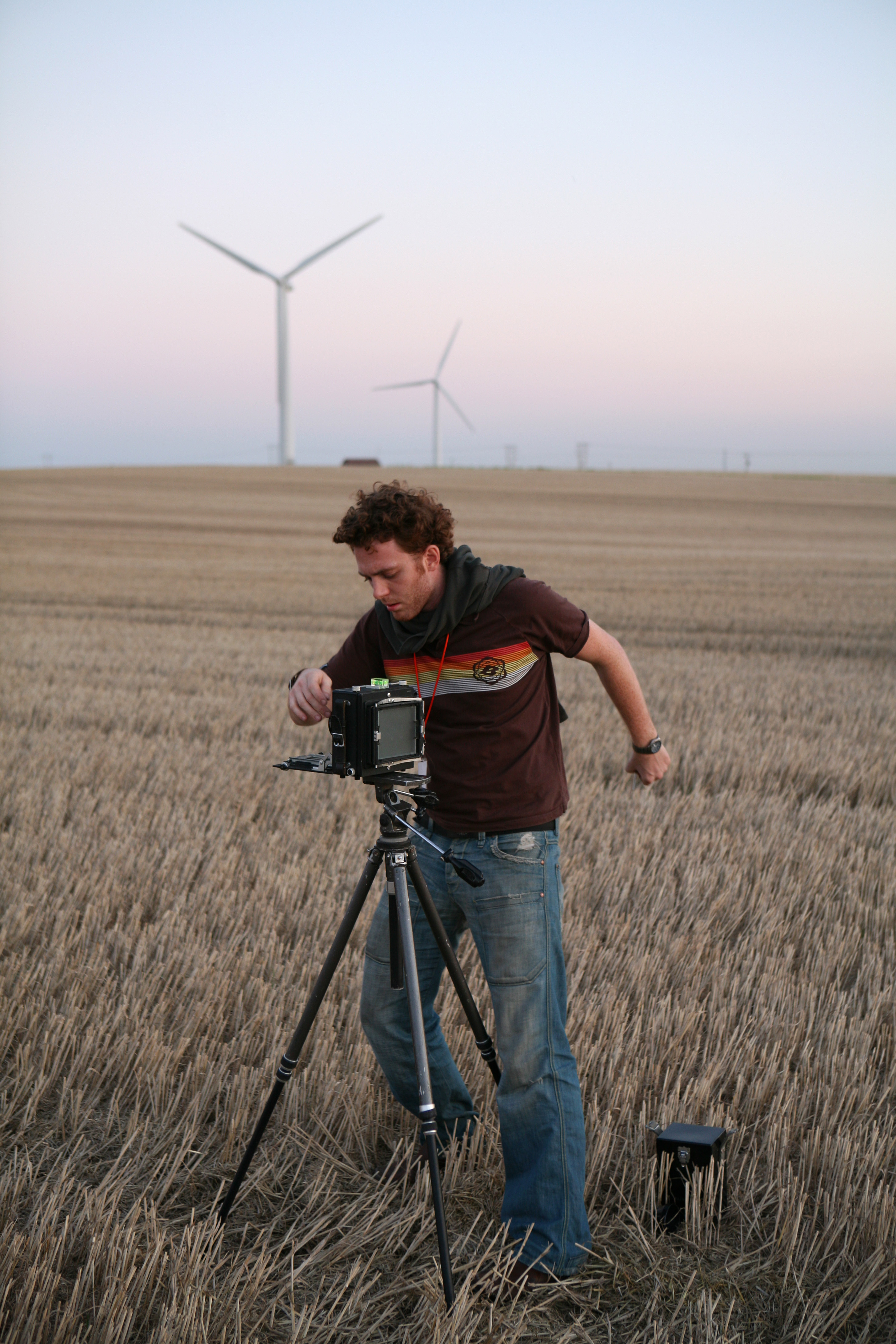
It was a smug act but I think Moore will override it soon enough. One assumes all footage was obtained with permission. Eco-posers are just giving the film more publicity.
Good to see they’re not taking it lying down:
They could offer it as a legal torrent vs. streaming delivery. Just get it out there again.
Update: It’s here for the moment and quality seems near the original:
(can be downloaded as a ~3GB file at 1080p)
Thanks. I smelled trouble when I first watched it so took steps to ensure I could always access it.
FYI, I noticed Gibbs has kept a copy on Vimeo for 2 months; could have sworn it didn’t show up earlier. He may have just de-privatized it. I’ll leave the link to be found in a search.
I’m thinking smug/flaky Google management is a big factor in censorship. YouTube allows all sorts of crass material like trophy hunting porn as educational or recreational. “Don’t Be Evil” is a joke.
https://www.scmp.com/news/china/science/article/3086177/coronavirus-uses-same-strategy-hiv-dodge-immune-response-chinese
Out of 8 billion reality denying fire apes there are less than a hundred that are capable of explaining in a few sentences what’s actually going on with the economy. Tim Watkins is one of them. I’m pretty sure his denial genes are defective. Seriously. Except when he whines about austerity which he avoids in this essay.
https://consciousnessofsheep.co.uk/2020/05/26/two-money-tricks/
{From emergency ICU health-care worker Kristen Martins.}
“My message to those protesting the stay-at-home orders in Minnesota, Tennessee, Washington, Colorado, Florida, Illinois, California, Arizona, Montana, and any other state & to Trump:
Come take a step into my daily hell.
Come tell me to my face that “fear is worse than the virus!”
Come walk into the trailer full of dead, rotting humans, and I will pick out a spot for your body, since it is “your body, your right”.
If “Jesus is your vaccine”, tell me why I am taking the rosary off my patient’s lifeless body?
Anyone protesting should forfeit their rights to receive any medical care. NONE. You are putting the lives of anyone you come into contact with because of your boredom and selfishness. You are putting every single healthcare worker’s life not only at an increased risk, but your disrespect for humankind because of your ignorance and stupidity is beyond appalling. You are a disgrace.”
https://kristenfmartins.wordpress.com/2020/04/21/running-out-of-outlets/
Good one. I’m grateful that there seem to be fewer morons in Canada.
Thanks, Apneaman. Heartbreaking, powerful stuff. It sickens me that anyone reading this, or a similar narrative, could minimize or deny the grimness of this disease and not engage ridiculously simple actions to help protect one another from it. But it’s a certainty that there are many who will do just that.
It Hit 80 Degrees in the Arctic This Week
“This story will provide important context for the headline, and I encourage you to read it—but really, the headline tells you what you need to know: It was 80 degrees Fahrenheit above the Arctic Circle this week.
A little farther south, in Siberia—you know, the region of world we reference when we want to connote something cold—it was 86 degrees Fahrenheit. Arctic sea ice in the neighboring Kara Sea took the deepest May nose dive ever recorded. Oh, and random swaths of the region are on fire. Things are extremely wrong.”
https://earther.gizmodo.com/it-hit-80-degrees-in-the-arctic-this-week-1843606717
We know from everyday life that bad things happen when the gradient between high and low energy is reduced. Doing it at the planetary scale and not making any changes whatsoever that might inconvenience our privileged lifestyles is insanity and more proof that we are governed by reality denial and the MPP.
The MPP in action, Alberta style….lmao
Alberta minister says it’s a ‘great time’ to build a pipeline because COVID-19 restrictions limit protests against them
https://www.theglobeandmail.com/canada/alberta/article-alberta-minister-says-its-a-great-time-to-build-a-pipeline-because/
Amazing. We’d have reason to question the validity of the MPP if just once we heard a leader say “we need to constrain growth and leave some oil in the ground so our grandchildren can at least enjoy a small fraction of the comforts we take for granted”.
I’ve visited Canada once, during March of 2015, when I drove from my home in the Midwest to Ottawa. The people I met and observed there were marvelously kind and reasonable, both to me and to one another. I noticed they had an ease of presence that I rarely experience in the United States anymore. I attribute much of that ease to a reduced overall stress burden as compared to US citizens. Upon my return home, I immediately sensed a heightened level of agitation and aggression from many members of my community as compared to my (admittedly brief) time in Canada.
There’s long been a deep sickness within a significant portion of the collective American (US) mindset. A combination of individual/national narcissism, the belief that freedom doesn’t require responsibility, general paranoia, rugged individualism at all costs, a pathological disregard for the welfare of others, and (more recently) a contempt for science. I struggle to see how this country can mend its ways, and thereby stop terrorizing itself and others.
Oops, I apologize for the double post. I don’t know how it occurred but it wasn’t intentional.
No need to apologize, the problem was on my end. WordPress for some unknown reason marked your posts as spam, even though you should have been whitelisted due to previous posts.
Chris Kresser is my favorite source of humble yet intelligent well-read science based health advice. In this recent podcast Kresser provides a big picture summary of what we know about the Wuhan virus and where we may be going.
https://chriskresser.com/covid-19-my-thoughts-on-where-we-are-now-and-where-were-headed/
Super informative and articulate podcast, Rob, thanks.
I don’t comment enough on your posts, but I read, appreciate, and get something useful out of every one of them. And thanks for occasionally tossing in a bit of comedy to lighten things up!
I’m really bummed today about how hostile so many people (particularly in the United States, where I live) are about wearing masks to reduce the spread of this disease. And I’m far from certain that common sense and scientific evidence will sway them. But this podcast gave me a few great tips to cope and manage the stress involved in our current predicament that I’ll put to use.
Thank you for the kind words.
I am very grateful that I had the good fortune to be born in Canada. We seem to be less polarized and hostile to each other than what I observe in the US. In the US most issues seem to have a red team and a blue team belief, and what the science says has no influence on those beliefs. Quite sad.
I’ve visited Canada once, during March of 2015, when I drove from my home in the Midwest to Ottawa. The people I met and observed there were marvelously kind and reasonable, both to me and to one another. I noticed they had an ease of presence that I rarely experience in the United States anymore. I attribute much of that ease to a reduced overall stress burden as compared to US citizens. Upon my return home, I immediately sensed a heightened level of agitation and aggression from many members of my community as compared to my (admittedly brief) time in Canada.
There’s long been a deep sickness within a significant portion of the collective American (US) mindset. A combination of individual/national narcissism, the belief that freedom doesn’t require responsibility, general paranoia, rugged individualism at all costs, a pathological disregard for the welfare of others, and (more recently) a contempt for science. I struggle to see how this country can mend its ways, and thereby stop terrorizing itself and others.
Well said. I too see dark clouds over the US, and by extension due to its influence, everywhere else. It seems the only way to unite the American people is to go to war. Unfortunately the next war will have a bad outcome because we’ve already burned all the good booty so war will simply accelerate the depletion of key resources.
I can only agree. It’s another awful truth that’s hard to take.
Oil production appears to have peaked just before the Wuhan virus arrived. I continue to believe we are experiencing a brief calm before the storm thanks to unprecedented ($5,000,000,000,000+) money printing and many citizens with hope that growth will resume. When the majority wake up and realize growth will not resume, hope will be replaced with fear and anger, and money printing will no longer work. Then all hell will break loose.
Get prepared while it’s still possible to do so.
https://resourceinsights.blogspot.com/2020/05/the-stealth-peak-in-world-oil-production.html
The Dumbfuck Money Bubble. See It, Or Be It.
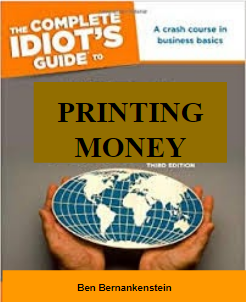
https://zensecondlife.blogspot.com/2020/05/the-dumbfuck-money-bubble-see-it-or-be.html
Some 3 billion people lost or had their jobs/income cut in the last few months, yet the stock market keeps rising. What better indicator is there that the stock market is disconnected from the real world & has little to no effect on most folks day to day lives? Let it crash & burn. The sooner the better. The system is beyond reform – it’s terminal. The sooner it dies, the sooner a new arrangement can be had. People fear change almost as much as death, which is funny because change is what the universe is all about.
https://srsroccoreport.com/chart-of-the-week-the-unemployment-rate-signals-the-dow-jones-index-to-crash-to-this-level/
Put another way, limits to growth, specifically net per capita energy, has forced us to rely on growth in paper assets rather than physical assets to keep our debt backed fraction reserve monetary system from collapsing on itself.
15 years ago the cocky chimps were gleefully chanting, “drill baby drill”. Today they are terrified & pleading, “print daddy print”.
UK’s going negative.
https://wolfstreet.com/2020/05/22/what-horrified-fund-managers-banks-uks-pension-minister-said-about-the-bank-of-englands-sudden-we-dont-rule-out-negative-interest-rates/
Negative interest – Negative growth – Negative emissions = Negative reality. I’m wondering just how comical (to me) theses expert ‘solutions’ can get? They’re like the keystone cops running around with a big box of magic band-aids trying to patch up a critically wounded & dying system.
Negative interest rates are the quintessential example of how we lack free will and are governed by the Maximum Power Principle. The people in charge know negative rates are a bad idea but will implement them regardless rather than preparing for our inevitable smaller future.
Promise the chimps more, throw in a touch of pseudo science razzel dazzel & they will follow you anywhere including over the cliff. Humans are a universal joke.
The new astrology
By fetishising mathematical models, economists turned economics into a highly paid pseudoscience
“In 2000, USA Today quoted Robin Griffiths, the chief technical analyst at HSBC, the world’s third largest bank, saying that ‘most astrology stuff doesn’t check out, but some of it does’.”
“The notion that an entire culture – not just a few eccentric financiers – could be bewitched by empty, extravagant theories might seem absurd. How could all those people, all that math, be mistaken? This was my own feeling as I began investigating mathiness and the shaky foundations of modern economic science. Yet, as a scholar of Chinese religion, it struck me that I’d seen this kind of mistake before, in ancient Chinese attitudes towards the astral sciences. Back then, governments invested incredible amounts of money in mathematical models of the stars. To evaluate those models, government officials had to rely on a small cadre of experts who actually understood the mathematics – experts riven by ideological differences, who couldn’t even agree on how to test their models. And, of course, despite collective faith that these models would improve the fate of the Chinese people, they did not.”
https://aeon.co/essays/how-economists-rode-maths-to-become-our-era-s-astrologers
Regardless of the belief, if it is not consistent with the laws of thermodynamics, it is wrong.
Our idiot chief health officer finally recommends Canadians wear masks after 3 months of telling us not to wear masks. How is it possible that obviously incompetent people can hold important positions?
https://www.ctvnews.ca/politics/it-s-now-recommended-that-canadians-wear-face-masks-1.4946752
I watched the new BBC Horizon episode on the virus.
https://www.bbc.co.uk/programmes/m000jbhj
1) No mention of preventative measures like vitamin D etc.
2) No mention that everyone should wear masks.
3) No mention that we’ve never successfully created a vaccine for a similar virus.
4) No mention of gain of function research in Wuhan that may have leaked.
Quite sad. BBC used to be a news source you could trust.
Donald Trump is correct on this issue. The WHO is criminally incompetent.
Rob, are you familiar with Pentti Linkola’s work? He was a Finnish fisherman, essayist and deep ecologist. Georg Henrik von Wright, the successor of Ludwig Wittgenstein, regarded him as the most profound Finnish philosopher. Linkola died in April. I hope these links work and are good enough, if not, maybe you can find better ones. His last book is available in English. He considered his previous book his magnum opus but it hasn’t been translated.
https://www.tellerreport.com/news/2020-04-05—pentti-linkola-s-last-interview-was-published-on-thursday-on-kulttuuritoimitus—he-talked-about-the-coronavirus–%E2%80%9Cit-helps-something%E2%80%9D-.BJx6UCDPwU.html
https://www.tellerreport.com/news/2020-04-05—pentti-linkola-snapped-hard-text-in-his-last-interview—and-praised-greta-thunberg-.Sye6BQEPDI.html
Thanks for the tip. I got one of Linkola’s books and will check it out.
Nobody rants about reality denial better than Mac10. His tirade today made me laugh. And he’s mostly right despite not understanding MORT and the other science behind what we observes.

https://zensecondlife.blogspot.com/2020/05/nature-won.html
“Now however these idiots have a right to be worried. Their entire way of life is circling the toilet, like a massive turd, while they watch, mesmerized.”
Speaking of circling, this clip is realistic when you know how people act:
(described as “crowd dynamics…”)