By JT Roberts: On Resources and How the World Really Works

I don’t know who JT Roberts is but he is very bright and is an excellent writer. I stumbled on some comments she made in a recent post by Tim Morgan and I thought they were so good I’ve copied them here.

https://surplusenergyeconomics.wordpress.com/2017/10/27/111-a-spike-to-puncture-the-bubble/

In the 70s just as US domestic oil production peaked Nixon made some unusual but very interesting moves.

  • Opened China for trade
  • Established the EPA
  • Created a Petro-Dollar deal with Saudi’s
  • Took the Dollar off Gold

I have a very difficult time believing that he, or his cabinet, or congress had any clue of the significance of those particular moves. I think that in particular they would not have understood the Limits to Growth reality, since they decided not to give ear to the findings by Meadows and Forester. US wealth had been built on abundant easily accessible energy and mineral resources. The US was the manufacturer to the world up until 1970 not because of innovation but because the world couldn’t compete on price. ( The Battle of Somme was the effective killing machine it was because of the cheap steel rails that had been supplied by the US, these latter became the light gauge system in the UK ) No other country had the combination of resources at the volumes that the US had. As these became depleted it hampered growth because of affordability. Had it only been a matter of raising the price to meet increased cost of production why didn’t that happen? Affordability is the real driver of growth not supply and demand.

By opening China it gave the US access to offshore its energy intensive industries like steel production, and mining. As well as labor intensive industries like clothing. ( A population living on rice is far less costly in energy terms then one living on hamburgers) Establishing the EPA created additional pressure to move manufacturing elsewhere. The suspension of Dollar-Gold convertibility was a necessity as there wasn’t enough gold to cover the dollars in circulation. It also hampered the ability to create currency. The risk was that dollar demand would collapse but that was countered with the Petro-Dollar arraignment effectively giving the currency a place to go rather than returning to the US to be inflated away. That move calmed the markets, because they felt that at least their dollars could now be converted to oil, which is of higher value than Gold.

Saddam Hussein, and Qaddafi threatened the stability of that system. Saddam had boycotted sales of crude to the US in 2002 and started selling his oil in Euros. For 30 days he stopped all exports in a show of force that he had control of their national petroleum system. What he didn’t understand was he was threatening to limit access to what the US needs most, energy and resources. The war was the answer to that threat. Now Iraqi oil is safely in the control of the international oil majors. Qaddafi had made a similar error since his interest wasn’t to allow the state owned system to be controlled by the oil majors. He also threatened the the Petro-Dollar by creating a competing gold currency that was being used in Africa. The French were particularly at risk as it was replacing the Franc still in use in there former colonies.

If we look closely at NAFTA we see that much of it revolves around access to resources. In exchange for easier economic trade with the US, both Canada and Mexico have agreed to unlimited access to their oil and other resources. When the USSR fell we saw the same pattern. Anglo-US corporations rushed in to gain access to whatever resources they could. Putin the patriot didn’t play ball like Yeltsin. So now he is vilified. Canada and Mexico have peaked in oil production, and now NAFTA is at risk. The UK joined the EU just as it had oil to sell and promptly left when it didn’t.

What we see is a common pattern that is larger then any political system.

Capitalism is a dissipative system out of equilibrium, as all dissipative system are. Like hurricanes Capitalism requires energy input to exist, anything that threatens that will collapse the system. It must grow or die. Within the structure, like hurricanes, there can be self organized subsystems. Tornado’s, Micro-bursts, and other elements that feed off the core. With Capitalism these are corporations and governments. In order for the core to survive the entire system must grow in aggregate. As the net energy driving the system declines the structure weakens, like a hurricane on land or cold water.

Not only is it impossible to return to a local agricultural existence. It is also impossible to decouple the elements of the system. We see that with Trump. His platform was isolation, and now its war. He has no choice he’ll make similar moves as Nixon did, but it can’t work because there is no more sweet spots to exploit.

Just as the shale play is a high cost desperate act of a dying industry. (Shale was well know in the 70s but as uneconomical as it remains today) The US will attempt to turn back time with it’s military machine as it has in the past. The problem is they can’t return affordability so the system will simply grind to a halt.

I guess Adam Smith was right about an Invisible Hand.


Without energy to drive real growth all you have left is moving money around. I think most mistake the symptom for the cause. The lax regulations are needed to increase debt which increases money supply. So strangely the corruption is part of the system.

For example it has been documented that the primary money laundering economies are US and U.K. So for all their show as the bastions of freedom and democracy the reality is they benefit from corrupt dictators that stuff their ill gotten gains in the western banking and real estate system.

With Trump it’s just irrelevant he’s neither good or bad. He is no different then any other elected president. He is limited to the resources at his disposal and won’t accomplish anything beyond that. Basically a symptom not a cause.

The Appolo success if we so call it really needs to be considered in context. If you compare the energy production of the US with the USSR it becomes clear that technology wasn’t the key to the space race. In actuality the Soviet rocket engines were 20% more efficient and more powerful. They dared to pipe oxygen rich exhaust from the turbos into the primary engine. But it was done because of necessity they couldn’t afford to waste the fuel. It also constrained their ability to test run the engines. Instead they choose to test them at launch.

The arrow all points in the same direction. Without the resources that the US had access to the USSR could not compete. But it had nothing to do with technology because they were winners with technology.

AK 47 is another example.

I sum it up this way. If you have wood you cook with wood. If you have coal you cook with coal. If you have oil you cook with oil. If you have gas you cook with gas. If you have a lot of it you have trains, planes, and automobiles. I might add rockets. With a little of it you cook.

Technology is a function of abundance not the cause of it.

It’s interesting to note the Roman Empire grew in wealth through military conquest. Then it started developing schools of higher learning in imitation of the Greeks.

Education has never preceded empire. So the thought that education or technology are the source of wealth is false. It has always been resources. It will always be. So in that regard it is no coincidence that the US military is larger then the next 10 militaries combined. So the military industrial complex was also a necessity.

Ironically the competitive economic system, communism thought that they could only find success within a highly educated society. Lenin targeted Germany for that reason. But educated people make poor soldiers. Ignorant religious zealots make far better soldiers. Which system promoted religious freedom and zealotry? For God and Country. God save the Queen. In God we trust. One nation under God.

So in many places Americans are hated because of their ignorance. But perhaps their ignorance has been their strength all along. In this regard we might want to watch closely the current US administration.

War is Peace
Freedom is Slavery
Ignorance is Strength

Reality Denial Harm Prevention: A Proposal for Screening and Licensing

wn0218-22028229

All 7 billion humans originated from one small tribe of hominids in Africa about 100,000 years ago. Despite their close relatedness individuals are born with considerable genetic variation in physical and mental characteristics. Examples of genetic variation include height, weight, strength, speed, eyesight, intelligence, aptitudes, demeanour, sexual orientation, dietary tolerance, disease susceptibility, addiction tendency, mental health, and longevity.

The laws and practices of most countries have acknowledged that genetic variation exists and that certain levels of variation can be harmful to society, or may prevent the individual from performing certain tasks. Examples include:

  • Most professions such as engineering, medicine, science, and law implicitly screen candidates for adequate intelligence and aptitude with challenging university entrance and degree requirements, exams, and professional certifications.
  • Airline pilots, air traffic controllers, train engineers, and truck drivers are required to have vision acuity and color vision above a minimum level.
  • Law enforcement, firefighting, and some military roles require adequate strength and agility to perform the work.
  • Many professional sports require a minimum speed, height, weight, or strength.
  • Many employers screen for substance abuse which is known to have a genetic predisposition.

A recent scientific breakthrough by Varki and Brower shows that the behaviorly modern human brain was enabled about 100,000 years ago by a simultaneous mutation for an extended theory of mind and denial of reality.

Denial of reality is therefore central to the behavior of most humans, and is characterized by a tendency to deny the reality of anything unpleasant, regardless of evidence or science. As with other genetic characteristics like color blindness, the level and type of reality denial varies widely in the population from benign to dangerous.

Benign forms of reality denial may benefit or harm the individual, but rarely do serious harm to society, future generations, or other species. Examples of benign reality denial include:

  • Belief in a god that promises life after death.
  • Unhealthy lifestyles and diets.
  • Use of mind altering substances.
  • Wacky beliefs like miracles, fate, luck, conspiracy theories, and UFOs.

Dangerous forms of reality denial, on the other hand, often benefit the individual or society in the short-term, but cause severe mid and long-term harm to society, future generations, and other species. Examples of dangerous reality denial include:

  • Denial of human overshoot.
  • Denial of species decline and extinction, and damage to ecosystems.
  • Denial of climate change severity, actions required to make the future less bad, and personal responsibility.
  • Denial of many limits to growth, including some imminent threats like low-cost oil depletion.
  • Denial of the implications of excessive debt and low interest rates.

Clearly, the risks and potential harm from genetic variation associated with reality denial, which for example could cause the collapse of civilization or extinction of many species, far exceed the risks and potential harm from the already regulated genetic variations, like vision accuracy, which could cause a fatal surgery mistake or a plane to crash.

We should therefore urgently act on the recent discovery of Varki and Brower and pass laws to screen and license people before they are permitted to function in roles inappropriate for certain levels of reality denial.

Upon reaching the legal age of consent, all citizens should be assessed for their inherited level of reality denial using a scale from 0 to 6 as follows:

  • full reality acceptance (0)
  • benign reality denial: low (1), medium (2), high (3)
  • dangerous reality denial: low (4), medium (5), high (6)

The screening process would include a review of activities in the community, social media, interviews with teachers and acquaintances, and a written examination.

The process would focus on assessing the strength of the following beliefs:

  • There are no limits to growth.
  • Green growth is better.
  • Technology is the solution to all problems including energy.
  • There are two sides to the climate change debate.
  • We must increase food production to keep pace with population growth.
  • iPhones, the internet, and Tesla are more important innovations than Haber-Bosch, concrete, and the diesel engine.
  • I’ve already done enough by shopping with a reusable bag.

In the future as brain scanning technologies improve, it is expected that the screening process will be replaced with a quick and inexpensive brain scan that will detect activity in the region of the brain responsible for reality denial.

Upon completion the individual will be issued an official government identification card stating the level of reality denial that they were born with.

Critical occupations and activities in society may not be filled or conducted by anyone exceeding a specified level of reality denial. Examples of maximum allowed levels include:

  • right to vote (3)
  • right to run for elected office (2)
  • right to make political donations (3)
  • senior position in any company (3)
  • senior position in government (2)
  • teachers and professors (1)

Please contact your elected representatives and make them aware of the new science associated with reality denial and lobby for this vital extension to existing harm prevention laws and practices.

By James Hansen: Scientific Reticence

Here is the latest (draft) paper from James Hansen, the world’s best climate scientist.

In summary, the situation is much worse than you’re being led to believe.

We argue that global warming of 2°C, or even 1.5°C, is dangerous, because these levels are far above Holocene temperatures and even warmer than best estimates for the Eemian, when sea level reached 6-9 meters (20-30 feet) higher than today. Earth’s history shows that sea level adjusts to changes in global temperature. We conclude that eventual sea level rise of several meters could be locked in, if rapid emission reductions do not begin soon, and could occur within 50-150 years with the extraordinary climate forcing of continued “business-as-usual” fossil fuel emissions.

The 2 C goal set by our governments is not an appropriate goal because it is clearly dangerous, and despite this, we are almost certainly not going to achieve the goal.

It’s not like we tried and failed. We’ve done nothing except talk and deny the science.

Hansen laments here that even scientists are denying the science.

Where are the adults?

Clipboard-20171026


http://www.columbia.edu/~jeh1/mailings/2017/20171026_ScientificReticence.pdf


By Gail Tverberg: The Approaching US Energy-Economic Crisis

Gail Tverberg refines her story on the relationship between energy and the economy, which is the most important issue that our leaders and media never discuss.

With each new version Gail is clearer and more comprehensive which reflects well on her effort to explain a complex and poorly understood topic.

This essay is a good place to start for someone seeking to understand what is going on in the world.

https://ourfiniteworld.com/2017/10/18/the-approaching-us-energy-economic-crisis/

6-seven-ways-a-us-energy-economic-crisis-can-arise

By Tim Morgan: SEEDS goes public

Another must read by Tim Morgan…

As you will know if you are a regular visitor, surplus energy economics is an interpretation which says that the economy is, fundamentally, an energy system, not a financial one. More specifically, it is a surplus energy system, because, whenever energy is accessed, some energy is always consumed in the access process. Our prosperity is the surplus, or difference, between the amount of energy accessed and the quantity used up in getting it.

Where the surplus energy approach differs most fundamentally from ‘conventional’ economics is in its recognition that there are two economies, not one.

The first of these is the ‘real’ economy of goods and services, labour and resources, and this is an energy system.

In parallel with it is a second or ‘financial’ economy of money and credit.

Conventional economics goes wrong in thinking that this ‘financial’ economy is the entirety of our economic system. In fact, it is in a subservient relationship with the energy economy. This ought to be obvious. After all, money has no intrinsic worth. It commands value only as a “claim” on the output of the real economy.

Back in 2013, when Life After Growth was first published, I was uncomfortably aware that it would be hard to put numbers on this relationship. This is where the SEEDS project – the Surplus Energy Economics Data System – began. One of the biggest challenges has been to use monetary units to calibrate the ‘real’ economy which is the substance behind the ‘financial’ economy with which we are all familiar. This is one of the reasons why developing SEEDS has taken so long.

During this period, I have become ever more aware of a striking and dangerous reality in our situation. This is the way in which the ‘financial’ economy has become estranged from the ‘real’ economy which it is supposed to represent.

The real economy began to decelerate in or around 2000, but we have been unable or unwilling to accept this. Instead, we’ve sought to fake a “normality” of growth by ‘mortgaging the future’.

At first, we did this by creating an ever larger mountain of debt. This led to the global financial crisis (GFC) of 2008.

So large had debt become by then that the only way in which we could co-exist with it was to make it cheap to service. This is where “monetary adventurism” began.

We have toyed with some extremely silly ideas since then, such as ‘helicopter drops’ of money, negative interest rates, and the banning of cash.

The powers that be haven’t been sufficiently irresponsible to adopt some of the more extreme expedients. But what they have done has been bad enough. Ultimately, we have adopted a policy of ultra-cheap money, slashing policy interest rates to all-but-zero, and using vast amounts of newly-created money to drive asset values up, and yields down.

Only now are we becoming aware of quite how disastrous this policy of ultra-cheap money really is. Naturally, it has accelerated the pace at which we borrow – after all, why would you not borrow, when you are being paid to do so by interest rates which are negative (they are less than inflation)? And why would you save, when the real value of your savings falls year on year?

But the downsides of monetary adventurism don’t end there. I’ll pick just one of these downsides for special mention here. It is pensions. By driving returns on capital down into negative territory, we have destroyed returns on capital and, with them, our ability to provide for retirement. For all but a tiny minority of the very wealthiest, it has become impossible to save enough to give us a decent income in retirement.

The naïve answer to this is that we needn’t worry about pensions, or other future issues like paying back debts, because we have the comfort of the hugely inflated values of assets such as stocks, bonds and property.

This ‘comfort blanket’ is foolish in the extreme – because the only way we can turn these assets into money is by selling them to each other.

In politics and society, there are two things which we must hope that the general public never finds out. The first is what has happened to their ability to provide for retirement. The second is that selling houses to each other cannot get them out of this predicament.

The SEEDS system – in its SEEDS Snapshots version, freely available to the public – can now be downloaded from the resources page. The SEEDS Professional version will be announced at a later date.

We will doubtless have many discussions here about what SEEDS does, how it does it, and what it can tell us.

For now, though, such discussions can wait. Please download the very first published version – and enjoy it.


https://surplusenergyeconomics.wordpress.com/2017/10/08/108-seeds-goes-public/

By Richard Heinberg: Energy and Authoritarianism

Arab Spring, Greece, Brexit, Trump, Venezuela, and many more to follow.

Pay attention to what our leaders and experts say. Not one has a clue what is going on.

Hidden from view = No Clue = Denial

http://www.resilience.org/stories/2017-09-26/energy-and-authoritarianism/


It is highly likely that, as events unfold, the causal criticality of energy decline will be hidden from the view of most observers, whose attention will be fixed instead on shocking but comparatively superficial and secondary political and social events. A more widespread understanding of the role of energy in society, and of the likely limits to future energy supplies, could be extremely beneficial in helping the general populace adapt to scarcity and avoid needless scapegoating and violence. Perhaps this essay can help in some small way to deepen that understanding.


One important wild card is the role of debt: it enables us to consume now while promising to pay later. Debt can therefore push consumption forward in time and (for a while, at least) make up for declining energy productivity. It would appear that the “fracking” boom of the past decade, which probably delayed the world oil production peak by about a decade, depended on the power of debt. But when debt defaults cascade, an economy may decline much faster than would otherwise be the case (default-led financial crashes have occurred repeatedly in modern history). And debt defaults can cripple the financial and thus the economic system of a nation with plenty of energy resources (as happened in the U.S. in the 1930s).


Lunch Price Increase

Honest growth driven by low cost energy is over.

What’s left is fake growth driven by debt and money printing.

I think the illusion of growth created by debt and money printing will eventually end when something awakens the herd to the bubbles and causes it to sell assets in a panic which will harm a lot of people, including innocents without assets.

On the other hand, if I am wrong and central banks continue to succeed with their illusion, then it seems the end game will be 90+% of assets owned by the 1% elite, and 99% of citizens angry and impoverished by a destroyed currency.

It would be so much wiser and safer to accept the necessity of a decline in our standard of living, and to allow the economy to deflate with taxation policies designed to prevent the wealth gap from widening as everyone becomes poorer.

I understand that it may be impossible to orchestrate a gradual deflation without triggering a crash, however every day that we postpone reality increases the pain we will eventually experience.

There is no free lunch.

21765598_10155072425313261_5674136948384125200_o

By Vaclav Smil: Energy Revolution? More like a Crawl

Vaclav Smil is an intelligent, wise, and knowledgeable expert on a wide range of scientific and social topics related to energy. He is Distinguished Professor Emeritus at the University of Manitoba in Winnipeg, Canada, and is a respected author of many books.

In this September 2015 talk at McGill University he touches on many important topics including:

  • We are a fossil fuel civilization and will remain so for a long time.
  • Over the last 25 years we have reduced our dependence on fossil energy by only 3%.
  • Power density is critical when comparing energy alternatives.
  • Renewable energy is not renewable and does not have the density to replace fossil energy.
  • Green products are not green.
  • Nuclear energy is dead. What’s left is being developed in the wrong places.
  • CO2 capture is not a solution for climate change.
  • Developed countries do not use energy rationally. Canada (and the U.S.) are the worst offenders in the world.
  • Food and energy have never been cheaper and we should expect to pay a lot more in the future.
  • The solution to reducing waste and energy consumption is higher prices.
  • Innovation is an overvalued and exaggerated topic. All of the critical technologies civilization depends on were invented over 100 years ago.
  • There are more important issues to worry about than peak oil including water scarcity, money printing, low interest rates, and high youth unemployment.
  • Most big events in history were unexpected. We can expect surprises in the future.
  • Reasons for hope include the peaceful breakup of the Soviet Union, and the fact that we can have comfortable lives at a much lower level of consumption.

I agree with almost all of Smil’s points except:

  • Smil believes we are unable to accurately predict the effect of rising CO2 and therefore he is not worried about climate change. I’ve done enough reading of climate science to be confident we should be very worried.  While we are not able to precisely predict the outcome, the probable outcome of our current path ranges from dangerous to catastrophic.
  • Smil believes that with fracking and other technology improvements we will have plentiful oil for at least a hundred years. I think we will have energy shortages within 10 years. Our different views are probably rooted in different assumptions about the link between energy and the economy. Smil thinks any oil shortages will increase the price of oil thus enabling new and more expensive sources. I think rising oil prices will reduce worker productivity and incomes which will make more expensive oil unaffordable and therefore supply will reduce in an escalating feedback loop as inexpensive oil is depleted. I also think that oil depletion and consequent rising production costs are the main cause of rising debt, money printing, and low interest rates that Smil worries about.

This lecture is a must watch for people seeking to understand the issues that really matter to our experiment with civilization.

By Tim Morgan: Why Mr. Trump can’t raise American prosperity

A must read by the brilliant Tim Morgan.

https://surplusenergyeconomics.wordpress.com/2017/09/05/104-why-mr-trump-cant-raise-american-prosperity/

Essentially, two things are happening to the average American. First, his or her income is rising less rapidly than the cost of essentials, squeezing the “discretionary” income which is the real definition of prosperity. Second, increases in income are being far exceeded by increases in debt, and also by growing shortfalls in pension provision. So the citizen feels both less prosperous and less secure.

As SEEDS measures it, per capita prosperity was 10% lower in 2016 than it was back in 2000. Neither is this trend likely to reverse – by 2025, the average American is likely to have seen his or her prosperity decline by a further 8% in comparison with 2016. At the same time, per capita debt has increased by almost $54,000, in real terms, since 2000, a problem now being compounded by a rapidly-growing systemic shortfall in pension provision.

‘Conventional’ economics cannot capture any of this. A perspective which ignores both “borrowed consumption” and the trend cost of energy is baffled by popular discontent, in America and elsewhere. Moreover, ‘conventional’ analysis tends to be misled by the apparently-buoyant values of stocks, bonds and property. These values are misleading, because they cannot be monetized – the only buyers for homes, for example, are the same people to whom they already belong.

For as long as these issues are overlooked, popular anger is likely to go on taking ‘the experts’ by surprise.


The concept of prosperity needs to be understood clearly. Prosperity is not simply the size of someone’s income. Rather, it is the sum left over after essentials have been paid for. This means that prosperity equates to “discretionary” income, which is the sum that he or she can choose how to spend.

The fundamentally energy-based nature of all output creates a natural distinction between “two economies” – the real economy of goods and services, and the financial economy of money and credit. Used properly, the financial system can deliver many benefits. Equally, though, it can be harmful, if it diverges too far from the real economy.

The potential for harm is simple. Money functions only as a “claim” on goods and services, which really makes it a claim on surplus energy. Likewise, since credit is a claim on future money, it is really a claim on future energy.

Financial “claims” – money and credit – can be manufactured out of thin air, and we can create as many of these claims as we like. But, if we create claims that exceed what the real economy can deliver, the excess cannot be honoured. Therefore, it must be destroyed. Inflation is one way of doing this, though default is another.


America is by no means unique in experiencing downwards pressure on prosperity – the same is happening in many other countries, often more severely than in the United States.

The problems posed for America are twofold. First, the deterioration in prosperity makes it impossible for the President to improve the material prosperity of the average American – in attempting to do so, he is about as powerless as was King Canute when he tried to turn back the tide.

Second, the use of cheap money to ‘manufacture’ nominal economic growth is already creating an escalating level of forward risk. Just as Americans are getting less prosperous, they are also becoming ever more indebted, and face ever greater insecurity as provision for pensions deteriorates.

The time cannot be too far off, for America as for the world more generally, where the future (represented by the collective balance sheet) overwhelms the present.

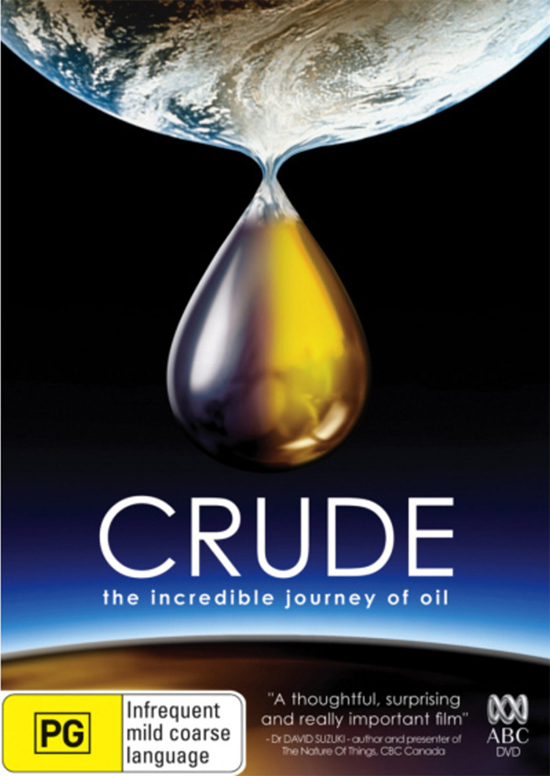
video review: Crude: The Incredible Journey of Oil by Richard Smith

crude-the-incredible-journey-of-oil

I’ve watched a lot of good documentaries but this one produced in 2007 by Richard Smith for the Australian Broadcasting Corporation is among the very best.

http://www.abc.net.au/science/crude/resources/

http://www.imdb.com/title/tt1551617/

Usually, the more important a non-fiction work is, the more scientific disciplines the author integrates into a coherent story. In this case, Richard Smith does a remarkable job of weaving geology, chemistry, biology, thermodynamics, climate, history, and economics into a fascinating story that follows a carbon atom as it moves about the planet over the last 200 million years.

I often marvel at, and wonder how we were blessed with such a large quantity of crude oil which we have used to build an amazing civilization. This documentary does a very nice job of explaining how crude oil was formed 160 million years ago on a hot greenhouse planet with near dead and toxic oceans. The photosynthetic bacteria that converted CO2 and sunlight into the carbohydrates that later became crude oil acted to remove CO2 from the atmosphere thus cooling the planet and returning it to a healthy environment for complex oxygen breathing life like ourselves.

Humans are now reversing this process by burning fossil carbon and returning the CO2 to the atmosphere which may return the planet to an environment incompatible with civilization. Unless, ironically, we run out of oil first, which will also cause our civilization to collapse.

What’s different this time is that humans are doing in a hundred years what took geology thousands or millions of years in the past. This speed makes the outcome more difficult to predict but common sense suggests it’s unlikely to be good.

Given that 10 years have elapsed since the documentary was produced it’s a credit to Richard Smith that it’s still relevant and accurate, although it’s a concern to see how far we have unraveled in 10 years with melting poles, record temperatures, stalled economic growth, zero interest rates, money printing, failing oil companies, and global social unrest.

It’s also a concern, but expected in light of Varki’s theory on denial, that we collectively have not yet acknowledged our predicament, let alone taken any steps to make the future less bad.

Highly recommended!

If you’d like a higher quality version than what’s available on YouTube it has been recently ripped in HD and available as a torrent here.