What News Outlet Doesn’t Deny Reality?

ZeroHedge, the successful bad boy financial news reporting site, is shifting to a subscription model.

I might subscribe if ZeroHedge knew what the fuck was going on in the world, but they’re as much in denial about human overshoot as the mainstream news outlets.

Granted, ZeroHedge is at least willing to report on the daily insanities of our monetary and financial systems, which everyone else conveniently ignores, and I do value some of their observations, but they assume some evil cabal of elites is plotting to enrich themselves, rather than understanding that we’ve hit limits to growth caused by non-renewable energy depletion (and soon other non-negotiable constraints like climate change), and central banks are desperately printing money and using every slight of hand they can think of to extend and pretend a little longer our system that requires growth not to collapse.

Basically ZeroHedge doesn’t have a clue, and they make a living by feeding the conspiracy hungry crowd that congregates there. Not only do they not make the world a better place, they foment social unrest to make it a worse place.

So no, I won’t be subscribing.

Where can you go for intelligent apolitical reality based news?

It’s very hard to find.

Nobody important talks about what matters, and I guess they wouldn’t be important if they did, because most people don’t want to know the truth.

It’s 24/7 tribal fluff and denial everywhere.

And they’ll say no one saw it coming.

A pox on them all.

https://www.zerohedge.com/markets/introducing-zerohedge-premium

INTRODUCING ZEROHEDGE PREMIUM

BY TYLER DURDEN

THURSDAY, DEC 10, 2020 – 23:35

When this website launched 12 years ago, little did we know – or expect – that it would grow to become one of the most popular and trafficked financial blogs, let alone websites, in the world. Since then, ZeroHedge has expanded from being focused on purely esoteric concepts in finance and capital markets to covering geopolitics, social, political (and recently, healthcare) matters (if for no other reason than the central bank takeover of markets has made discussing centrally-planned “markets” borderline absurd and often painfully boring).

In those twelve years we have had the pleasure of sharing hundreds of thousands of notable news items, events and market absurdities with you, our readers, creating a magnificent support base of millions of fans who – for one reason or another – come to this site daily, sometimes dozens of times. In that period we have, of course, also spawned countless critics and haters, and that’s perfectly normal: that’s what free speech is all about – the ability to exchange opinions, often in a less than glorified manner, in order to reach a consensus or optimal conclusion. After all, that is one of the anchors that made America great.

Which is why what troubles us most, far more than the Fed’s vain and futile attempt to control the business cycle and plan markets (for the eventual outcome, see USSR), are the creeping attempts by various multinational entities and corporations to quash free speech, both elsewhere and here. It started with Facebook, which in May 2019 became the first “social network” to ban ZeroHedge, only to reverse shortly after (admitting it had made a mistake); this was followed a little over half a year later by Twitter, which “permanently” banned our account, only to admit 6 months later that it had “made a mistake” and reinstated us. But barely had the digital ink on these “mistaken” attempts to censor free speech dried, when the world’s biggest online advertising monopoly, Google, took the unprecedented step of demonetizing the website (following a similar step taken by PayPal). Why? Because it disapproved of the language in our comments (how or why it picked on this website’s comment section as opposed to millions of others, we will never know). To avoid a shutdown, and against our wishes, we were forced to implement comment moderation as the alternative was insolvency. Also, contrary to occasional laughable rumors, we don’t and have never had access to outside capital – be it political or financial – and have been reliant on the same advertising model we have used since inception.

Needless to say, whether due to “mistakes” or overt attempts to demonetize us, the writing on the wall was clear: while they may be entirely within their rights to do whatever they want as “private” companies, pardon monopolies, the ‘social’ and ad-based gatekeepers of online content – the twitters, the googles, the facebooks of the world – had launched an overt crusade to upend the uncensored internet, to snuff out independent thought, contrarian views, and inconvenient opinions and create one giant echo chamber of consent straight out of George Orwell. To do that they would use any and every tool they have access to, and unfortunately we had to comply with the whims of these monopolies which nobody in Congress has the guts to challenge directly and to strip them of their too-big-to-question powers.

Until now.

When Google suspended us in June we said that a standalone website was in the works, one which is funded not by advertising – and is thus beholden to the biased internet titans of the world – but by you, our readers.

We are launching that website today, call it ZeroHedge Premium for lack of a better word.

Here’s what will happen next.

We will maintain the traditional zerohedge.com website as is, without a paywall and with ads… but since it has ads, it will also maintain the comment moderation – that, as we explained in June, was a prerequisite demand by Google. But parallel with that we are launching a “premium” website, where subscribers will not only never again have to see one more ad but more importantly will have access to a fully unmoderated comment section.

Our hope is to eventually have enough subscribers so we can do away with advertising altogether – call it a real-time experiment in media for the censorship age. Because “mistakes” and events in the past several years have made it clear to us – and we hope to you – that there is no such thing as free speech any more; if you really want “free speech” you have to pay for it (in the case of ZeroHedge, the premium subscription will be $1/day – less than the proverbial cup of coffee). We also hope that enough people sign up allowing us to aggressively grow our team and expand our coverage, both thematically and geographically, so we can provide you with better content, better coverage, better everything.

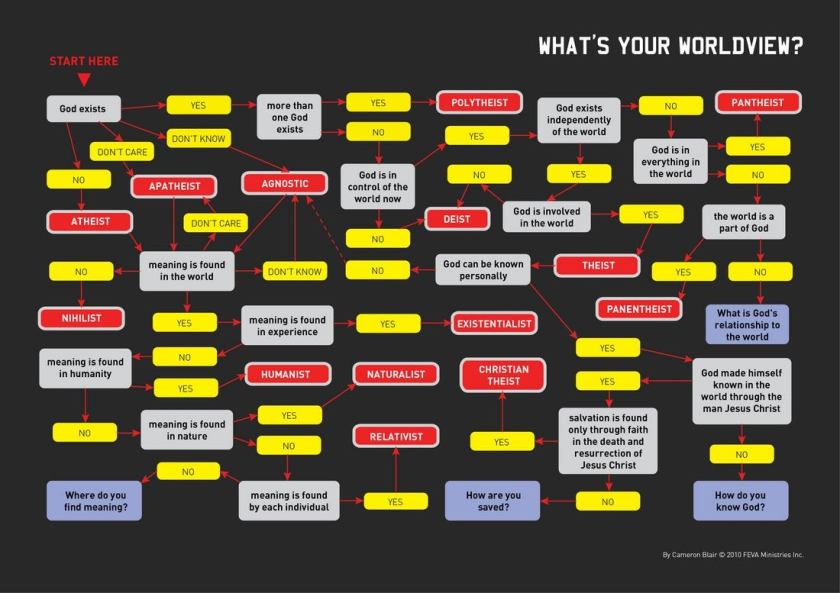
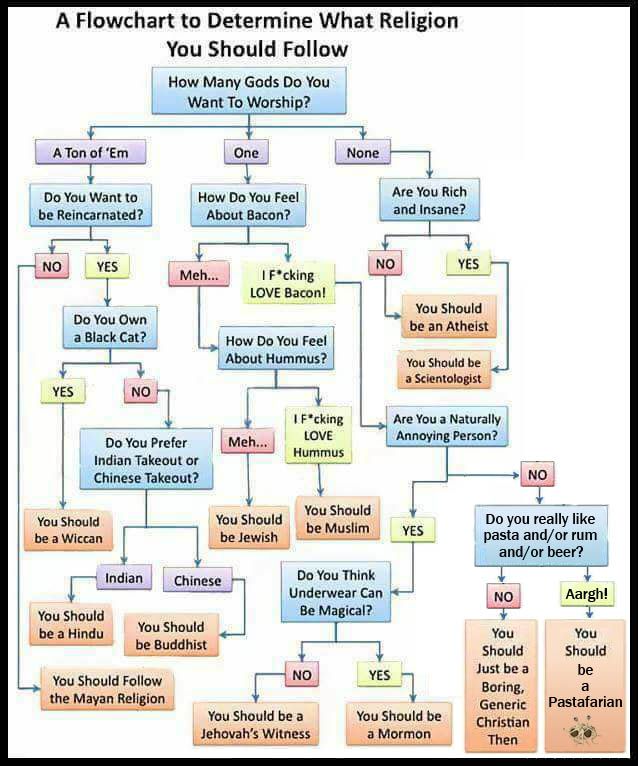
The un-Denial Decision Tree

This post was inspired by a comment from reader Kira. She asked if denying climate change was the same as denying death. I answered as follows:

“I suspect there are 2 main groups of people:

One group is the 95% of the population that doesn’t really understand the science or the severity of the problem. They see bad things happening with the weather, but they also hear on the news that countries have signed an agreement to prevent the temperature from rising more than 2 degrees, and they see neighbors buying solar panels and electric cars, which they’re told by experts are solutions to climate change, so their optimism bias that comes from genetic reality denial leads them to conclude that the climate problem is being addressed, and they put it out of mind.

The other group is the 5% that does understand the science and the severity of climate change. These people have enough intelligence and education to conclude that we are already screwed regardless of what we do, and that any effective mitigation effort must involve a rapid decrease in population and/or per capita consumption. It is within this group that genetic denial of unpleasant realities is operating in full force. Most of these experts genuinely believe that climate change can be safely constrained, and economic growth can continue, by replacing fossil energy with solar/wind energy and by using machines to remove CO2 from the atmosphere. These beliefs are so absurd, and so contrary to basic high school level science, that there can be no other explanation than genetic realty denial. In this group, maybe it is death that is the main thing being denied.”

Kira said she agreed and then suggested it might be better to let people, and especially young people, remain in blissful ignorance so that they do not become depressed and lose a sense of purpose.

I thought about it and created the following decision tree of possible paths to answer her question.

  1. Humans are in serious trouble
    1. Disagree (I believe in God or Steven Pinker)
      • path: Carry on and oppose anything that threatens your beliefs and lifestyle
    2. Agree (I believe my eyes)
      1. It’s too late to do anything useful (nature’s forces now dominate human forces)
        1. Agree (a reasonable position given the data, but only if you think other species don’t matter, and 8 billion suffering humans is no worse than 8 billion minus 1 suffering humans)
          • path: Try not to think about it and enjoy the good days that remain and/or do some prepping to extend your good days
        2. Disagree (there’s still time to make the future less bad, even if all we do is reduce harm to other species and/or total human suffering)
          1. Humans can’t or won’t change their behavior in time
            1. Agree (most of history says we only change when forced, and the coming debt/energy/climate collapse will be too severe for any good to come of it)
              • path: Try not to think about it and enjoy the good days that remain and/or do some prepping to extend your good days
            2. Disagree (I believe Sapolsky that behavior is plastic and we have enough energy left to build a softer landing zone)
              1. Genetic reality denial blocks any useful change
                1. Disagree (I deny that I deny reality)
                  • path: Make yourself feel good by recycling your garbage, shopping with reusable bags, buying an electric car, and voting Green
                2. Agree (it’s not possible to act optimally without understanding reality)
                  1. Awareness of genetic realty denial will increase awareness of reality
                    1. Disagree (most people just want to pay their bills and watch TV)
                      • path: Try not to think about it and enjoy the good days that remain and/or do some prepping to extend your good days
                    2. Agree (most people want to learn)
                      1. Awareness of reality will cause positive behavior changes
                        1. Disagree (if the majority understood reality it would be Mad Max)
                          • path: Try not to think about it and enjoy the good days that remain and/or do some prepping to extend your good days
                        2. Agree (most people want to do the right thing, especially if pain is shared fairly)

This tree of (usually subconscious) decisions a person must make to decide which path to take about human overshoot results in 7 possible paths.

Six of the paths do not improve the outcome. One of the paths might improve the outcome, but has a very low probability of success because it’s currently occupied by a single old uncharismatic antisocial engineer.

Most people who really understand our overshoot predicament would probably discard my complicated decision tree and focus on a single issue: humans can’t or won’t change.

This view was recently voiced by reader Apneaman in a comment:

But can’t/wont. Have not.

Why? Like Sabine says…………

Now, some have tried to define free will by the “ability to have done otherwise”. But that’s just empty words. If you did one thing, there is no evidence you could have done something else because, well, you didn’t. Really there is always only your fantasy of having done otherwise.

No plan, no matter how spiffy & technically feasible, or logical argument can convince me that the humans are capable of collective change. I’ll need to see it to believe it. Same as God. Only Jesus floating down from the firmament & performing 10 miracles that are so spectacular they would make illusionist David Copperfield blush could convince me of the supernatural.

While true that it’s difficult to cause people to collectively do things they find unpleasant, or that conflict with the MPP objectives of their genes, it’s not impossible and not without precedent. I gave the following examples:

When the Canadian government says to its citizens:

  • Everyone must pay about 50% of their income as tax to operate the country.
    • Most citizens comply, and those that don’t are usually caught and forced to pay an extra penalty.
  • Germany has attacked our friend and we need our young men to risk their lives by fighting a war on a different continent.
    • Most eligible young men volunteered.
  • A virus threatens to overrun our healthcare system and we need citizens to stay at home except for essential activities which must be conducted with a mask.
    • Most citizens will comply.

Now if the Canadian government said to its citizens the combined threats of climate change and diesel depletion threaten our food security within 10 years, so we are putting in place incentives to encourage local food production and processing, and to decrease food imports, I think most citizens would support the plan.

If then after a couple years of further study and communication on the threat, the government said we don’t think there will be enough food to support our population in 10 years so we are stopping immigration and requiring families to have no more than one child, I think most citizens would comply.

The issue of course is that the Canadian government is not going to acknowledge or act on our overshoot threat in this manner.

Why?

I think it’s due to our genetic tendency to deny unpleasant realities, whenever we can get away with it.

Taxes, war, and viruses are very unpleasant, but they’re in your face and impossible to deny.

Food shortages 10 years out are easy to deny.

How do we change this?

It has to start with discussing and trying to understand our genetic tendency to deny unpleasant realities. Hence the path I’ve personally chosen in the above tree.

On Garrett Hardin’s Denial and the Gift of History

Three years ago I wrote about Garrett Hardin’s famous 1968 paper “The Tragedy of the Commons” here. The gist of it is that the collective effect of individuals making independent, well-intentioned, rational decisions regarding the use of a shared resource, such as livestock pastures in the past, and our entire planet today, leads to the degradation of the resource such that it can no longer support the individuals that depend upon it.

I was impressed with Hardin’s clear and direct thinking about over-population: 

To couple the concept of freedom to breed (in a welfare state) with the belief that everyone born has an equal right to the commons is to lock the world into a tragic course of action.

It is a mistake to think that we can control the breeding of mankind in the long run by an appeal to conscience.

I summarized Hardin’s position on population control as follows:

  • Failure to control population growth will result in ruin.
  • Population control via appeal to reason or conscience, or threat of shame, will not work, and will in fact make the situation worse. Population can only be effectively controlled by coercion, that is, laws with penalties for overbreeding.
  • The key to passing population control laws is to educate citizens on the reality that if they do not relinquish the freedom to breed they will lose all of their freedoms, including eventually the freedom to breed.

I concluded that since Hardin wrote his paper 50 years ago the accessible evidence for severe overshoot is overwhelming and proves that Hardin was wrong in that education alone is not sufficient to pass the necessary population control laws.

I asked, how can a majority emerge to support a contentious law to control breeding when the vast majority of 7.6 billion people deny human overshoot?

If you deny the existence or implications of overshoot, then it is logical to embrace one or more of the many arguments against population control, austerity, and conservation. On the other hand, if you embrace the reality of overshoot, then population control, austerity, and conservation not only become perfectly reasonable, they become the most important, ethical, moral, and rational things we must do.

There was a hint in Hardin’s paper that he may have understood the centrality of reality denial to our predicament:

… natural selection favors the forces of psychological denial. The individual benefits as an individual from his ability to deny the truth even though society as a whole, of which he is a part, suffers.

Hardin did not elaborate further on reality denial but did reference another paper he wrote titled “Denial and the Gift of History” published in a 1964 book edited by himself titled “Population, Evolution, and Birth Control”.

I was unable to obtain this book and 3 years ago asked readers to help me find it. A kind reader named “V” recently found it and I thank him/her very much.

You can download the book here.

It appears to be an important book that will be of interest to students of human overshoot. Here is an enticing summary I created from the best bits of the 1st and 2nd edition back covers:

Population, Evolution, and Birth Control: A Collage of Controversial Ideas

Assembled by Garrett Hardin, University of California, Santa Barbara

“Every year Malthus is proven wrong and is buried—only to spring to life again before the year is out. If he is so wrong, why can’t we forget him? If he is right, how does he happen to be so fertile a subject for criticism?”

“The emerging history of population is a story of disaster and denial—disaster foreseen, but disaster psychologically denied in our innermost being. How can one believe in something—particularly an unpleasant something—that has never happened before?”

With these questions Professor Hardin introduces this unique collection of readings on what is perhaps the most important social problem besetting mankind—the population problem.

For the past twenty years Garrett Hardin has focused his interests on the social implications of biology. He has drawn together here what he considers the most effective published statements made in support of, and in opposition to, the questions at issue. Arranged to show the historical development of major ideas, the more than 100 articles, reviews, and criticisms serve to clarify the points of controversy. Editorial comments accompany the readings, but the reader is urged to draw his own conclusions.

Among the selections are writings dating from Old Testament times to the present. They include extracts from Malthus’ first essay, from Margaret Sanger’s autobiography, from the book Famine—1975! by William and Paul Paddock, which despite its startling and unpopular conclusions, may prove to be a turning point in population literature, and a recent essay by Roman Catholic Dr. Frederick E. Flynn that presents the startling new interpretation of “natural law” that Dr. John Rock used in his book, The Time Has Come, to argue that progesterone oral contraceptive is theologically acceptable to the Catholic Church.

Other important readings include J. H. Fremlin’s “How Many People Can the World Support?”, Paul Ehrlich’s “Paying the Piper”, Kingsley Davis’ “Population Policy: Will Current Programs Succeed?”, and Garrett Hardin’s “The Tragedy of the Commons”.

Each article was selected in the light of its proved effectiveness in stimulating classroom discussion. The collection provides excellent collateral reading for any course of study that deals with the social impact of science—whether taught in departments of biology, anthropology, economics, sociology, geography, or others.

GARRETT HARDIN studied at the University of Chicago and at Stanford University, where he received a Ph.D. in 1941. He has been associated with the Carnegie Institution of Washington, Stanford University, and the California Institute of Technology; and he is now professor of biology at the University of California, Santa Barbara. He has written a popular introductory textbook, “Biology, Its Principles and Implications”, and a general work, “Nature and Man’s Fate”. The present collection of readings was a natural product of his experience in developing discussion classes in universities and in adult education programs.

My initial reaction was, OMG, we’re definitely not becoming wiser. Over 50 years look how far we’ve fallen in public discourse and university teaching of important matters.

So far I’ve only studied the one essay “Denial and the Gift of History”, which I extracted in full below, and the remainder of this post discusses it. A quick scan of the book suggests it contains many more essays worthy of future time and discussion.

I summarize Hardin’s “Denial and the Gift of History” as follows:

  • Denial of death is a widely recognized human behavior.
  • Humans have also denied unpleasant realities throughout history.
  • Due to denial’s ubiquity, a biologist must conclude it is at least in part genetic.
  • Denial in moderation is more advantageous to the survival of an individual than extreme denial, or the absence of denial, hence denial’s ubiquity in humans.
  • While advantageous to an individual, denial is a grave threat to society, because the rate of change of overshoot threats is slow relative to a single lifetime, and thus are easy to deny.
  • “The Gift of History” is that studying prior collapses of ecosystems and civilizations can teach us to overcome our denial of current events.

My conclusions about Hardin on denial:

  • Hardin got a lot right:
    • denial is ubiquitous in humans
    • denial is genetic
    • denial of overshoot is a key threat to the species
  • Hardin missed a lot:
    • denial is not an interesting oddity of human behavior, denial is central to the emergence of behaviorally modern humans
    • the need for denial of death with an extended theory of mind drove the evolution of the more generic denial of unpleasant realities – in other words, denial of death is central, denial of everything unpleasant is an artifact
  • Hardin was wrong on the solution to overshoot:
    • 50 years of history has proven that knowledge and education will not overcome our genetic tendency to deny unpleasant realities like overshoot

Here’s the complete essay:

Denial and the Gift of History by Garrett Hardin

“None believes in his own death,” said Sigmund Freud. “In the unconscious everyone is convinced of his own immortality.” He was not the first to say this. The poet Edward Young, more than two centuries earlier, wrote: “All men think all men mortal but themselves.” Very likely others, even before Young, recognized this power of denial in man’s life.

The operation of denial is evident in all literature, particularly heroic literature, which is the visible monument of this psychological process. “A thousand shall fall at thy right hand, ten thousand at thy left, but it [i.e., death] shall not come nigh thee,” said the Psalmist. How our breast swells with confidence at these words! Religion must surely be good if it can instill in man this most useful confidence in his powers! So says the apologist for religion, after giving up the defense of its verity. It is a powerful apology. It is no doubt the cornerstone of the philosophy of life of both geniuses and habitual criminals. Arthur Koestler has reminded us that during the days when pickpockets were executed in England, the day of a hanging was a day of great profit for other pickpockets who circulated through the tense and orgasmic crowd. Statistics gathered from the early nineteenth century showed that out of 250 men hanged, 170 had, themselves, witnessed an execution. Denial plays havoc with the deterrence theory of punishment.

“Nothing can happen to me,” said Freud’s poor Hans, the road mender. Great kings are no wiser. When Croesus contemplated waging war against the Persians he consulted the oracle at Delphi, who replied, with her characteristic ambiguity: “If Croesus should send an army against the Persians he would destroy a great empire.” Delighted with the reply, Croesus attacked, and the prophecy was fulfilled: a great empire was indeed destroyed—his.

Are we less the victims of denial now, two and a half millennia later? Consider an article published in the Wall Street Journal discussing the dangers of thermonuclear war. More than four columns were devoted to a glowing description of how our stockpiles made us capable of destroying the Soviet Union “in several ways and several times over.” But, as Jerome Frank has pointed out, the article included just two slight references to what the USSR could do to us. The oracle of Wall Street has spoken: “If we wage thermonuclear war, a great nation will be destroyed.” Nothing could be clearer.

But perhaps it is only men of great affairs, practical men, who are the victims of the impulse of denial? Hardly; the biographies of scientists and scholars are replete with accounts of behavior that denies the implications of knowledge. Herbert Conn, a pioneer in the public hygiene movement, did not hesitate to use the public drinking cup himself; and though he warned that the housefly was a carrier of typhoid he did not bother to close his own screen doors. And Freud, who declared that children should receive sex instruction from their parents, left his own children to learn the facts of life “from the gutter,” like everyone else.

How are we to explain the persistence and ubiquity of denial? As biologists we adhere to the working hypothesis that every trait has both genetic and environmental components. As evolutionists we ask, what is the selective advantage of the trait that the hereditary component should so persist through centuries and millennia? Does nonrealistic thinking have a survival value? Is denial superior to truth? These are unpleasant surmises. The problem is a difficult one, and it cannot be said that any man has the answer. But biologists know of a suggestive model—the sickle-cell trait. It is caused by genes.

In malarious regions of Africa the human population is genetically diverse with respect to this trait, and the diversity is stable (so long as we don’t drain the swamps to kill mosquitoes or introduce atabrine to destroy the malarial parasites). The sickle-cell gene causes the red blood cells of the body, normally disc shaped, to become sickle shaped. Only the disc-shaped cells support the life of the parasite. But sickle cells are bad for the human; if a person has only sickle genes, he suffers from anemia, and usually dies young. In a malarious environment it is best to be a hybrid; such individuals are resistant to malaria, but do not suffer from anemia. Individuals having completely normal cells are not anemic, but suffer from malaria. To be hybrid is (individually) best, but a hybrid population is not stable; it constantly throws off some offspring having only genes for normal cells (these are eliminated by malaria) and some having only sickle-shaped cells (who are eliminated by anemia). Only some (50 percent) of the offspring are hybrid.

Is this perhaps the analogical model we need to explain the persistence of denial among humans? The purest deniers live in a world of magic; its lack of congruence with the real world causes the statistical early death of this group. Among these magicians we must number early aeronauts, men who go over Niagara Falls in a barrel, gold prospectors, and indeed all compulsive gamblers. At the other extreme are men of so realistic and cautious a disposition that they are left behind so long as there remains a frontier where rewards are great. A world made up only of such men of pure sensibleness would never invent the submarine or the airplane, never discover the New World. Denial, dangerous though it is, does have some survival value.

The power of denial, valuable though it may be to the individual competitive man of action, is a grave danger to society as a whole. The time scale of historical change, extending as it does over many human generations, makes denial easy and plausible. We tend to assume that as things are now, they have always been, and there’s nothing to worry about in the future. The tourist of the Mediterranean lands naturally assumes that the picturesque and poverty striken countrysides of Spain, Italy, Greece, and Lebanon looked always thus, not realizing that these deserts and near deserts are the work of unconscious man. Plato, in his Critias, says:

“There are mountains in Attica which can now keep nothing but bees, but which were clothed, not so very long ago, with fine trees producing timber suitable for roofing the largest buildings, and roofs hewn from this timber are still in existence. There were also many lofty cultivated trees.

The annual supply of rainfall was not lost, as it is at present, through being allowed to flow over a denuded surface to the sea, but was received by the country, in all its abundance—stored in impervious potter’s earth—and so was able to discharge the drainage of the heights into the hollows in the form of springs and rivers with an abundant volume and wide territorial distribution. The shrines that survive to the present day on the sites of extinct water supplies are evidence for the correctness of my present hypothesis.”

Every move today to preserve the beauty of the forests, the purity of the air, the limpidity of the streams, and the wildness of the seashore is opposed by practical and powerful men. The reasons they give are various, and are (of course) couched in the noblest terms. Freely translated, the voice of the practical man is that of Hans the Road Mender: It can’t happen to me. Other Edens have become deserts, other empires have fallen, other peoples have perished—but not us. We deny the evidence of logic and our senses. As La Fontaine said, “We believe no evil till the evil’s done.”

The gift that history has to give us is freedom from denial. Historical decay takes longer than the efflorescence and decay of a single life, and so it is not easily perceived as a real process and a real danger. But the study of history, if it is to have any real worth, must convince us of the reality of processes that extend over more than a single life span. To achieve this goal we must explicitly state the therapeutic function of history, which is this: to reveal and neutralize the process of denial in the individual. If we fail in this our fate will be that which Santayana described: “Those who cannot learn from the past are doomed to repeat it.”

Maximizing Power with Fewer Children

Most people who are expert on our overshoot predicament and the behaviors that enabled it believe two things:

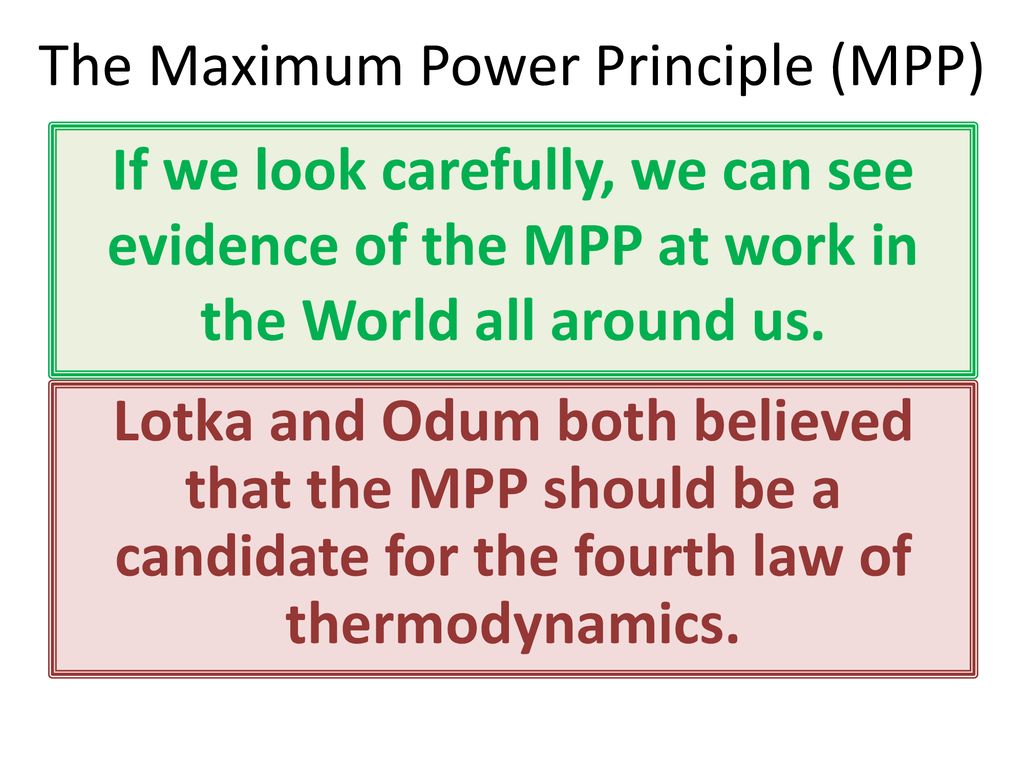
  1. The Maximum Power Principle (MPP) governs our behavior.
  2. We have no free will.

These beliefs lead to the following conclusions:

  1. Our overshoot predicament was inevitable.
  2. There is nothing that can be done to improve the outcome.

A recent comment by Apneaman here is a good example of this belief.

Overpopulation is baked in and so is the remedy (die-back).

I don’t see breeding less as a choice. Survival & reproduction are what life does. Evolution & the MPP are non negotiable.

I don’t think it’s possible to study how life works and not come to the conclusion that we are governed by the MPP and have no free will. I accept these as facts.

I also know that we are the only species with sufficient intelligence to understand the reality of our overshoot predicament, its implications, and to calculate the best course of action.

Most paths are blocked by powerful constraints:

  1. We can’t grow out of our predicament (finite planet)
  2. New technology won’t help (energy depletion)

The best path given the constraints is voluntary rapid population reduction because every overshoot related problem we face improves with fewer people, and because reducing the population will minimize suffering.

So the key question becomes, is it possible to voluntarily reduce the population without violating the MPP?

I’m not an expert on the MPP, and so acknowledge risk of being proven wrong here, but I’m thinking there is some evidence that we could voluntarily reduce the population and not violate the MPP.

It seems there are conditions where max power requires fewer children. For example, families choose to have fewer children when some combination of the following conditions exist:

  • no dependence on children for survival in old age (low risk power will go to zero too soon)
  • not dependent on children for labor (power maximized with fossil energy)
  • success (max power) requires expensive education & income is sufficient to educate few children
  • childcare expenses are high (too many children risks all failing with suboptimal total power)
  • mothers are educated with careers (too many children reduces mother’s power)

This evidence hints that the MPP could be leveraged by awareness of our overshoot predicament to drive down population. One possible scenario follows.

While it’s true that population control is an unpopular topic and is rarely discussed, it’s also true that a political party seeking election has never clearly told the voters that the economy will soon collapse due to resource depletion and environmental damage, and that new born children will have a low probability of survival until we reduce the population.

That party could offer policies suitable for maximizing power in a collapsing economy. For example, a birth lottery where applicants are randomly awarded a permit to have a a child and those children will be heavily supported by the state assuring max power for the lucky family. Childless couples will also maximize their power because they won’t waste resources on children that die. Couples who have a child without a permit will be subject to expensive fines thus reducing their power.

It’s worth a try. If they’re not elected we’ll be no worse off, and we might even be better off since some couples will go childless after listening to the debate.

We need a principled small party that has a low probability of being elected anyway, like for example the Green Party, to step up.

This scenario unfortunately depends on party members breaking through their genetic tendency to deny unpleasant realities and accepting our overshoot predicament and its implications.

Thus we’ve come full circle to a prerequisite for a broader understanding Varki’s MORT, which is why I talk about it so much.

MORT awareness is not happening, and it probably never will happen, because denial of denial is the strongest form of denial.

But I’ll probably keep talking about MORT, hoping that some people join me in spreading the word, because there is no alternative except darkness.

By Jack Alpert: How the World Works

This latest video from Jack Alpert is very good.

Alpert explains why on our current default trajectory most of the global population that lives after 2050 will experience starvation and that by about 2100 our 8 billion will be reduced to about 600 million serfs leading a medieval lifestyle on a sick planet.

Alpert then describes an alternate trajectory via voluntary rapid population reduction that avoids unnecessary suffering and preserves a modern human civilization of 50 million living on a healthy planet.

Alpert remains the only person that I’m aware of with a thermodynamically feasible plan for maintaining a modern human civilization as fossil energy depletes.

His plan does require us to break through our evolved tendency to deny unpleasant realities. A few, such as the readers of this blog, have demonstrated this is possible but scaling to the majority remains in serious doubt.

You can find other work I’ve posted by Jack Alpert here.

Yuval Harari’s Sapiens: A Brief History of Humankind (revisited)

Harari Sapiens

I first reviewed Harari’s book 5 years ago here.

After watching this book sit near the top of popular book lists for several years I thought I should re-read it to see if I missed something. I posted the following refreshed review on Goodreads.

Another fine example of Panglossian cognitive dissonance in the tradition of Pinker’s Enlightenment Now and Ridley’s Rational Optimist.

Harari gets everything right except what matters: human overshoot and the total dependence of everything he admires about humans on rapidly depleting non-renewable resources.

Harari does seem to get the fact we’re trashing other species and the planet but then leaves that thought unfinished and shifts to an abundant future with genetically engineered humans and artificial intelligence.

By pandering to and reinforcing the human tendency to deny unpleasant realities it’s no wonder his book is popular.

Despite being very well read he’s just another clever monkey in denial.

By Nate Hagens: Earth Day 2020 – The State of the Species

Every year Nate Hagens gives a talk on Earth Day. I missed the announcement of his talk a month ago, perhaps because I killed my social media accounts, but better late than never.

Nate’s presentation as usual is excellent, and this year he provides thoughts on how the virus may influence our overshoot predicament.

Here are a few of Nate’s predictions and ideas I thought were noteworthy:

  • The virus gave our economy a heart attack, although it was already sick.
  • The Great Simplification has begun: a GDP decline of 12-20% is likely this year.
  • Global peak oil was, with no uncertainty, October 2018.
  • Diesel availability is at risk because of surplus gasoline (my note: big problem because diesel powers everything we need to survive: tractors, combines, trucks, trains, and ships).
  • The financial system has been nationalized: central banks are now both the lender AND buyer of last resort.
  • Global debt/GDP, which was before the virus already unsustainable at 350%, will now rocket to 450+%, which sets us up for another more acute crisis in the not too distant future.
  • Poverty will increase in all countries.
  • Renewable energy is in trouble.
  • 25+% of higher education institutions will go bankrupt.
  • The experts don’t have answers: they do not understand energy or how our system works.
  • We need humans to have better bullshit filters: if we don’t use science to help us going forward we have no hope.
  • We should nationalize the oil industry and drain America last.

Nate concludes with many constructive and positive ideas on how we might respond to our predicament.

Unfortunately Nate did not mention the most important response needed: rapid population reduction. Yes I know that reality denial and the Maximum Power Principle, which govern our behavior, make voluntary population reduction highly improbable, but so do they make improbable all of Nate’s suggestions.

I’m thinking that since it’s unlikely we’ll do anything except react to crises as they unfold we might as well focus on the one and only action that would improve everything: population reduction. It simplifies the conversation, and makes it (theoretically) effective. Much better than talking about many things that we also probably won’t do, but even if we did wouldn’t address the core issue: overshoot.

Imagine this political platform: “We only need to do one thing, and there’s only one thing we need to do, don’t have children unless you win the lottery, so there can be future generations.”

You can find other excellent work by Nate that I’ve posted in the past here.

On the Avengers and Denial

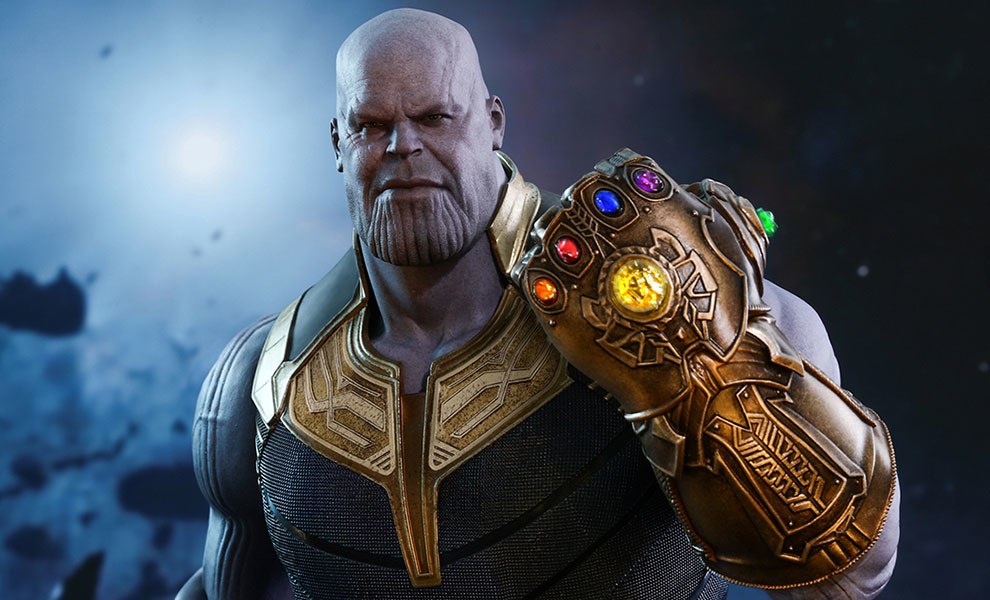
Thanos

I finally got around to watching the top grossing movies of 2018 and 2019, Avengers: Infinity War ($2.1 billion) and Avengers: Endgame ($2.8 billion).

This type of movie, with extreme fantasy super heroes and over the top special effects, is not my cup of tea, but I decided to watch them to get some insight into what our culture is thinking.

The bad guy, Thanos, understands that the universe is in overshoot which will soon cause extreme suffering from wars and starvation, so he acquires a technology to humanely vaporize 50% of life, without causing any suffering, so that the remaining 50% can live in peace and plenty, with new found awareness to constrain their populations going forward.

The good guys, played by the largest and most expensive collection of movie stars ever assembled, think Thanos’ plan is evil, and spend the next 5 hours of multi-million dollar special effects to thwart his plan.

In the end the good guys “win” by vaporizing Thanos and his thousands (millions?) of evil helpers. The outcome for civilization is vague but it seems technology solved the overshoot problem by providing more stuff so everyone had plenty. There was no tying up of loose ends to explain why Thanos’ all powerful technology could not have done the same.

Sadly, two of the heroes are killed in the final fight, but we are promptly and explicitly informed that their spirits live on, and that they know their sacrifices were not in vain.

I skimmed a few fan forums that debate the plot and motives of Thanos. As you might expect there was lots of heat and noise.

Fortunately, one of our most respected and well known scientists, Neil deGrasse Tyson, stepped up with a tweet to comfort the world that brilliant physicists think we’ll be just fine as long as we push on to Mars:

It’s a reasonable assumption that popular movies reflect the current zeitgeist of our culture and I observed the following:

  • The fact that the Avengers explicitly discussed the perils of overshoot suggests that many people must be thinking, at least subconsciously, about our predicament.
  • Which role was assigned to the bad guys, and which to the good guys, demonstrates how exactly wrong our culture is about reality.
  • The movie’s finale demonstrated once again how strongly our species denies death.
  • Neil deGrasse Tyson demonstrates that our best and brightest deny reality as strongly as the common man.


In a similar vein, a top grossing movie of 2014, Kingsman: The Secret Service, is a Tarantino’ish version of James Bond whose bad guy understands that the only way to address climate change is to rapidly reduce the population. The wrong guys win again in this movie.


The 2013 TV show Utopia, was cancelled after only 2 seasons, perhaps because it had a little too much reality.

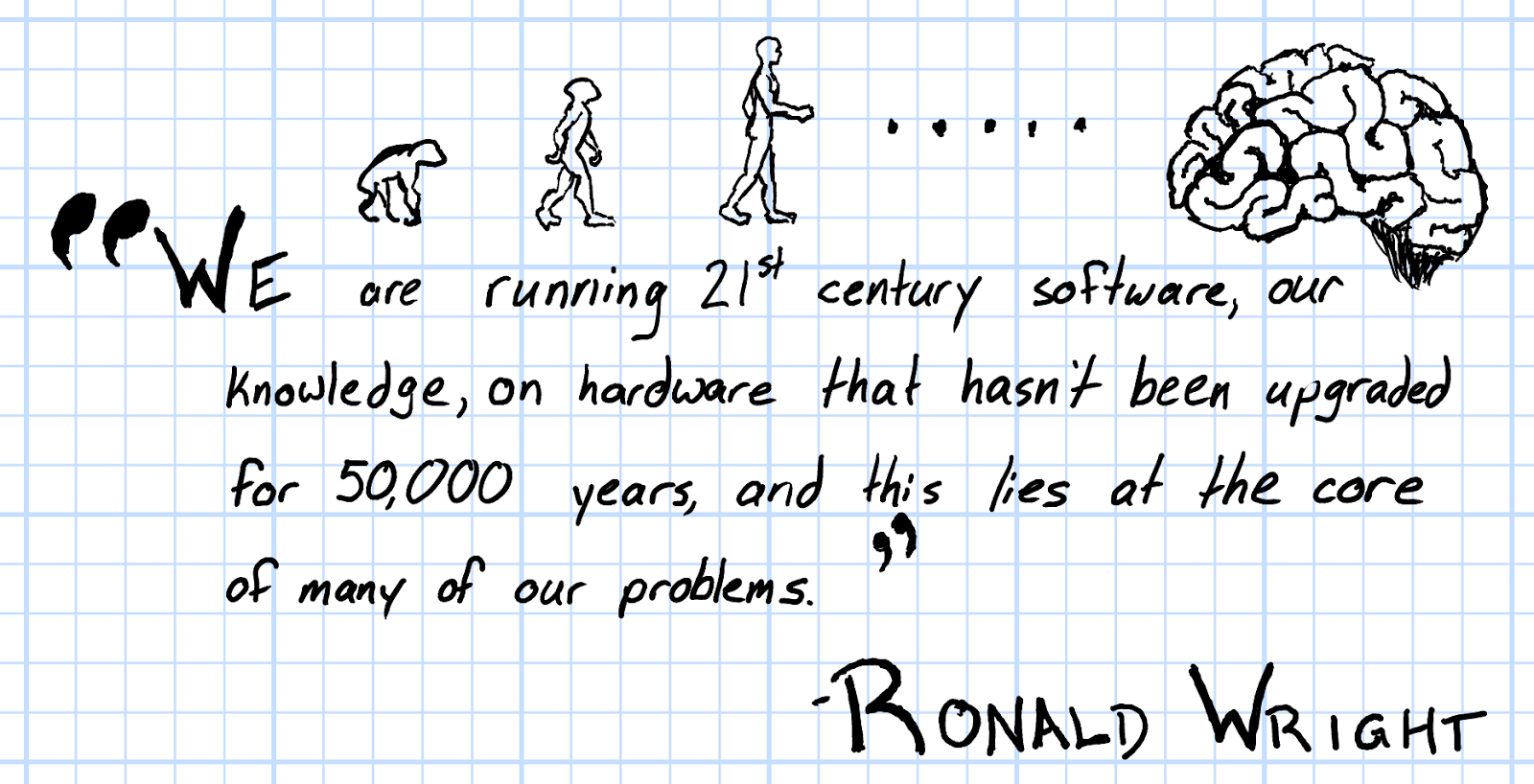
By Ronald Wright: A Short History of Progress Revisited

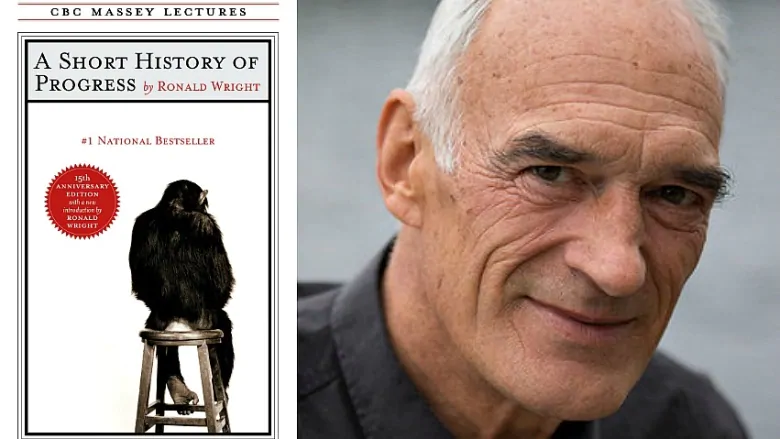
Ronald Wright - A Short History of Progress

Ronald Wright presented his book “A Short History of Progress” in 2004 via the Massey Lectures that were broadcast by CBC Radio.

It’s my all time favorite lecture series and I’ve listened to it at least a dozen times. You can listen to it here.

Last month Wright launched the 15th anniversary edition of his book and was interviewed by CBC Radio which you can listen to here.

“I almost don’t want to say what I really think.”

Wright also wrote an essay last month updating our “progress” in the 15 years since his book was published.

Wright’s understanding of the gravity and historical precedents of our predicament is excellent. What to do about it, not so much, as he is an archeologist and not an engineer or physicist. Nevertheless, Wright is a brilliant writer with a superb command of history.

https://thetyee.ca/Analysis/2019/09/20/Ronald-Wright-Can-We-Dodge-Progress-Trap/

h/t Apneaman

Can We Still Dodge the Progress Trap?

In the 2004 Massey Lectures, A Short History of Progress, I wrote about the fall of past civilizations and what we might learn from them to avoid a similar fate. Societies that failed were seduced and undone by what I called a progress trap: a chain of successes which, upon reaching a certain scale, leads to disaster. The dangers are seldom seen before it’s too late. The jaws of a trap open slowly and invitingly, then snap closed fast.

The first trap was hunting, the main way of life for about two million years in Palaeolithic times. As Stone Age people perfected the art of hunting, they began to kill the game more quickly than it could breed. They lived high for a while, then starved.

Most survivors of that progress trap became farmers — a largely unconscious revolution during which all the staple foods we eat today were developed from wild roots and seeds (yes, all: no new staples have been produced from scratch since prehistoric times). Farming brought dense human populations and centralized control, the defining ingredients of full-blown civilization for the last five thousand years. Yet there were still many traps along the way. In what is now Iraq, the Sumerian civilization (one of the world’s first) withered and died as the irrigation systems it invented turned the fields into salty desert. Some two thousand years later, in the Mediterranean basin, chronic soil erosion steadily undermined the Classical World: first the Greeks, then the Romans at the height of their power. And a few centuries after Rome’s fall, the Classic Maya, one of only two high civilizations to thrive in tropical rainforest (the other being the Khmer), eventually wore out nature’s welcome at the heart of Central America.

In the deep past these setbacks were local. The overall experiment of civilization kept going, often by moving from an exhausted ecology to one with untapped potential. Human numbers were still quite small. At the height of the Roman Empire there are thought to have been only 200 million people on Earth. Compare that with the height of the British Empire a century ago, when there were two billion. And with today, when there are nearly eight. Clearly, things have moved very quickly since the Industrial Revolution took hold around the world. In A Short History of Progress, I suggested that worldwide civilization was our greatest experiment; and I asked whether this might also prove to be the greatest progress trap. That was 15 years ago.

What has happened — and not happened — since then to alarm or reassure us?

First, our numbers have risen by 1.4 billion, nearly a hundred million per year. In other words, we’ve added another China or 40 more Canadas to the world. The growth rate has fallen slightly, but consumption of resources — from fossil fuel to water, from rare earths to good earth — has risen twice as steeply, roughly doubling our impact on nature. This outrunning of population by economic growth has lifted perhaps a billion of the poorest into the outskirts of the working class, mainly in China and India. Yet those in extreme poverty and hunger still number at least a billion.

Meanwhile, the wealthiest billion — to which most North Americans and Europeans and many Asians now belong — devour an ever-growing share of natural capital. The commanding heights of this group, the billionaires’ club, has more than 2,200 members with a combined known worth nearing $10 trillion; this super-elite not only consumes at a rate never seen before but also deploys its wealth to influence government policy, media content, and key elections. Such, in a few words, is the shape of the human pyramid today.

The 2008 crash triggered by banking fraud was staved off by money-printing and record debt. This primed a short-run recovery, which has in turn revived illusions we can borrow from nature and the future indefinitely — illusions fed by corporate think-tanks, irresponsible politicians, and Panglossian cherrypickers such as Steven Pinker. But what about the long run? In 1923 the great economist John Maynard Keynes famously answered, “In the long run we are all dead.” By that he meant, let’s deal with the problems we see now and leave the unforeseeable to those who come later. Fair enough in the 1920s, when there was only one person on Earth for every four today and the future seemed to have room for endless outcomes, good or bad. Nearly a century later, Keynes’s quip sounds more like dire prophecy, as short-term thinking lures us ever deeper into very difficult problems that science can not only observe but foresee. Predicted consequences of global warming — blighted coral reefs, melting glaciers, spreading deserts, and extreme weather — are already upon us.

One of the sad ironies of our time is that we have become very good at studying nature just as it begins to sicken and die under our weight. “Weight” is no mere metaphor: of all land mammals and birds alive today, humans and their livestock make up 96 per cent of the biomass; wildlife has dwindled to four per cent. This has no precedent. Not so far back in history the proportions were the other way round. As recently as 1970, humans were only half and wildlife more than twice their present numbers. These closely linked figures are milestones along our rush towards a trashed and looted planet, stripped of diversity, wildness, and resilience; strewn with waste. Such is the measure of our success.

The archaeologists who dig us up will need to wear hazmat suits. Humankind will leave a telltale layer in the fossil record composed of everything we produce, from mounds of chicken bones, wet-wipes, tires, mattresses and other household waste, to metals, concrete, plastics, industrial chemicals, and the nuclear residue of power plants and weaponry. We are cheating our children, handing them tawdry luxuries and addictive gadgets while we take away what’s left of the wealth, wonder, and possibility of the pristine Earth.

Calculations of humanity’s footprint suggest we have been in “ecological deficit,” taking more than Earth’s biological systems can withstand, for at least 30 years. Topsoil is being lost far faster than nature can replenish it; 30 per cent of arable land has been exhausted since the mid-20th century.

We have financed this monstrous debt by colonizing both past and future, drawing energy, chemical fertilizer, and pesticides from the planet’s fossil carbon, and throwing the consequences onto coming generations of our species and all others. Some of those species have already been bankrupted: they are extinct.

Others will follow. Whether we are triggering an extinction as severe as that which killed the dinosaurs, when three-quarters of all species were wiped out, is still to be seen. By the time the answer is clear, there could be nobody left to know it. The lesson of fallen societies is that civilization is a vulnerable organism, especially when it seems almighty. We are the world’s top predator, and predators crash suddenly when they outgrow their prey. If the resulting chaos unleashes nuclear war, it could bring mass extinction in a heartbeat, with Homo sapiens among the noted dead.

Awareness of our predicament is spreading, if slowly and with mixed results. The warnings of science are growing more urgent and precise, gaining wider attention and sparking grassroots movements such as Extinction Rebellion and the schoolchildren’s strikes inspired by Greta Thunberg. People are beginning to see the world dying before their eyes. The dwindling of birdlife in their gardens and bugs on their windshields backs up the scientists’ alarm that falling insect numbers threaten a “catastrophic collapse” of natural systems.

Effective reform will take political will at world level. Yet the very idea of international cooperation is under attack — just when it is needed most. As the Intergovernmental Panel on Climate Change says in its October 2018 report, keeping global warming below 1.5 C “is possible within the laws of chemistry and physics” but will require “unprecedented changes” before 2030.

Conservation and environmentalism have had some success, a few species have been pulled back from the brink, a few Green politicians have been elected, a few promising fixes (renewable energy, electric cars, etc.) are being developed. Yet at this writing, the momentum of extraction, consumption, and destruction is still gathering speed, driven by the delusion of endless growth, and the willingness of corporations to set financial profit above life itself. Even if fossil energy were replaced at once by clean sources, our other problems — overpopulation, overconsumption, erosion, deforestation, and accumulating waste — would still persist.

The failure of democratic governments to stand up for the greater good over the long run is fuelling disillusionment with democracy itself. There is something badly wrong with an economic regime in which 26 individuals own as much as half the world’s population. Such extreme disparity has never been seen before. Inequality is the main driver behind rising population and consumption. The highest birthrates are in the poorest places, mainly Africa and the Indian subcontinent. At the other end of the seesaw, obscene wealth — the kind which owns mansions around the world and gigantic yachts with helicopter pads — has a colossal footprint, while its undue influence amounts to a dark tyranny.

Back in Classical Greece, Plato suggested that in a just society there should be no more than a 5:1 spread in income between richest and poorest. That was a hard sell then, and still would be. But what might be reasonable today? Where should the balance be struck to help the weakest while still rewarding effort and achievement? Given the seriousness of what we face, this is a conversation we must have. The wealth already wrenched from nature might just be enough to buy us a lasting future if it were shared, managed, and ploughed into solutions.

Of one thing we can be sure: if we fail to act, nature will do so with the rough justice she has always served on those who are too many and who take too much.


Ronald Wright Quote (Studious Fox)

On Boneheads

You Bonehead

Yesterday, the leader of the world’s largest and strongest economy called his central banker a “bonehead” for not lowering interest rates below zero.

Today, the European Central bank (ECB), which according to Trump is not led by a bonehead, reduced interest rates and increased money printing:

https://www.bloomberg.com/news/articles/2019-09-12/ecb-cuts-rates-restarts-qe-to-fight-slowdown-as-draghi-era-ends?srnd=markets-vp

The ECB reduced the deposit rate to minus 0.5% from minus 0.4%, and said it’ll buy debt from Nov. 1 at a pace of 20 billion euros ($22 billion) a month for as long as necessary to hit its inflation goal.

Trump and the ECB correctly understand that lower interest rates are required to stimulate growth, and yet rates are already near zero, which suggests real growth is no longer possible.

A non-bonehead would seek to understand the underlying reason growth is constrained. They might begin by reading today’s essay by Gail Tverberg in which she makes 11 important points:

https://ourfiniteworld.com/2019/09/12/our-energy-and-debt-predicament-in-2019/

[1] Our problem is not just that oil prices that are too low. Prices are too low for practically every type of energy producer, and in many parts of the globe.

[2] The general trend in oil prices has been down since 2008. In fact, a similar trend applies for many other fuels.

[3] The situation of prices being too low for many types of energy producers simultaneously is precisely the problem I found back in December 2008 when I wrote the article Impact of the Credit Crisis on the Energy Industry – Where Are We Now?

[4] In the right circumstances, a rapidly growing supply of cheap energy products can help the world economy grow.

[5] It is striking that the period of rapid energy consumption growth between World War II and 1980 corresponds closely to the long-term rise in US interest rates between the 1940s and 1980 (Figure 6).

[6] Starting about 1980, the US economy began substituting rapidly growing debt for rapidly growing energy supplies. For a while, this substitution seemed to pull the economy forward. Now growth in debt is failing as well.

[7] Since 2001, world economic growth has been pulled forward by China with its growing coal supply and its growing debt. In the future, this stimulus seems likely to disappear.

[8] The world economy needs much more rapidly growing debt if energy prices are to rise to a level that is acceptable to energy producers.

[9] The world economy seems to be running out of truly productive uses for debt. There are investments available, but the rate of return is very low. The lack of investments with adequate return is a significant part of what is preventing the economy from being able to support higher interest rates.

[10] Since 1981, regulators have been able to prop up the economy by reducing interest rates whenever economic growth was faltering. Now we have pretty much run out of this built-in source stimulus.

[11] The total return of the economy seems to be too low now. This seems to be why we have problems of many types, ranging from (a) low interest rates to (b) low profitability for energy producers to (c) too much wage disparity.

Having now learned that economic growth is constrained by the depletion of low cost non-renewable fossil energy, a non-bonehead would then focus on renewable energy to determine what is or is not physically possible, and the implications of trying to substitute fossil with solar and wind energy.

They might begin with this week’s essay by Tim Watkins and would quickly learn that the environmental costs of “green” energy are very high, that “renewable” energy is totally dependent on non-renewable fossil energy, and in any case only produces electricity which does not address the other 80% of fossil energy we depend on.

http://consciousnessofsheep.co.uk/2019/09/09/facing-our-inconvenient-truths/

Having now attained an understanding that there is no possible way to resume economic growth, a non-bonehead would then ask what’s the consequence of attempting to force growth with printed money and negative interest rates? A quick review of history would show there is no free lunch and that monetary shenanigans ultimately destroy currencies which leads to wars and revolutions.

Finally, a non-bonehead would integrate all of the above with an understanding of the ongoing collapse of our planetary ecosystem, including the loss of a climate compatible with civilization. They might begin with this week’s interview with Phillise Todd, who has a good grasp of the big picture, despite her occasional and understandable (as explained by Varki’s MORT theory) lapses into denial.


Understanding now the intractable nature of our predicament, and comparing reality with what our culture believes, a non-bonehead would conclude they are a genetic mutant and that most of our species are boneheads.

When challenged with the criticism that all they do is discuss problems without offering solutions, a non-bonehead would respond with a clear plan:

What would a wise society do?

And the boneheads would ignore it.