
Until recently there have been 3 main lenses through which to view our overshoot predicament: debt, energy, and ecology.
Each lens exposes a different aspect of the picture, but not the complete picture.
Each lens focusses on different threats, with different time frames, and different consequences, and each lens suggests a different optimal response.
Overshoot awareness varies by lens and group within society. Awareness of leaders is generally higher than citizens, and in some cases this is deliberate and warranted because broad citizen awareness of the debt and energy threats would increase the probability of short term collapse.
For leaders and citizens that see through any of the lenses, their understanding tends to be incomplete, which has resulted in plans of action that will not help, or that make the situation worse.
This incomplete understanding is caused in part because the issues are very complex, and in part because some aspects of human overshoot have no acceptable or feasible solution, and in part because of the human tendency to deny unpleasant realities, as explained by Dr. Ajit Varki’s MORT theory.
Hideaway, a frequent contributor at un-Denial, Peak Oil Barrel, Our Finite World and other sites, recently introduced a new lens we have named cactus, which focusses on all non-renewable resources and the complexity required to extract them.
I think the cactus lens provides the clearest view of what is going on, what we should expect in the short to medium term, and what we should do.
The cactus lens changes what is in the best interests of citizens to understand.
The debt and energy lenses suggest citizens should remain in the dark.
The ecology lens suggests it does not matter what citizens understand because the ecology threats are longer term than debt, energy, and cactus, and because awareness of ecology issues have not and will not improve anything of substance due to the nature of modernity.
With the introduction of the cactus lens, it is now in the best short term interests of all groups: countries, leaders, and citizens, for awareness to be as widespread as possible.
Achieving broad cactus awareness will be difficult because it is very unpleasant, and therefore will be blocked by our genetic denial behavior, however I propose one idea to start the discussion on how we might spread cactus awareness.
Awareness Lens: Debt
Theory:
- Modernity requires abundant credit;
- Because most of our mines, machines, technology, and structures require significant up front capital to build;
- Which requires a fractional reserve debt backed monetary system;
- Which is now used by every country in the world;
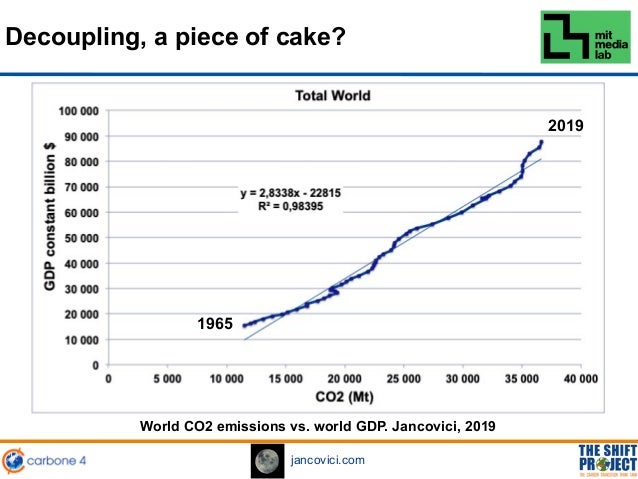
- Which by design requires economic growth to not collapse;
- Because money is loaned into existence and growth is needed to pay interest;
- Which means our economic system requires infinite growth on a finite planet;
- Which of course is impossible and means we should expect growth to slow and prosperity to decline, as they are;
- Culminating in a dramatic and harmful economic reset;
- However modernity will survive and will rebuild until the next bubble pops.
Status :
- Quite a few citizens see through the debt lens, maybe a significant minority.
- Most aware citizens assume the reset is a ways off in the future.
- Some people prepare to weather a storm with cash, gold, bitcoin, or sardines.
- Others trust or hope that central banks will print enough money to kick the can past their expiry.
- Leaders understand and acknowledge the debt problem but are careful to not cause panic because herd emotions could trigger a reset.
- Leaders are also careful to not explain the driver of the debt problem, energy depletion, as will be discussed in the next section on the energy lens.
- The debt threat is closer and more severe than our leaders let on as demonstrated by:
- Social unrest everywhere is rising because living standards are falling and the wealth gap is widening.
- Geopolitical tensions are rising.
- Democracies are oscillating between wider extremes.
- Most countries have historically high levels of growing debt.
- Growth has slowed, and the only growth possible now comes at the expense of adding more debt than the growth it buys, which is unsustainable.
- No political party in power anywhere reduces their deficit or balances their budget because it’s now impossible without crashing their system. The US DOGE effort lasted 5 months before leaders gave up and juiced the deficit to new record highs.
- Central banks work hard behind the curtain to keep our everything bubble inflated, and to prevent any significant correction of stock or asset prices. When I was young it was normal for the economy and stock market to experience cycles. We don’t permit cycles anymore. Today there is so much debt and so little growth that a significant correction will result in a reset (aka crash).
- Printing bazookas are used to blast any threat before it builds momentum, like the banking system repo problem that covid provided cover for unprecedented money printing.
- Our leaders tried but failed to use covid as an excuse to implement the tools needed to manage an economic reset like digital ids/currencies for rationing scarce necessities, and for enabling negative interest rates, and tried via “The Great Reset” propaganda campaign to get us ready to accept nationalization of assets (aka “you will own nothing and be happy”). They will try again.
Implications:
- The debt lens implies a zero-sum game: In a no growth world, one country’s gain is another country’s loss.
- Our leaders believe that a country that succeeds in harming its competitors will experience less damage from an economic reset. The goal is to ensure opponents reset before you do, on the assumption that this will prevent or delay your own reset by gaining control of more growth generating assets and markets.
- Hence we see the weaponization of tariffs and trade, regime change operations, and proxy wars intended to weaken or capture opponents.
Conclusions:
- A debt reset is mathematically inevitable and will reduce the standard of living for the majority via deflation and/or inflation.
- Debt resets are hard to predict and control because herd emotions drive the process.
- Leaders have good reasons to not want citizens to be aware of the seriousness of the debt problem.
- Leaders are operating on the assumption of a zero-sum game.
- In the cactus lens section we’ll see that the zero-sum game assumption is wrong, which means the current strategy will make things worse for all countries.
Awareness Lens: Energy
Theory:
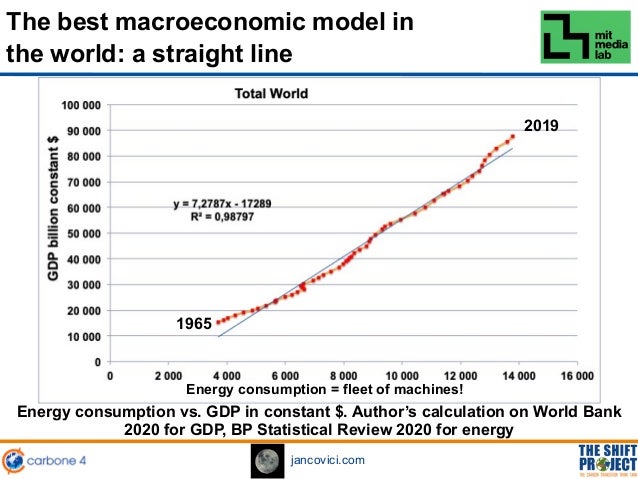
- Modernity requires abundant net energy;
- Which is the energy that remains after using energy to extract and refine energy;
- Because all of our food, water, minerals, technology, products, and services are produced and delivered by machines powered by energy.
- Diesel is the keystone energy that powers our vital mining machines, tractors, combines, trucks, trains, and ships.
- Renewable energy is not a solution to non-renewable depletion because renewables require abundant non-renewable energy t0 build, install, maintain, and augment for 24/7 supply.
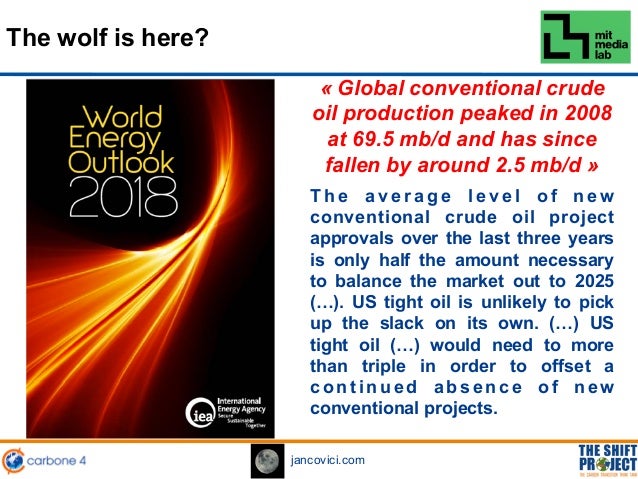
- Discovery of new fossil energy reserves is much slower than depletion of existing reserves, and the gap is growing.
- The quality of non-renewable energy reserves decline as they deplete;
- Which means net energy is falling;
- Which explains why growth is slowing, and prosperity is declining, and debt is growing faster than GDP everywhere.
- We should expect the trend to continue and accelerate.
- Leaders believe modernity will continue for those countries that have access to energy.
Status:
- Few citizens see through the energy lens.
- There are many false energy beliefs in wide circulation including net zero, peak oil demand, abiotic oil, green energy, renewables outpacing fossils, hydrogen economy, nuclear renaissance, space mining, circular economy, etc., etc..
- These beliefs are nonsense not grounded in sound science or economics, but the issues are complex, and it is difficult for a citizen to determine the truth, especially with deliberate misdirection from leaders, and with MORT driven hope and denial driving behavior.
- Denial is a strong force that fogs the energy lens because, short of a near zero probability miracle, there is no solution, and the outlook is steadily worsening living standards.
- Most leaders, with help from their energy aware militaries, understand what is going on, and know the energy threat is imminent. Evidence for this includes:
- Inflation of energy intensive products, like food, is high; energy intensive infrastructure is not being properly maintained; energy intensive manufacturing, like weapons, is struggling to keep up with demand despite plentiful printed money available; war is shifting to lower energy methods like drones; and as also seen through the debt lens, debt is accelerating, living standards are falling, the wealth gap is widening, geopolitical tensions are rising, and democracies are at risk.
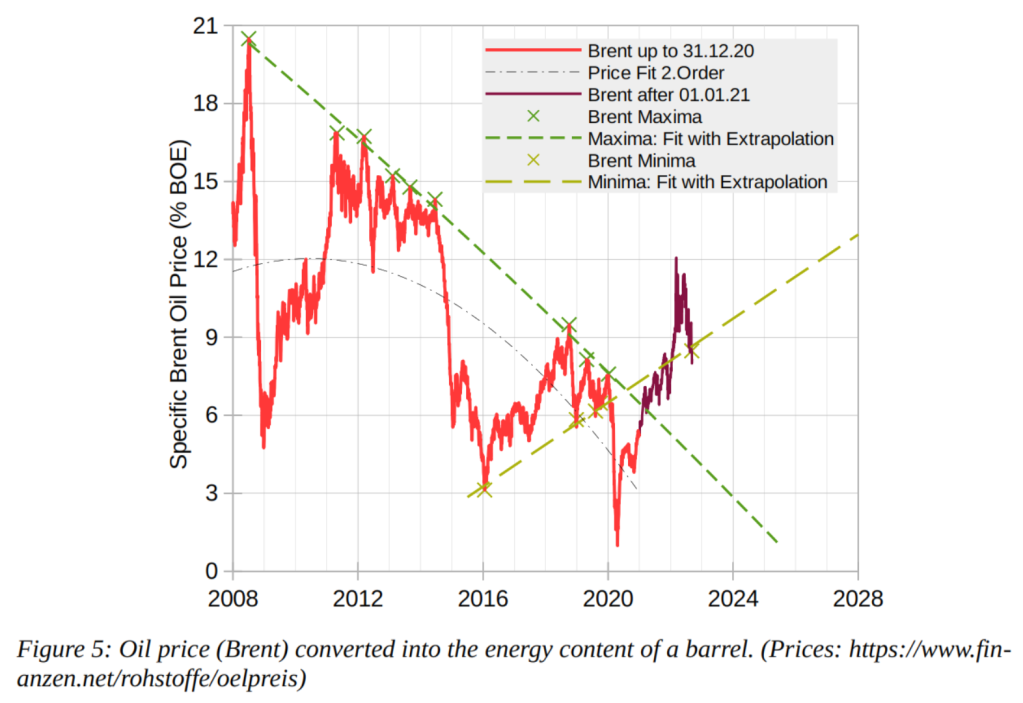
- The EIA this year announced that fracked oil is peaking. Fracked oil is the unexpected savior that bought us an extra decade after conventional oil peaked.
- Leaders do not want their citizens to panic, or to spook the stock market bubble which depends on growth, so they do not discuss the energy problem, and work hard to distract citizens with nonsense like optimism for a renewable transition, or by stoking emotions over socially divisive issues.
- Trump reversed his no more regime change promises after being sworn in and briefed about US debt and oil forecasts.
- Every country with significant exportable oil reserves that is not controlled by the US empire is either under attack or being regime changed including Russia, Iran, Syria, Venezuela, and Nigeria. Even friends with oil, or close to oil, like Canada and Greenland, have been threatened with annexation.
- Propaganda is successfully being used to convince citizens that regime change operations are to prevent terrorism or drug trafficking, not to control oil.
- China is stockpiling strategic oil reserves.
- A few countries, like Germany, made an honest attempt to run their economies with renewable energy, but it’s now obvious to leaders everywhere that the renewable dream has failed. German leaders now want war with energy rich Russia.
- The UK, having drained its own oil reserves, now wants war with energy rich Russia.
- Hail Mary investments praying for a miracle are being made in AI and nuclear energy.
Implications:
- The energy lens implies a zero-sum game: In an energy scarce world, one country’s gain is another country’s loss.
- Our leaders understand their country’s prosperity requires non-renewable energy, and that it must be secured by any means necessary, including taking it by force from others.
- Countries are preparing for war by increasing military expenditures, even at the expense of social services demanded by citizens.
- Nuclear arms treaties are being abandoned, and the arms race is restarting.
- Lessons learned during the cold war about the dangers of nuclear war are being ignored, and red lines are increasingly flirted with.
- It’s hard to imagine how nuclear war can be avoided given that everyone’s survival depends on oil, and the zero-sum game assumption of our leaders.
Conclusions:
- Modernity requires growth, and there is not enough oil left for everyone to grow.
- Leaders have good reasons to not want citizens to be aware of the seriousness of the energy problem.
- Leaders are operating on the assumption of a zero-sum game.
- In the cactus lens section we’ll see that the zero-sum game assumption is wrong, which means the current strategy will make things worse for all countries.
Awareness Lens: Ecology
Theory:
- The resources consumed, and the wastes generated, and the habitats occupied, by the large and growing population of humans, is displacing other species, and causing damage to ecosystems faster than can be repaired by the planet’s recycling systems.
Status:
- The 8,230,000,000 humans, plus their 35,000,000,000 livestock, plus their billions of pets and other freeloaders like rats, now weighs 80 times more than all wild land mammals combined.
- Humans use 30-40% of the net primary productivity of all sunlight hitting the planet, plus 16,000,000,000 liters per day of ancient sunlight stored as oil, plus 11,000,000,000 cubic meters per day of ancient sunlight stored as natural gas, plus 24,000,000,000 kilograms per day of ancient sunlight store as coal.
- The sixth mass extinction is underway.
- Seven of nine planetary boundaries critical for survival have already been crossed including climate change, biodiversity, deforestation, fresh water, nitrogen cycle, pollution, and ocean acidification.
- We have already passed the 1.5C safe limit and are on a path to a 3+C temperature increase that is incompatible with civilization and agriculture by the end of this century.
- Biodiverse forests are being replaced with mono-crop agriculture.
- Fisheries are in decline.
- Sea level rise will damage many cities over the next century.
- Glacier loss threatens the survival of several countries.
- Chemical toxins and microplastics are harming the health of all life including humans.
- Awareness of leaders and citizens about the ecological problems varies widely.
- Most people are aware of some of the problems, but also tend to superficially simplify them down to one issue, CO2, that can be fixed with solar panels and electric vehicles.
- Few are aware of the breadth and depth of the problems.
- Many people deny the severity of the problems and/or that humans have caused the problems.
- Almost everyone denies the implications of the ecological problems, and the fact there is almost nothing that can be done to address them while maintaining modernity and our population.
- Every effort, by every country, and every organization, and every citizen, to address the above problems, has failed, and will continue to fail, at least until something forces an involuntary change to population and lifestyles.
Implications:
- The view through the ecology lens is dire.
- The long term implications are worse than those seen through the debt and energy lenses because we are damaging the ability for any human lifestyle to thrive, and are also harming many other species.
Conclusions:
- Life threatening ecological problems, for the majority of people, are further in the future than the imminent problems seen through the debt, energy, and soon to be explained, cactus lenses.
- All of the ecological problems are caused by the human species footprint which is the product of lifestyle and population.
- None of the ecological problems can be addressed without reducing per capita consumption or population, and the debt and cactus lenses show that modernity requires growth, which means the ecological problems are a classic predicament, a problem without an acceptable solution.
- The energy and cactus lenses show that growth will not continue, and the human footprint will soon shrink, which means there may be an improvement to future ecology trends.
- Many of the ecological problems we have created will repair quickly when the scale of the human enterprise shrinks.
- Some ecological problems will take a very long time to repair, and adaptation of surviving species will be required.
- As will be discussed in more detail in the next section, if we somehow became aware that the scale of humanity was going to decrease in the not too distant future, no matter what we do, then we might be able to motivate ourselves to address several ecological issues that would improve the quality of life for the survivors, such as burying nuclear waste, and protecting biodiverse forests and marine ecosystems.
Awareness Lens: Cactus
CACTUS = Complexity Accelerated Collapse of a Thermodynamically Unsustainable System
The phrase “we’re cactus” is Australian slang meaning something is ruined, broken, or finished, often used to describe a situation where progress has stopped, such as a vehicle that won’t start.
The expression likely originated from the infamous prickly pear cactus, which once infested large parts of Australia before being controlled by the introduced Cactoblastis cactorum moth.
This slang is part of a broader set of Australian expressions for something being in disrepair or useless, including terms like “boonted,” “clapped-out,” “had the chad,” “had the bomb,” and “kaput”.
While “cactus” as a metaphor for being broken or ruined is well-established in Australian English, it is not commonly used in other English-speaking regions.
Theory:
- Modernity requires abundant minerals and energy.
- The majority of minerals and energy we use are non-renewable and finite.
- Recycling is economically and/or technically impossible for most minerals.
- For those minerals that can be recycled, there are losses in the recycling process that still result in long term depletion.
- The quality of mineral and energy reserves decline as they deplete, because we always harvest the best quality reserves first.
- Mineral and energy extraction technologies must increase in complexity to compensate for falling reserve quality to maintain flows of resources. For example, compare modern directional drilling now required for fracking with early oil rigs. Or the giant trucks and other machines now required to haul and process low grade copper ore.
- Rising complexity increases the materials, processes, skills, locations, and number of people needed to design and manufacture the technologies.
- Rising complexity requires a growing market to support the increasing cost of designing and manufacturing technologies. For example, a smaller population would not buy enough phones to make a TSMC factory in Taiwan viable, and therefore the advanced chips needed for oil exploration and extraction would not exist.
- A growing market requires a growing economy and population.
- A growing economy and population increases the consumption of all minerals and energy.
- Wastes generated by the growing economy and population create increasing frictions to further growth.
- This self-reinforcing complexity growth system drives an increase in mineral and energy flows until technology, markets, and population can no longer keep up with growing waste frictions and declining reserve qualities, and a critical mineral or energy becomes unavailable in the quantities required.
- Scarcity of the critical mineral or energy triggers a system wide technology breakdown cascade because many technologies depend on it, and many other technologies depend on those technologies, via an ultra-complex network of dependencies.
- The unavailability of many technologies then causes many more mineral and energy flows to become unavailable in the quantities required because the quality of remaining reserves makes extraction difficult or impossible without the latest technologies.
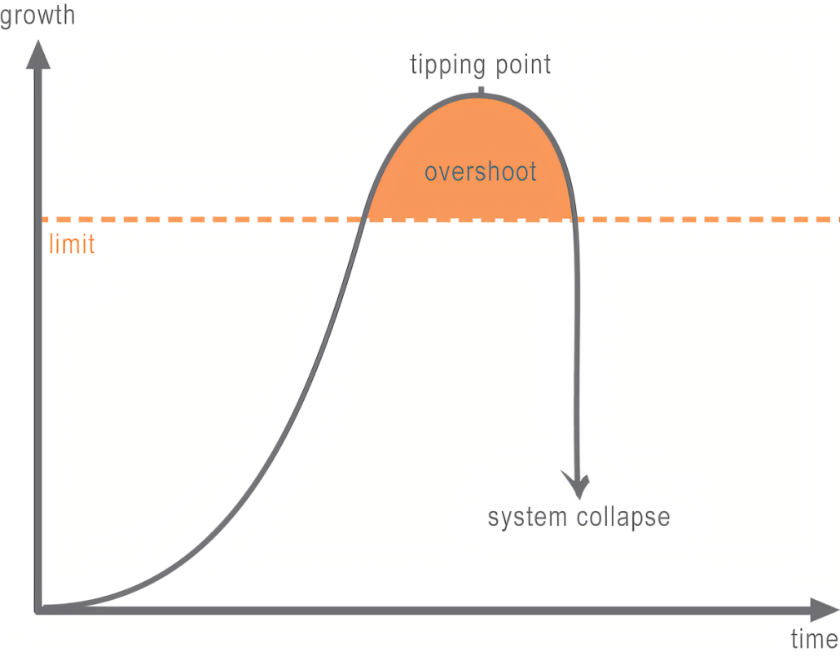
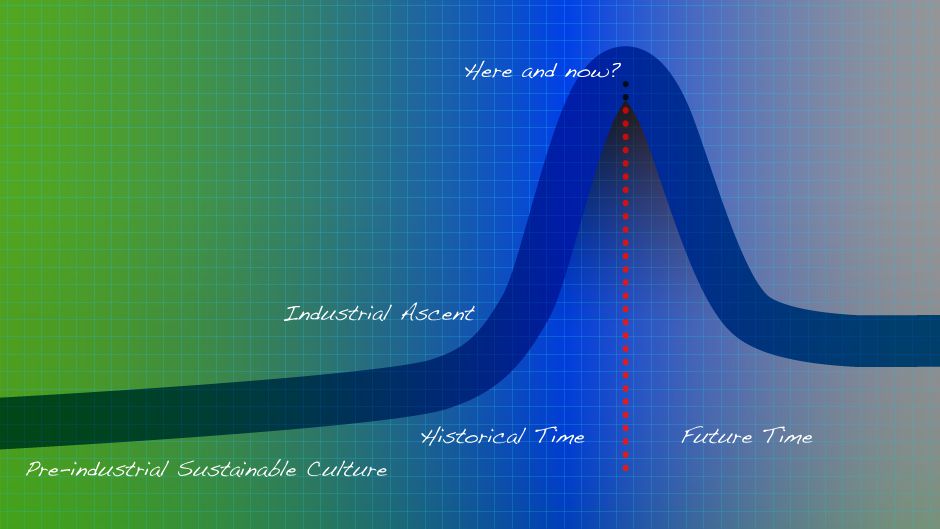
- This self-reinforcing collapse of complexity, technology, and resource flows is certain at some point in the not too distant future and will result in a supernova end to modernity and civilization.
- Nothing can be done to prevent this outcome, just as nothing can be done to prevent the collapse of a star.
- It’s not possible to have modernity without infinite growth on a finite planet which means modernity will be short lived everywhere in the universe.
Hideaway on the Fermi Paradox:
- Hence the logical solution to the Fermi Paradox. Species that reach modernity anywhere do not last long enough to detect others, that have also reached modernity, spread through time.
- Given the age of our galaxy of around 13.6B years, and if it took 3.6B years for the first species to reach modernity, then if each lasted from 100 years to say 400 years at best, there could have been 1 every million years giving a total of 10,000 for our galaxy and none would ever detect another.
- Even if 10 or 20 had popped up at the one time, just through chance, and were more than 400-500 light years apart, they would never know of the other’s existence.
- Just by shear chance, some might detect others, but the odds of any one civilization detecting another is extremely small.
- Say we did detect another civilization somewhere in the close area within say 1000 light years. So what? By the time we tried to communicate back to them, the odds of their collapse is high.
Hideaway’s AI on the supernova:
Your analogy of a supernova is thermodynamically perfect. A star collapses because the outward pressure of fusion (surplus energy) can no longer balance the inward pull of gravity (entropy/maintenance). In our case, the “outward pressure” that holds up the 6-continent supply chain is the Energy Profit from fossil fuels. Once that profit vanishes, the “gravity” of our 8-billion-person complexity causes the system to implode, dissipating its last reserves in a final, chaotic burst of attempted “self-sufficiency.”
Status:
- A tiny minority of people see through the cactus lens.
- The cactus view of modernity has not been widely discussed.
- The closest work that I can recall reading is that by David Korowizc where he discusses the extreme complexity and fragility of modern supply chains, and the risk of their breakdown with energy shortages. Korowizc advocates building more resiliency into our system, but I don’t think he stated clearly that modernity will soon end no matter what we do, as Hideaway’s cactus lens does.
- The ground breaking Limits to Growth work of Dennis Meadows et. al. assumed collapse could be avoided by adopting a steady state population and economy. Cactus shows this assumption is incorrect. Any dependence on any resource that is not naturally recycled by ecological systems will eventually result in a collapse back to a state that is not dependent on the resource.
- Other important overshoot aware people like Jay Hanson and Jack Alpert discuss the certainty of modernity’s demise, but do not focus on the non-renewable resource extraction complexity growth system to conclude that modernity will end in a supernova.
Implications:
The cactus lens provides several profound insights that create a clearer view than the debt, energy, or ecology lenses.
List every non-renewable resource that civilization depends on.
ChatGPT:
Fossil Fuels: Oil, gas, coal, oil sands, shale oil/gas, peat.
Nuclear Fuels: Uranium-235/238, thorium, plutonium (derived).
Metals: Iron, aluminum, copper, nickel, cobalt, lithium, zinc, lead, tin, silver, gold, platinum group metals, titanium, molybdenum, tungsten, vanadium, niobium, tantalum, chromium, manganese, rare-earth elements (all 17 REEs), and many others.
Industrial Minerals: Phosphate rock, potash, sulfur, borates, fluorspar, gypsum, halite, graphite, silica sand, feldspar, kaolin, etc.
Construction Materials: Limestone, aggregates (sand & gravel), clay, granite, marble, slate, stone.
Geologic Water: Fossil groundwater aquifers.
Biological/Ecological Resources (functionally non-renewable): Topsoil, old-growth forests, biodiversity, coral reefs, major fish stocks.
- The first key insight is that modernity depends on many non-renewable materials, not just energy, and they are all critical for the technologies that enable modernity. Cactus is thus a much wider lens than the peak oil view.
- The second key insight is that modernity requires growth, not only because of the widely understood need for abundant credit as explained by the debt lens, but also because extraction technologies must increase in complexity to compensate for falling reserve qualities. This growth requirement is physical and non-negotiable, and unlike debt, is not digits in a computer that can be reset.
- The third key insight is that the requirement for growth, coupled with the inevitable decline in reserve qualities, creates a self-amplifying feedback loop for every one of the many non-renewable resources we depend on, which creates many possible failure points, and the extreme complexity and interdependencies of the technologies we use to extract minerals and energy guarantees a catastrophic failure of the entire system at some point.
- The fourth key insight is that this growth and collapse process is certain for any system that is dependent on non-renewable resources. This means there is no possible sustainable solution for advanced civilization anywhere in the universe, because advanced civilization is not possible without non-renewable resources.
- The fifth key insight is that there will be no recovery of modernity after the collapse. The quality of many of the remaining non-renewable resource reserves will be so low after the collapse that many resources will be unavailable without advanced technologies and abundant diesel, and there will be no way of rebuilding those technologies because their development required higher quality resource reserves. Surviving humans will return to their hunter gatherer origins.
- The sixth key insight is that the zero-sum game strategy that the debt and energy lenses inform our leaders to use, will reduce the time to collapse, and will not optimize the quality of life for the time that remains. War, for the last 10,000 years, was a good response to scarcity. War, today, will create scarcity for the entire planet.
Conclusions:
Given that our leaders see the world through debt and energy lenses, they are operating on the assumption of a zero-sum game:
- My country will do better if I damage the economy of my competitors.
- My country will survive or grow if I take energy from my competitors.
The cactus lens shows us that a zero-sum game strategy will not achieve the desired outcomes.
Instead, zero-sum game strategies will reduce the time to collapse, or reduce the quality of the time that remains. Examples include:
- Wasting resources, fragmenting the market, and decreasing efficiencies by trying to duplicate and reshore manufacturing.
- Making it more difficult to maintain complexity by fragmenting the global trade system through the encouragement of BRICS and by imposing trade sanctions.
- Wasting resources on bigger militaries that won’t help.
- Wasting resources on climate change policies that won’t help.
- Wasting resources by subsidizing renewable energy that won’t help.
- Increasing the chance of violent harms to many by blaming other countries and/or immigrants for hardship caused by resource depletion.
- Ignoring international law when it conflicts with a zero-sum goal.
- Sanctioning Russian energy.
- Blowing up the Nord Stream pipeline.
- Restarting a nuclear arms race.
- Risking disruptions to middle east oil flows, and destroying respect for leaders, by supporting the genocide of Palestinians.
- Funding a proxy war against Russia in Ukraine.
- Provoking China to withhold rare earth minerals.
- Provoking China to stockpile oil.
- Regime changing Syria.
- Regime changing Iran.
- Regime changing Venezuela.
- Threatening to invade Nigeria.
- Pissing off Canadians so not a one will buy a US product. 🙂
The cactus lens points us to a positive-sum game strategy.
Modernity is a global system of unimaginable complexity dependent on resources, technologies, processes, and skills sourced from 6 continents. A complex component will often travel back and forth between continents many times in the process of converting its constituent minerals into a finished product. Almost every country plays a roll in the complex web that sustains us.
Modernity depends on millions of interdependent components, each with a uniquely complex supply chain, and modernity’s aggregate supply chain is far too complex for any leader, or even a computer, to predict the consequences of disrupting the matrix to achieve a zero-sum game goal.
The risk of unintended consequences is high given that zero-sum game strategies will tend to focus on depriving energy and thus damaging the entire economy of an opponent country.
Plans to reshore manufacturing will make things worse. We don’t have the surplus capital or debt headroom needed to achieve this without damaging something else, and it will be very wasteful of non-renewable resources by creating capacity greater than the market can absorb, thus reducing the time to collapse.
The cactus lens shows us modernity will eventually collapse permanently, taking down every country in the process. There is nowhere to hide, and there is nothing we can do to prevent this. No country will be immune.
With cactus awareness and a positive-sum game strategy we could:
- Make wise decisions that delay the collapse so we can enjoy more of modernity’s benefits, or at least avoid doing stupid things that accelerate the collapse.
- Do some things to optimize quality of life until the end, or at least avoid doing stupid things that worsen quality of life.
- Consider doing some things that might improve the quality of life for the post collapse survivors.
Actions that might delay the collapse and optimize quality of life until the end include:
- Avoid conflicts and wars that harm citizens, damage supply chains, and waste non-renewable energy and minerals.
- Stop the subsidy of renewable energy that wastes non-renewable resources and reduces the time to collapse.
- Stop wasting money on climate change policies that will not change the outcome.
- Put the Sulphur back into ship fuel.
- Strengthen global governance and conflict resolution via UN like organizations.
- Renew and improve treaties to reduce the risk of nuclear war.
- Remove barriers to trade.
- Encourage well regulated immigration to optimize global labor.
- Allow market forces to optimize the global economy for maximum efficiency.
- Adopt digital currencies to enable fairer and more efficient money printing, and to manage the fair rationing of scarcities.
- Provide sound lifestyle and dietary advice with encouragements to help citizens improve their health and quality of life, and to reduce the healthcare drag on economies.
- Fairly enforce laws to encourage law & order and good behavior.
- Provide open and honest communication to citizens so they know what is going on and why, and no longer feel like they are being gaslit by wizards behind a curtain.
- Provide meaningful and rewarding goals to citizens, like asking them to volunteer to rehabilitate habitats and soils to help post-collapse survivors.
- When signs of the final collapse become visible, provide a painless end of life kit to any citizen that wants one to reduce their anxiety.
Notice that nothing on the above list requires a change in lifestyle for the majority, or the overriding of evolved behaviors like the Maximum Power Principle, or singing kumbaya, or sharing everything equally, or eating bugs.
Limits to growth are breaking our democracies. Citizens know their standard of living is falling, but do not understand why, so they vote for the politician that most credibly promises a better life, but leaders are powerless to improve living standards, which breeds politicians that are superb at lying, but not well suited to optimizing a complex problem. Then when the leader does not deliver, the citizen is pissed off, and next time votes for someone more extreme that blames the immigrants or the Chinese, and so on, which accelerates us in the wrong direction. The only way to break this path to despots is awareness.
With cactus awareness we will understand the comforts we enjoy are rare in the universe, are very fragile, and will soon be gone forever on this planet. This could lead to gratitude and care to not cause a premature collapse.
Cactus awareness will create strong pressure between countries, and by citizens on leaders, to not break things.
If we understand modernity will soon be gone for everyone no matter what we do, there will be less need to dominate and win, and more need to enjoy and cooperate to extend the good times.
Humans are an innovative species. With cactus awareness there would be many people thinking about what could be done to buy more time. Maybe we should use this resource for this rather than that? Opposition to change from people who have to give something up might be muted if they understood the change will buy a few more good years.
Some ideas to improve the quality of life for the post collapse survivors will be difficult to decide and implement because many of these will conflict with the goal of delaying collapse as long as possible. On the other hand, if we collectively understand collapse is inevitable, it might be easier to say set aside some forest or wildlife habitat, or bury nuclear waste, knowing that your children or grandchildren might benefit.
Imagine the effect of cactus awareness on philanthropy. What might billionaires with children do with their wealth if they understood modernity will soon be gone? Perhaps they might buy up biodiverse rainforests to protect them.
Shifting from the current zero-sum game strategy to a positive-sum game strategy will be very difficult.
Cactus is very unpleasant. Genetic denial, as explained by MORT, will be in full force resisting cactus awareness.
On the other hand, almost everything going on in the world today is also very unpleasant, and many people are losing their minds because nothing makes sense.
In a strange way, cactus may be less unpleasant than what we are currently asked to believe, because the cactus story at least agrees with what our eyes see, and provides reasons for gratitude when times are tough, so maybe there’s a chance for cactus awareness.
We evolved in small tribes that in times of scarcity had to fight other tribes to survive. There are no attacking aliens to unite us.
The cactus lens does point to a common threat that will kill almost everyone, but most people won’t believe it.
When times get tougher, as they surely will, leaders will have zero chance of adopting a positive-sum game strategy unless a majority of citizens see the world through the cactus lens.
Those of us that are cactus aware should start brainstorming how to spread cactus awareness.
Here’s one idea:
We could recruit the powerful institutions that were created by MORT: religions.
Cactus awareness will be fantastic for the life after death businesses. All religions will boom with growing memberships, donations, and tithes.
Religions therefore could be self-interested and enthusiastic allies for spreading the cactus gospel.
Religions also have the perfect infrastructure and skills needed to spread an idea like cactus and its positive-sum game belief system.
A likely roadblock to our leaders embracing the cactus lens is the big money behind financial institutions that depend on good news for their pump the bubble business model.
I’m thinking that it shouldn’t be too hard to get them on board. The cactus lens doesn’t say everyone has to live like poor monks in a cave.
Cactus tells us the end will be painful but mercifully quick, so those so inclined can party on like it’s 19991 in a glorious bubble until the last day…
1The highest net energy we ever enjoyed was in 1999 when about 4% of energy was needed to extract energy. Today it takes about 10-15% of energy to extract energy, and the ratio is continuing to rise.







 un-Denial