Un-denial regulars Charles & Chris (aka paqnation) collaborated on this essay exploring the psyche of doomers.
They discuss in detail characteristics common to the doomers they know. I have not observed the same common characteristics in the overshoot aware people I follow, and I elaborate a bit on this at the end of the essay.
It will be interesting to hear from others in the comments what they observe about doomers.
Introduction
Today, we are exploring a topic, which is rarely addressed in the doomosphere. We are not going to describe material limits and extraction trends, evaluate which DEFCON level is currently on, uncover the early and now increasingly advanced signs of collapse, speculate on the origin, mechanism or inevitability of our collective demise, attempt to predict the exact date of societal breakdown, lament over denial, wonder if Good(TM) and nature will prevail, or debate in which exquisite torments the human species will go extinct. But rather, for once, we focus on the personal: we observe the observer.
This is a topic Charles had wanted to explore for quite a long time but didn’t know how to. Following recent comments at un-Denial, Chris privately inquired if he was detecting some bargaining or desperation. This led to an interesting observation: we both recognize how precarious this fleeting moment is in human experience. However, we arrived at different accepting states: Charles tenaciously follows his heart, at his small scale, with faith, whatever the outcome, whereas Chris lives with kindness, relieved to witness the demise of this destructive species. So what would be the common characteristics of doomers? How does this impact their personal life, in particular in their social interactions? And what are some of the strategies that they can deploy to balance their nature?
Disclaimer: we are not trained psychologists. So, although we drew from our personal experiences and observations, there is no claim of any general validity. We still hope this may be of some use, especially, for those, increasingly numerous, who are just starting their journey down doomers’ lane: beware since this is a bumpy route. If not, then just read this piece lightly, on the beach as you would a summer article from Vogue magazine.
Birth and Discovery
Our study starts from the second best resource for any serious contemporary heavily funded research project: Wikipedia (the first one being some AI-powered scam-selling chatbot).
The page on doomers states that they “are people who are extremely pessimistic or fatalistic about global problems”. Well, that’s clearly the description of doomers from the external point of view of a normie. While it is true doomers think most exclusively at the global scale, they would disagree about having a pessimistic perspective. For them, the rest of society suffers from optimism bias, even denial. They would readily argue, some even ferociously, their outlook is realistic, if not the only possible outcome. There is a story behind this stance.
Nobody is born a doomer. Even if there may be some psychological predisposition, anyone can become a doomer. The typical doomer didn’t even willingly decide to become one, in the same way he would start tennis. This is a condition one develops when bitten by a radioactive spider: maybe he read some piece in a newspaper about the end of oil, or was shaken by some internet news about deforestation trends. With the impacts of climate change starting to be tangible, these animals can be encountered in the wild a lot more easily than they used to be. Most of, if not all of, these articles end on a positive note: how some substitutes are being worked on, or some politicians are about to regulate, or how anybody can participate in harm reduction by behaving as a responsible consumer. The soon to become doomer finds himself unknowingly at a turning point, he stands just before the gate which will eventually shake his world upside-down: he can accept the convenient conclusions at face value and forget, or start asking questions.
If he takes the red pill, a series of discoveries and shocks about the “true” nature of his world awaits him. This is the start of a long learning phase, a period of gradual uncovering and revelations. Unrolling the wool ball, teaches him rudiments in fields as diverse as mathematics, history, ecology, system dynamic, physics, evolutionary biology, geology, political science, sociology (and maybe even linguistics), psychology… Every day, he spends multiple hours reading books, listening to experts, skimming the internet in search for obscure blogs, hidden gems of knowledge. And gradually, piece by piece, he patiently assembles a small holistic inner “model of everything”, a mini-world comparable to a computer simulation. With this model, he hopes to understand the world, in its entirety, not only in its current state, but also its origins and future dynamic. He constantly refines the model, incorporates new findings. And he always comes up with the same, disappointing, but inescapable answer: 42. Scratch… Rewind… Sorry, wrong story… The Soon to Be All Ending Catastrophe.
Growth and Action
Once he is completely convinced of the folly of conventional wisdom, the doomer starts to act. In doing so, note that he is still following a very conventional cultural pattern: identify a problem then act in order to reach a solution.
His motivations vary according to his nature: inflect the global dynamic, avert the crash, if only for his group, lessen the blow, or deal with personal guilt or anger. He acts differently according to who he is and what he values: he may become an activist, teach other, learn to live thriftily, disconnect from the machine, travel, even follow a spiritual path. He tries to spread the word, finds his tribe. He may be learning new skills: growing food, doing preserves, managing a stock of perishable goods, metal-work, carpentry, communication, horticulture, bushcraft, homesteading, cooking, knitting, hunting… In some cases, this may go as far as to change him into an accomplished survivalist, a hermit, or even a pagan druid. He is forward-looking, cautious. He likes to stay on the safe side, keep margins of errors. Simultaneously, he is innovating, willing to take risks to explore non-conventional paths. He perceives the unexpected and plans for it. The doomer walks the talk, he is ready to step out of his comfort zone, experiment with activities he doesn’t necessarily (initially) enjoy. This all proves his tenacity, and that he is willing to make genuine sacrifices for the greater good. He is resilient, independent, autonomous. He does not need to rely and may even be defiant towards authority, central power.
This is a time of radical changes: the slow intellectual maturation process of the preceding phase is brought to fruition. This is also a constructive phase in the trajectory of the doomer. He has impacts, some he is unaware of. He can shock other people who may initially reject his perspective, but won’t forget. He rings the alarm bell, plays the societal role of the canary, shows alternative ways of living, out of the norm. Overall, he is able to nudge the collective perception of reality, instill doubt in the official narrative. But until it is the right time, this will not, this cannot scale up.
He thinks global, he expects to see global changes. So he eventually takes notice of the great gap between his efforts and expectations.
Stagnation and Isolation
At this point, he can feel pretty down. The beverage from the doomer’s chalice is about to turn sour. He may have paid, a sometimes pretty heavy, price for following this trail: maybe he lost all interest in his work and was fired, or he was abandoned by friends after repetitive bouts of anger, divorced his wife who couldn’t bear his constant mulling. Seeing the normies still going on with it, his life may not feel as enjoyable: the tasteless military canned food, the cold showers, the lack of finance, the crazy entourage, the aging and aching body, the absence of children’ laughter. Sometimes it feels all he achieved was only to travel down the social ladder and preemptively self-destruct. He may regret his sacrifices. All for nothing.
It seems the doomer is particularly vulnerable and obnoxious in his social interactions. Traveling for so long outside of the societal norm, having to constantly battle one’s beliefs in opposition to the group, is corrosive. It has forged his identity in a way that few can appreciate his company. The doomer is eternally focused on future and grandiose issues, to the point he may disregard immediate concerns or current concrete people’s suffering. This can easily and rightfully be felt as selfishness. It seems he eternally postpones the time he will allow himself to live, to be happy, to be. Instead, it is constant high alert: prepare, anticipate, protect, hide…
More importantly even, he feels he is not being listened to. If only they would follow his plan. If only they would all behave reasonably like himself. However, he never really acknowledges the other party either. He has only one channel of communication: verbal mental logic, within his own little “model of everything” at that. Maybe, he doesn’t understand the other modes of communication, doesn’t know they exist. He will invariably steer discussions towards collapse, like a reliable magnet. He feels it is his duty of explaining the world to other. So he often ends up sounding like a patronizing self-righteous bastard preaching from his ivory tower, a clear know-it-all. He stubbornly offers depressing tales of defeats without any room for breathing. He will not tolerate any difference of opinion or alternative views, about something which is, after all, to a large degree unknown and unknowable. It is never enough, no “solution” can work. No amount of preparation will do, no effort matters, it is never enough. Doesn’t it seem like the opposite, and very similar, side of the growth mentality? And then he rambles about his preferred course of action: the ultimate solution in a long list of solutions which all try to solve problems brought about previous solutions. Some kind of “final solution” of a new kind. Sounds totally reasonable to him. He has lost touch with society. He is now entirely engulfed in a handmade world of his own making, his precious.
If he can control it, a doomer with children can certainly not allow himself to dive, in their presence, that far within the depths of his dark psyche. This would be a sure way to crush them and repeat the curse down the next generation (in the small probability, there is a next generation ;). Are we seeing here a hint of what lies behind many doomer’s mask of cold-hearted objective thinking?
So he avoids social interactions, hides far away to protect oneself and others. His experience of the now, forever tainted by the future imagined catastrophe. A continuous mourning over that which has not yet happened.
Hitting diminishing returns, the doomer’s dynamic has gradually entirely morphed into a nihilistic descent, a downward spiral. The tryptic of fear, anger and sadness overwhelms him. Depression can hit. His activity, fueled by a now sterile obsession, turns compulsive. He keeps on beating the dead horse, eventually becoming a lone addict, fulfilling the prophecy before its time, a potent curse.
Elements of Doomer’s Psychology
Let us pause here for a moment. Being a doomer implies the bondage to a process of both light and darkness: it arises, grows inward, expresses outwards and decays. Why are some people more prone to become doomers than others? Is there some root cause, or is just fluke? And, more importantly maybe, is there life after death (of the arc of doom ;)? Before we attempt to answer these questions, let us recapitulate the psychological traits that seem common to most doomers.
Doomers have an unusual relation with spatial and temporal scales. They see far ahead. This makes them very patient when they need to reach any far-fetched objective. But they need some effort to be present to integrate what’s in their vicinity. They will easily switch off and ruin their immediate experience whenever they are enthralled in thoughts: they can miss many bright aspects of life, the multiple hints of love around them. Especially, since they tend to automatically filter everything which does not interest them. That which does not constitute a threat. They rarely stand still but always run “one step ahead”, thinking about the next move, making predictions. Paradoxically, they can be extremely sensitive to early warning signals, which for them, stand out amidst flows of data. At times, they experience information overload and that may be the real reason they need to isolate themselves. They will integrate in their mental models small details which may have large implications and be able to draw surprisingly accurate conclusions or sometimes turn out radically wrong.
Doomers are very cerebral: they think incessantly. Their inner monologue slithers unabated like a powerful tireless snake. They easily end up caught in obsessive mental loops. This grants them an exceptionally strong will, on the fringe of stubbornness. Otherwise, they wouldn’t be able to live in constant antagonism with most of society. Otherwise, they wouldn’t persevere in things they do not particularly enjoy just to prepare for a potential negative outcome sometimes in the far future (less far now).
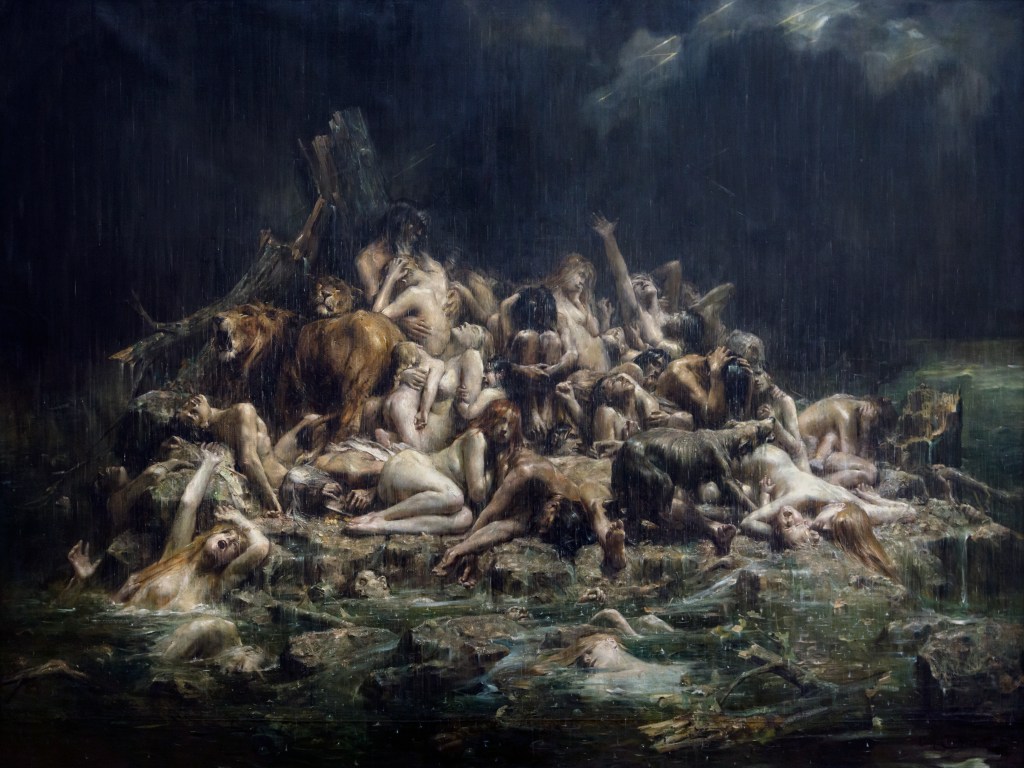
Here the figure of Noah, building the gigantic ark on its own, with the help of God only instead of fossil fuels, may come to mind.
And they often excel at thinking: they are rational, logical, uncompromising, independent intellects, who do not trust nor rely blindly on figures of authority. Naturally, they respect people of high integrity, and are particularly skilled at detecting scammers, which they despise with a passion. Even if, sometimes, only the Trickster can allow irreconcilable demands of society to unfold, for better or worse. They work ceaselessly on an impossible project: their intellect wants to encompass even that which cannot, cage absolutely everything in the box of the mind. This is the ultimate quest for total knowledge, the final conquest of light over darkness. Their perfectionist control freak inner voice shouts: “Let them all be statistics, cells in excel sheets! I will make their life perfect. I have a plan.” In combination with their obsessive nature, this makes them inflexible figures easily drawn to dogmatism. Never face a doomer in a confrontational argument on his preferred topic.
Unfortunately for them, this rigidity affects them equally (You shall love your neighbor as yourself): they won’t easily allow themselves to live spontaneously, free from any clear pre-set goal. In that, they ironically have totally internalized the very core of industrial productivism. They have difficulties dealing with their emotions, sometimes even completely severed from them. This may be the key of one of their contradiction: the desire to protect an abstract entity, the whole species, while not noticing the immediate needs of the actual person just in front of them.
The next item on the list may be a consequence of their mental fixation, or just a characteristic prevailing in most dwellers of the modern world. Most doomers seem to have issues with their image of self. It might be incorrectly calibrated: either under or over-valued. Since they believe living conditions are about to become dramatically harsher than they already are, they feel natural to deploy more efforts and expect less rewards than the rest of the pack. Ironically this makes them an ideal target for ruthless practitioners of growth. You may hear them profess implacable credos of flamboyant macho bravado. Are these genuine expressions of their resilience or hints of a lack of confidence, of an underlying fear? “Hard times don’t last, hard people do” can be read in the doomer’s entry of Wikipedia. How much of a doomer’s rational rhetoric hides a self aggrandizing fantasy?
At the opposite end of the spectrum, some doomers display the arrogance of humanism dialed up to the end of the gauge. Isn’t the idea that the collective behavior ought to be controlled, the trajectory of the species planned in order to maximize survivability or minimize suffering, a delusion completely devoid of any humility?
Many doomers identify with a collective: the group of all humans or the whole living planet as a unique organism, Gaïa. Otherwise, how could the consequences of the activities of the whole species be a reason for personal shame? It can be suspected that some doomers have an even more unconventional notion of self: either setting only fuzzy boundaries, or simply considering it as an arbitrary construct of the mind. Who can say what’s what? Holobionts come to mind.
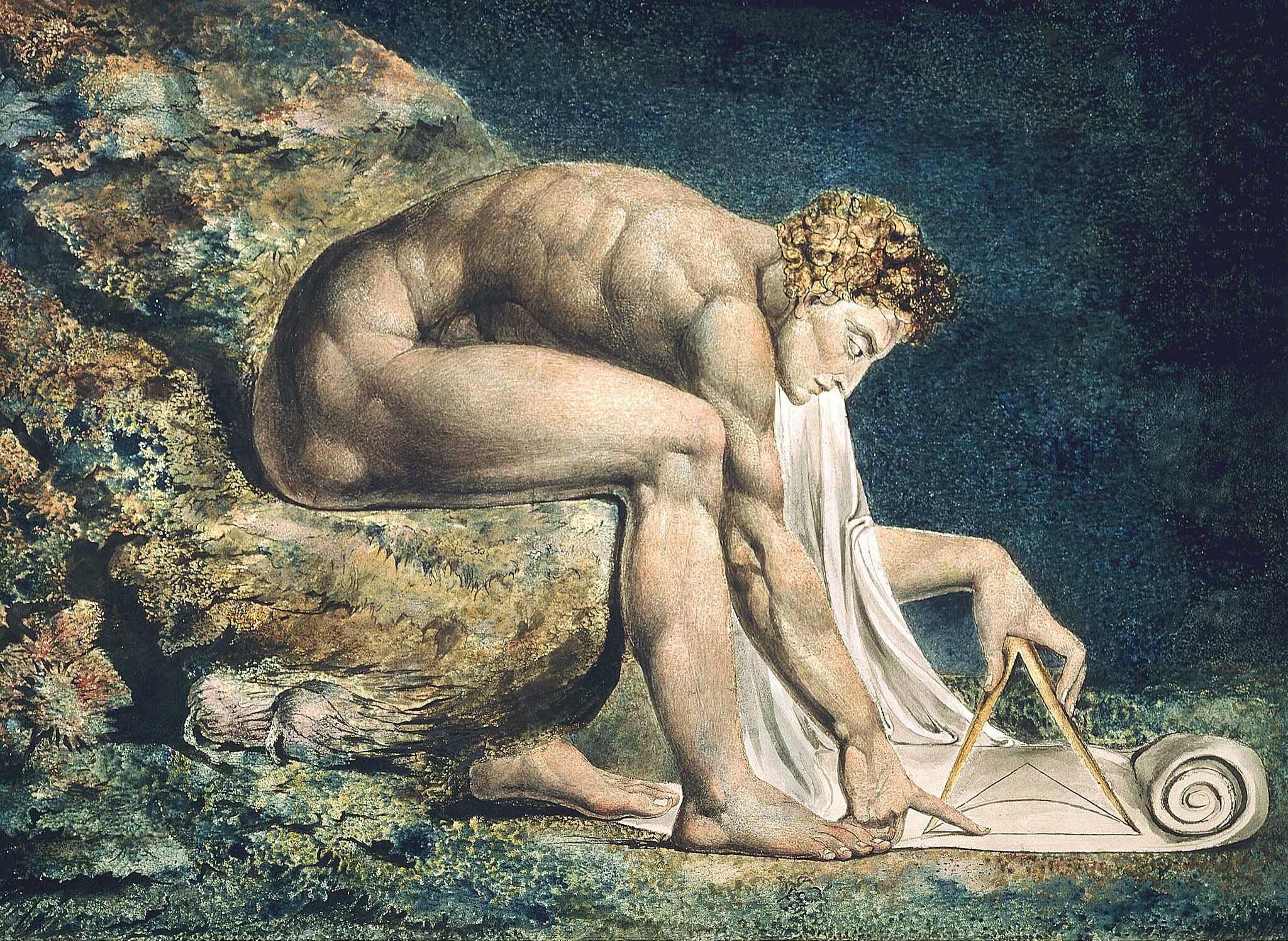
This is all surprising, isn’t it? We would have expected meeting a Cassandra-like creature instead, it’s the Carl Jung archetype of Apollo which seems to be emerging. According to Wikipedia the Apollo archetype:
“personifies the aspect of the personality that wants clear definitions, is drawn to master a skill, values order and harmony. The Apollo archetype favors thinking over feeling, distance over closeness, objective assessment over subjective intuition.”
Apollo, the bearer of light. The enlightenment. The statue of liberty. The Apollo space program. The template of a now bygone era. All his creations turned into a gigantic farce: advanced mathematics powered AI to generate pornographic images of lascivious beings endowed with cat or androgynous attributes (no, this sentence was not generated by a chatbot); extravagant expenditure of engineering, fuel and other resources only to send a few tons of metal into space at 0.00015% the distance to Mars; feats of programming, automation, slavery, life stripping exploitation to publish these words into the great silicon web of matter-less opinions, to reach you…
We can now better understand the doomers’ fascination with derelict places, decay, the morbid. His thoughts are crystallized on the edge of the observable, the end of his light. The fixation aimed at some imagined brief moment in the future: a turning point, a tipping point, the end times, the apocalypse, total annihilation, extinction. Before this point, the dumb masses rule. After, it the doomer won’t need to struggle anymore because all will be over. He is proven right, it’s a victory, a Pyrrhic victory, at last, just before the closing curtain. More importantly maybe, everybody will then experience the same discomfort he finds himself in right now.
Tentative Explanation: Unconscious Root Motivation
This section will be more hypothetical: it’s an attempt at finding some plausible root causes of the doomer’s dynamic.
On the surface, doomers seem to be disappointed idealists. Humanists who are not accepting the failed (in comparison to their own standard) experiment that either the species or this specific culture proves daily to be. They long for a world of reason, beauty or harmony. They simply can’t really get over the large gap between their expectations and reality.
But, really, maybe, idealism was born out of the necessity to compensate an even deeper issue, a trauma, in some form or another. Doomers are in a state of shock. It would explain the fear. It would explain the challenges with the self.
It would explain the addictive behavior. It would explain the propensity for seclusion. It would explain the dissociation from emotions. It would explain the tendency to preemptively put oneself in conditions harsher than needs to be. It would explain the elitism of placing oneself above and untouched, as a neutral observer. It would explain the constant assessment of danger. These are all habits and defense mechanisms adopted during past stressful circumstances. Doomers have been hard-wired, psychologically trained in tough times. What they imagine of the future, is a reflection of their past, now buried in the unconscious. In a way, they are optimized for survival in extreme situations and wither during lax times.
Let us not dwell too long on that, as this is highly circumstantial. Everyone will judge for himself the validity of this hypothesis. Let us just stress the fact that trauma comes in various degrees and does not correspond only to a one-time brutal event but may also be activated by a continuous feeling of danger during childhood.
Family history could play an important role here. We are almost all offsprings of horrors: genocides (Native American, holocausts), slavery, wars; killers, rapists, survivors. There have been so many tragedies in relatively recent human history, that almost no-one is psychologically untouched. So maybe it’s just the normality of life.
In contrast, the western middle class is materially extravagantly sheltered, while totally dependent on an overarching, psychologically oppressive system: replete with propaganda, disheveled morality, betrayals, tricks and manipulations of the mind. This fosters wild imaginations, delusions, various degrees of psychosis. A bit like industrial farm chickens on steroids (which they are not), many haven’t had the opportunity to grow up fully in balance. Diminished humans. Living in this unnatural, bullying society, considering the prospect of shortages, observing from afar, through the distorting lens of the media, the implacable destruction of multiple life forms on the planet is, in itself, enough for trauma. And we are back to a circular argument.
Maturation Out of the Loop of Doom
Are there happy doomers, content with their mental state? Probably.
But doomerism is usually a heavy load to carry. So one might reasonably want to mature past this state, grow out of the addiction and self-destruction. If doomerism is really a consequence of a form of trauma, then it is only natural, this will take some time to resolve. Hopefully, there are many strategies, which, in time, can bear their fruits. These strategies are not a rejection of the rational conclusion of the doomer about the state of the world. That’s one thing. It’s rather a movement of further expansion. It is about the recognition of other aspects, which can coexist with the certainty of collapse:
- recognition of the destructive effect of doomerism on oneself,
- recognition of the limits of individual power, to understand and control,
- recognition of the bounded responsibility of oneself in global issues,
- recognition of the load that one carries,
- recognition of the diversity: of forms and beings, down to the way of seeing the world,
- recognition of the emotions, past and current: anxiety, pessimism, shame, despair, fear, anger, sadness,
- recognition of that which lies in one’s shadow,
- recognition of all the things that are going fine, right now, the love around.
Habits and multiple rationalizations of the mind will naturally present themselves and prevent change. They protect the stability of the psychic equilibrium achieved in reaction to past circumstances. This equilibrium has served its purpose and has now become counterproductive. To break the deadlock, there are multiple small practices, which progressively, gently rectify our stance. There is a lot of activities we may choose from, here are a few non-exhaustive examples:
- breathe, relax, meditate,
- practice compassion, to others, to yourself,
- treat yourself, care for yourself, listen to your needs,
- focus on the small things you have control over, you can handle,
- congratulate yourself, smile to yourself, pat yourself on the back,
- cultivate gratefulness: note the things that go well,
- appreciate the word “enough”,
- find a safe zone, find your tribe,
- express yourself,
- perform service to others,
- confront your fears by overcoming real world hardships, travel the world, gain confidence,
- observe events, without tainting, without trying to anticipate,
- study your thoughts: see their origins, differentiate between the group’s and yours, observe the repetitions, the patterns, the tricks of the mind,
- keep a log of your predictions: write them down as precisely as possible and then compare with actual events,
- study your emotions, dive in the darkness of the forbidden ones, do not block them, let them unfold, run their full course,
- listen to other people’s viewpoints without jumping to conclusion, pause whenever you feel the urge to react automatically, compare with your viewpoint,
- study family history,
- bring things back to the concrete, root yourself, limit the habit of thinking in generalities,
- consider therapy, follow some form of spiritual practice,
- take the leap of faith, rely on higher intervention, a higher force, abandon control, let life be.
In a way, this is nothing new, already in 2012, Paul Chefurka talked about the inner path and the outer path. This all boils down to experimenting the “outside” while listening to the “inside” until there is no more friction.
Conclusion
Being a doomer is a bit like being an alcoholic. Some are able to drink a few drinks and stop. Other will start with only half a drink and find 13 years of their life has passed by without notice. Although, it is most probably some form of escapism, like Bovarysme, doomerism is grounded in legitimate concerns.
Now, these concerns are reaching gigantic proportion. Everybody can see collapse at their doorstep. Everybody will soon have to deal with the consequences, envisioned by doomers. There are no easy answers, doomers can simply share their journey.
Chris
I was hesitant to team up with Charles for this experiment. I joke about him being my spiritual advisor, but him and I have been going in opposite directions for a while now. I guess my hesitancy was in thinking that this would be too pro human or too spiritual for my taste. I was relieved when he sent me his first draft. I was on board with everything he was saying. IMHO, his analysis about the typical doomer is spot on.
Now I also think we could flip the script and make this piece about the overshoot aware Spiritual person instead. Dive in to see what makes him/her tick. Try to see how they believe what they believe in the face of no evidence whatsoever. And yet they are very well versed to reality and our predicament. Have a feeling that story would sound very similar to the doomer. But that’s a different essay for someone else to tackle.
During this process of back-and-forth notes with Charles, a pattern was emerging. It was clear to me that he was worried about offending the doomer crowd. It was also clear to me that because of his experience of being one himself, he would be able to draw heavily on that, and rather than being offensive, it would be respectful.
On occasion I try to rattle Charles by sending him a shock jock belief of mine or a quote like this one from James at Megacancer. “The story of life: The quest for profit and growth will continue as it has since the first organic cell fissioned. The End.”
Nothing fazes him. In fact, most of the time he ends up liking what I said, or it gives him ideas to come back at me with something better. I guess what I’m trying to say is that Charles is tolerant to pretty much anything. And if you ever have a chance to interact with him outside of un-Denial, do it! He’s much more comfortable with one on one email.
Charles
Writing this piece, I didn’t want to gaslight the doomer: overshoot and collapse are real. Still, I also think, there is a psychological basis, an interplay between the macro and the micro, a link between individual psyches and collective dynamic. I believe material collapse will happen in synchronicity of a mass regulatory psychological event. I hope so: although extremely alluring, this culture is insane. It’s been hard to maintain integrity.
I have been a doomer, a part of me will always remain one. I slowly am retiring. Contemplating, as much as it is granted to me, life peacefully, joyfully, in awe.
I enjoyed very much working with Chris on this piece. More than anything else, I especially appreciate his accepting, encouraging presence, true to his first name as the carrier of Christ.

Rob here with a few thoughts.
I have followed quite a few overshoot aware people over the last 15 years including Gail Zawacki, Nicole Foss, Gail Tverberg, Alice Friedemann, Jay Hanson, Nate Hagens, Dennis Meadows, William Rees, David Korowicz, Jean-Marc Jancovici, Tim Watkins, Jack Alpert, Michael Dowd, Tim Morgan, David J.C. McKay, Tom Murphy, Tim Garrett, William Rees, Charles Hall, Paul Chefurka, Sam Mitchell, Jason Bradford, Andril Zvorygin, Steve St. Angelo, Simon Michaux, Hideaway, xraymike79, James, B, Mike Stasse, Irv Mills, and a few others.
I have not observed in these people many of the characteristics that Charles & Chris think are universal. I do lack visibility into the personal lives of most of these people so perhaps Charles & Chris have access to insights I do not have, or perhaps they follow different people. Hopefully examples of people with the common characteristics that Charles & Chris observe will be provided in the follow-up comments.
What I observe is that the majority (say 80%) of the tiny minority (say 1000 out of 8,000,000,000) people who have become deeply aware of our overshoot predicament tend to become obsessed with the topic and spend a lot of time discussing it. Very rarely an individual, like Paul Chefurka or Nicole Foss, breaks free of the obsession and retreats to live the balance of their life thinking about other things, but this is the exception rather than the norm.
Speaking for myself, I am unable to unsee a cliff we are accelerating towards, and I am fascinated why 8 billion minus maybe 1000 brains of an otherwise extraordinarily intelligent species are unable to understand the obvious, nor to take any actions to minimize the coming suffering of their beloved children and grandchildren.
I also do not think any normal person can easily become a doomer as claimed in the essay above. My personal experience has been that the majority of people are unable to understand the information necessary to become a doomer, regardless of their intelligence or education, or how simply and thoroughly the information is fed to them. In other words, no amount of data or logic is sufficient to explain the reality of overshoot to most people.
I think Dr. Ajit Varki discovered the answer to this mystery with his MORT theory, which also explains why only one super-intelligent species evolved on this planet despite the obvious fitness advantages of high intelligence, and why that species is also the only species that believes in gods.
Perhaps there is a better explanation than MORT for what we observe, but I have not yet found it.








 un-Denial