Yuval Harari’s Sapiens: A Brief History of Humankind (revisited)

Harari Sapiens

I first reviewed Harari’s book 5 years ago here.

After watching this book sit near the top of popular book lists for several years I thought I should re-read it to see if I missed something. I posted the following refreshed review on Goodreads.

Another fine example of Panglossian cognitive dissonance in the tradition of Pinker’s Enlightenment Now and Ridley’s Rational Optimist.

Harari gets everything right except what matters: human overshoot and the total dependence of everything he admires about humans on rapidly depleting non-renewable resources.

Harari does seem to get the fact we’re trashing other species and the planet but then leaves that thought unfinished and shifts to an abundant future with genetically engineered humans and artificial intelligence.

By pandering to and reinforcing the human tendency to deny unpleasant realities it’s no wonder his book is popular.

Despite being very well read he’s just another clever monkey in denial.

By Nate Hagens: Earth Day 2020 – The State of the Species

Every year Nate Hagens gives a talk on Earth Day. I missed the announcement of his talk a month ago, perhaps because I killed my social media accounts, but better late than never.

Nate’s presentation as usual is excellent, and this year he provides thoughts on how the virus may influence our overshoot predicament.

Here are a few of Nate’s predictions and ideas I thought were noteworthy:

  • The virus gave our economy a heart attack, although it was already sick.
  • The Great Simplification has begun: a GDP decline of 12-20% is likely this year.
  • Global peak oil was, with no uncertainty, October 2018.
  • Diesel availability is at risk because of surplus gasoline (my note: big problem because diesel powers everything we need to survive: tractors, combines, trucks, trains, and ships).
  • The financial system has been nationalized: central banks are now both the lender AND buyer of last resort.
  • Global debt/GDP, which was before the virus already unsustainable at 350%, will now rocket to 450+%, which sets us up for another more acute crisis in the not too distant future.
  • Poverty will increase in all countries.
  • Renewable energy is in trouble.
  • 25+% of higher education institutions will go bankrupt.
  • The experts don’t have answers: they do not understand energy or how our system works.
  • We need humans to have better bullshit filters: if we don’t use science to help us going forward we have no hope.
  • We should nationalize the oil industry and drain America last.

Nate concludes with many constructive and positive ideas on how we might respond to our predicament.

Unfortunately Nate did not mention the most important response needed: rapid population reduction. Yes I know that reality denial and the Maximum Power Principle, which govern our behavior, make voluntary population reduction highly improbable, but so do they make improbable all of Nate’s suggestions.

I’m thinking that since it’s unlikely we’ll do anything except react to crises as they unfold we might as well focus on the one and only action that would improve everything: population reduction. It simplifies the conversation, and makes it (theoretically) effective. Much better than talking about many things that we also probably won’t do, but even if we did wouldn’t address the core issue: overshoot.

Imagine this political platform: “We only need to do one thing, and there’s only one thing we need to do, don’t have children unless you win the lottery, so there can be future generations.”

You can find other excellent work by Nate that I’ve posted in the past here.

Gail Tverberg on what to expect…

Hope for the Best, Plan for the Worst

Gail Tverberg is one of my favorite thinkers and has been writing about our overshoot predicament for years. In today’s essay she makes the most specific predictions I’ve seen on the probable outcomes of the economic deceleration caused by the Wuhan virus.

I suspect most of her predictions will happen, but I’m not confident on the timeline. It’s possible money printing will buy us a few more years, or maybe not.

I think we should hope for the best, and plan for the worst.

Regardless, time is running out to make preparations.

https://ourfiniteworld.com/2020/04/21/covid-19-and-oil-at-1-is-there-a-way-forward/

Here are a few excerpts from her full essay.

COVID-19 and oil at $1: Is there a way forward?

Our basic problem is a finite world problem. World population has outgrown its resource base.

In this post, I suggest the possibility that some core parts of the world economy might temporarily be saved if they can be made to operate fairly independently of each other.

The COVID-19 actions taken to date, together with the poor condition the economy was in previously, lead me to believe that the world economy is headed for a major reset.

A reset world economy will likely end up with “pieces” of today’s economy surviving, but within a very different framework.

There are clearly parts of the world economy that are not working:

  • The financial system is way too large. There is too much debt, and asset prices are inflated based on very low interest rates.
  • World population is way too high, relative to resources.
  • Wage and wealth disparity is too great.
  • Too much of income is going to the financial system, healthcare, education, entertainment, and travel.
  • All of the connectivity of today’s world is leading to epidemics of many kinds traveling around the world.

Even with these problems, there may still be some core parts of the world economy that perhaps can be made to work. Each would have a smaller population than today. They would function much more independently than today, like mostly separate economic pumps. The nature of these economies will be different in different parts of the world.

In a less connected world, what we think of today as assets will likely have much less value. High rise buildings will be worth next to nothing, for example, because of their ability to transfer pathogens around. Public transportation will lose value for the same reason. Manufacturing that depends upon supply lines around the world will no longer work either. This means that manufacturing of computers, phones and today’s cars will likely no longer be possible. Products built locally will need to depend almost exclusively on local resources.

Pretty much everything that is debt today can be expected to default. Shares of stock will have little value. To try to save parts of the system, governments will need to take over assets that seem to have value such as farm land, mines, oil and gas wells, and electricity transmission lines. They will also likely need to take over banks, insurance companies and pension plans.

If oil products are available, governments may also need to make certain that farms, trucking companies and other essential users are able to get the fuel they need so that people can be fed. Water and sanitation are other systems that may need assistance so that they can continue to operate.

I expect that eventually, each separate economy will have its own currency. In nearly all cases, the currency will not be the same as today’s currency. The currency will be paid only to current workers in the economy, and it will only be usable for purchasing a limited range of goods made by the local economy.

These are a few of my ideas regarding what might be ahead:

(a) There will be a shake-out of governmental organizations and intergovernmental organizations. Most intergovernmental organizations, such as the United Nations and European Union, will disappear. Many governments of countries may disappear, as well. Some may be overthrown. Others may collapse, in a manner similar to the collapse of the central government of the Soviet Union in 1991. Governmental organizations take energy; if energy is scarce, they are dispensable.

(b) Some countries seem to have a sufficient range of resources that at least the core portion of them may be able to go forward, for a while, in a fairly modern state:

  • United States
  • Canada
  • Russia
  • China
  • Iran

Big cities will likely become problematic in each of these locations, and populations will fall. Alaska and other very cold places may not be able to continue as part of the core, either.

(c) Countries, or even smaller units, will want to continue to limit trade and travel to other areas, for fear of contracting illnesses.

(d) Europe, especially, looks ripe for a big step back. Its fossil fuel resources tend to be depleted. There may be parts that can continue with the use of animal labor, if such animal labor can be found. Big protests and failing debt are likely by this summer in some areas, including Italy.

(e) Governments of the Middle Eastern countries and of Venezuela cannot continue long with very low oil prices. These countries are likely to see their governments overthrown, with a concurrent reduction in exports. Population will also fall, perhaps to the level before oil exploration.

(f) The making of physical goods will experience a major setback, starting immediately. Many supply chains are already broken. Medicines made in India and China are likely to start disappearing. Automobile manufacturing will depend on individual countries setting up their own manufacturing supply chains if the making of automobiles is to continue.

(g) The medical system will suffer a major setback from COVID-19 because no one will want to come to see their regular physician any more, for fear of catching the disease. Education will likely become primarily the responsibility of families, with television or the internet perhaps providing some support. Universities will wither away. Music may continue, but drama (on television or elsewhere) will tend to disappear. Restaurants will never regain their popularity.

(h) It is possible that Quantitative Easing by many countries can temporarily prop up the prices of shares of stock and homes for several months, but eventually physical shortages of many goods can be expected. Food in particular is likely to be in short supply by spring a year from now. India and Africa may start seeing starvation much sooner, perhaps within weeks.

(i) History shows that when energy resources are not growing rapidly (see discussion of Figure 3), there tend to be wars and other conflicts. We should not be surprised if this happens again.

Conclusion

We seem to be reaching the limit of making our current global economic system work any longer. The only hope of partial salvation would seem to be if core parts of the world economy can be made to work in a more separate fashion for at least a few more years. In fact, oil and other fossil fuel production may continue, but for each country’s own use, with very limited trade.

There are likely to be big differences among economies around the world. For example, hunter-gathering may work for a few people, with the right skills, in some parts of the world. At the same time, more modern economies may exist elsewhere.

The new economy will have far fewer people and far less complexity. Each country can be expected to have its own currency, but this currency will likely be used only on a limited range of locally produced goods. Speculation in asset prices will no longer be a source of wealth.

It will be a very different world!

Providing Alcohol to an Alcoholic

Symptoms of a High Functioning Alcoholic

OPEC backs biggest oil cut since 2008 crisis

OPEC agreed on Thursday to cut oil output by an extra 1.5 million barrels per day (bpd) in the second quarter of 2020 to support prices that have been hit by the coronavirus outbreak, but made its action conditional on Russia and others joining in.

https://www.reuters.com/article/us-opec-meeting/opec-backs-biggest-oil-cut-since-2008-crisis-awaits-russia-idUSKBN20S0TT

Notice that this and pretty much every other news report you read never explains the thermodynamic implications of what they report, because they are ignorant of, and/or deny, the relationships between wealth creation, credit availability, and fossil energy consumption.

Oil producers today cut production by about 1.5%.

Why? Because demand for oil is falling and the world has limited storage capacity. Oil must be burned at about the same rate it is produced. If they don’t curtail production prices will fall below the cost of production and everyone will lose money, except of course shale oil producers who have always lost money.

Why is oil demand falling? Because the oil powered machines that produce and deliver almost all of the things we use and eat are slowing down, which means economic growth is slowing or possibly declining.

What happens if economic growth stops or declines? Our banking system becomes fragile because the design of our debt backed fractional reserve monetary system requires growth to function.

Put more simply, money and debt retain value, and credit remains plentiful, only in the presence of economic growth.

Why are credit and debt important? Because our standard of living depends on them. For example, today you can save 5% of the price of a house, get credit for 95% in the form of a mortgage, and immediately enjoy 100% of the house. Your mortgage, in turn, funds someone else’s retirement portfolio. Without plentiful credit, most people will not enjoy their own home, or car, or iPhone, and most people will not be able to retire.

I explained the importance of growth and why we can’t have it forever in more detail here.

How have our leaders responded? Canada announced an emergency interest rate cut yesterday in the hope of stimulating economic growth. Our prime minister is planning to spend more printed money to stimulate growth.

Will it work? Does providing alcohol to an alcoholic work? Yes, for a while, unless he’s already too drunk, but doing so makes his bottom more painful.

How do you know when an alcoholic is too drunk? You offer him free liquor and he does not drink.

How do you know when an alcoholic has not yet bottomed out? He kills his hangover the next day with a drink.

How do you know when it’s too late to save an alcoholic? He dies from an overdose.

How do you know when an alcoholic is clean? He decides to promote and vote for a birth lottery.

<Edit Mar 8>

I’m going to go out on a limb and say the correction has begun that those of us with defective denial genes have anticipated since the rocket scientists that lead us “fixed” the too much debt crisis in 2008 with more debt. They’ll try again this time but I suspect the alcoholic is too drunk to drink. I don’t know if the drunk will respond if they try extreme measures like intravenous white lightning. Assuming he doesn’t, my guess is 20-50% of paper wealth will vaporize in this step down. There are more steps to follow in coming years until the alcoholic bottoms out when his preferred drink, oil, is gone. There’d be much less pain for all if he’d sober up now.

Denial is Proportional to the Unpleasantness of the Reality

screaming girl with tightly shut eyes

More evidence that intelligence and education do not reduce reality denial, and that the strength of denial is proportional to the unpleasantness of the reality, as Varki’s Mind Over Reality Transition theory predicts.

Two hundred scientists were recently surveyed on their perceptions of global risks.

https://futureearth.org/initiatives/other-initiatives/grp/the-report/

Top risks by likelihood:
1. Extreme weather
2. Biodiversity loss
3. Water crises
4. Climate change
5. Urban planning
6. Man-made disasters
7. Involuntary migration
8. Food crises
9. Asset bubbles
10. Illicit trade

Top risks by impact:
1. Extreme weather
2. Climate change
3. Water crises
4. Biodiversity loss
5. Food crises
6. Man-made disasters
7. Urban planning
8. Natural disasters
9. Involuntary migration
10. Interstate conflict

Notice that depletion of affordable fossil energy does not make their list.

Notice also that fossil energy scarcity will worsen every single one of the risks they are worried about, except maybe climate change, and a good argument can be made that oil scarcity will in fact worsen climate change because we will probably burn anything and everything to survive.

Notice also that all actions (except rapid population reduction) to mitigate any of the risks the scientists are worried about requires surplus wealth that only abundant affordable fossil energy can generate.

Notice also that depletion of affordable fossil energy is a problem today for every country in the world, not a vague future risk, nor a risk for future generations, nor a risk that effects only a subset of less fortunate countries. Affordable fossil energy depletion is at the core of global social unrest caused by growing wealth inequality and falling standards of living, unsustainable runaway government debt that threatens monetary stability, and a dangerous asset bubble that threatens a collapse rather than a decline.

Notice also that fossil energy depletion (and climate change) is the only risk that we can’t do anything about, except make do with less, and rapidly reduce our population.

Notice also that most scientists believe we can keep our lifestyles and reduce the threat of their top risk, climate change, by switching from fossil energy to renewable energy, which is a thermodynamic impossibility.

Notice also that fossil energy depletion is the only risk that has 100% certainty.

The only reality more certain and more unpleasant than fossil energy depletion is our mortality, which I’ve previously discussed.

That’s why fossil energy depletion is not on the risk list of our best and brightest.

The strength and ubiquity of human reality denial is amazing!

h/t Alex Smith @ Radio Ecoshock

P.S.  This talk by engineer Jean-Marc Jancovici, which I posted a couple years ago here, is one of the best explanations of why everything I said above about the depletion of affordable fossil energy is true. In 90 minutes Jancovici demolishes pretty much everything the idiot professions of economics and central banking believe.

On the Avengers and Denial

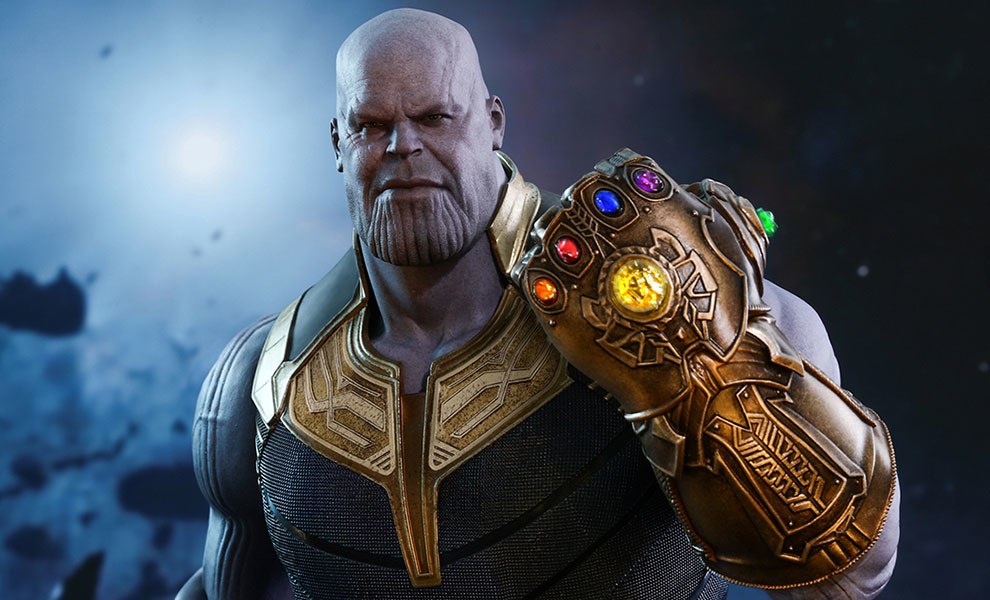
Thanos

I finally got around to watching the top grossing movies of 2018 and 2019, Avengers: Infinity War ($2.1 billion) and Avengers: Endgame ($2.8 billion).

This type of movie, with extreme fantasy super heroes and over the top special effects, is not my cup of tea, but I decided to watch them to get some insight into what our culture is thinking.

The bad guy, Thanos, understands that the universe is in overshoot which will soon cause extreme suffering from wars and starvation, so he acquires a technology to humanely vaporize 50% of life, without causing any suffering, so that the remaining 50% can live in peace and plenty, with new found awareness to constrain their populations going forward.

The good guys, played by the largest and most expensive collection of movie stars ever assembled, think Thanos’ plan is evil, and spend the next 5 hours of multi-million dollar special effects to thwart his plan.

In the end the good guys “win” by vaporizing Thanos and his thousands (millions?) of evil helpers. The outcome for civilization is vague but it seems technology solved the overshoot problem by providing more stuff so everyone had plenty. There was no tying up of loose ends to explain why Thanos’ all powerful technology could not have done the same.

Sadly, two of the heroes are killed in the final fight, but we are promptly and explicitly informed that their spirits live on, and that they know their sacrifices were not in vain.

I skimmed a few fan forums that debate the plot and motives of Thanos. As you might expect there was lots of heat and noise.

Fortunately, one of our most respected and well known scientists, Neil deGrasse Tyson, stepped up with a tweet to comfort the world that brilliant physicists think we’ll be just fine as long as we push on to Mars:

It’s a reasonable assumption that popular movies reflect the current zeitgeist of our culture and I observed the following:

  • The fact that the Avengers explicitly discussed the perils of overshoot suggests that many people must be thinking, at least subconsciously, about our predicament.
  • Which role was assigned to the bad guys, and which to the good guys, demonstrates how exactly wrong our culture is about reality.
  • The movie’s finale demonstrated once again how strongly our species denies death.
  • Neil deGrasse Tyson demonstrates that our best and brightest deny reality as strongly as the common man.


In a similar vein, a top grossing movie of 2014, Kingsman: The Secret Service, is a Tarantino’ish version of James Bond whose bad guy understands that the only way to address climate change is to rapidly reduce the population. The wrong guys win again in this movie.


The 2013 TV show Utopia, was cancelled after only 2 seasons, perhaps because it had a little too much reality.

Ajit Varki: Our Only Hope is Legitimate Fear-Mongering

OK Now You Can Panic

Dr. Ajit Varki, the scientist who inspired this blog with his book, published a paper for a new book today, which expands on his Mind Over Reality Transition (MORT) theory.

Varki, in the past, has been self-critical of his 2013 book feeling that it did not receive the time and polish that his theory deserved. It is clear that Varki set out to remedy the defects of his book with this paper because it’s beautifully written, concise, logically structured, and well referenced. I encourage you to read the paper in full here, or you can download a pdf here.

What follows are a few excerpts from the paper that I thought were noteworthy, and some new ideas from Varki. I also discuss any points where Varki and I differ.

Did Human Reality Denial Breach the Evolutionary Psychological Barrier of Mortality Salience? A Theory that Can Explain Unusual Features of the Origin and Fate of Our Species

Abstract
Some aspects of human cognition and behavior appear unusual or exaggerated relative to those of other intelligent, warm-blooded, long-lived social species––including certain mammals (cetaceans, elephants, and great apes) and birds (corvids and passerines). One collection of such related features is our remarkable ability for ignoring or denying reality in the face of clear facts, a high capacity for self-deception and false beliefs, overarching optimism bias, and irrational risk-taking behavior (herein collectively called “reality denial”). Such traits should be maladaptive for reproductive success when they first appear as consistent features in individuals of any species. Meanwhile, available data suggest that self-awareness (knowledge of one’s own personhood) and basic theory of mind (ToM, also termed mind-reading, intentionality etc.) have evolved independently several times, particularly in the same kinds of species mentioned above. Despite a long-standing opportunity spanning tens of millions of years, only humans appear to have gone on to evolve an extended ToM (multilevel intentionality), a trait required for optimal expression of many other unusual cognitive attributes of our species, such as advanced linguistic communication and cumulative cooperative culture. The conventional view is that extended ToM emerged gradually in human ancestors, via stepwise positive selection of multiple traits that were each beneficial. A counterintuitive alternate possibility is that establishment of extended ToM has been repeatedly obstructed in all other species with the potential to achieve it, due to a “psychological evolutionary barrier,” that would arise in isolated individuals of a given species that develop the genetic ability for extended ToM. Such individuals would observe deaths of conspecifics whose minds they fully understood, become aware of mortality, and translate that knowledge into mortality salience (understanding of personal mortality). The resulting conscious realization and exaggeration of an already existing intrinsic fear of death risk would have then reduced the reproductive fitness of such isolated individuals (by favoring personal survival over reproduction). This “psychological evolutionary barrier” would have thus persisted until hominin ancestors broke through, via a rare and unlikely combination of cognitive changes, in which two intrinsically maladaptive traits (reality denial and extended ToM) evolved in the minds of the same individuals, allowing a “mind over reality transition” (MORT) over the proposed barrier. Once some individuals broke through in this manner, conventional natural selection could take over, with further evolution of beneficial aspects of the initial changes. This theory also provides a unifying evolutionary explanation for other unusual features of humans, including our recent emergence as the dominant species on the planet, and replacement of all other closely related evolutionary cousins, with limited interbreeding and no remaining hybrid species. While not directly falsifiable by experiment, the MORT theory fits with numerous facts about humans and human origins, and no known fact appears to strongly militate against it. It is also consistent with most other currently viable theories on related subjects, including terror management theory. Importantly, it has major implications for the human condition, as well as for many serious current issues, ranging all the way from lack of personal health responsibility to ignoring anthropogenic global climate disruption, which now threatens the very existence of our species.

The yaksha asked: “What is the greatest surprise?” Yudhisthira replied: “People die every day, making us aware that men are mortal. Yet we live, work, play, plan, etc., as if assuming we are immortal. What is more surprising than that?”

—The Mahabharata

Perhaps because I’m an electrical engineer who specialized in operating system design, rather than a life sciences practitioner, I’ve never been totally comfortable with MORT’s focus on the evolution of an extended theory of mind (ETOM).  There are many unique properties of the human brain, in addition to ETOM, such as symbolic language and advanced intellectual abilities.

It feels more accurate to speak about a barrier to evolving a brain with higher computing power. We all know that a more powerful desktop computer can do more advanced things like speech recognition and video editing. Ditto for a biological CPU. A more powerful brain can better understand the thoughts of others AND extrapolate its own mortality AND implement complex speech AND read symbolic text AND calculate quantum mechanics AND fly to the moon AND invent technologies to dominate all other species.

This more general way to think about MORT does not change or invalidate Varki’s thesis because it’s the same mortality awareness barrier, but provides a clearer explanation of what probably happened when we broke through the barrier, or at least it does for this cranky old engineer.

I think reality denial unlocked nature’s ability to evolve a more powerful CPU, with the first enhancement being an extended theory of mind, and subsequent enhancements being other uniquely human intellectual capabilities.

In case you doubt that 1-200,000 years is enough time to evolve sufficient computing power to figure out the laws of physics and fly to the moon, recall that we created a Chihuahua from a wolf in about 32,000 years.

I also want to mention that there is another complementary theory for the evolutionary requirement that high brain power co-evolve with reality denial.

All life must obey the Maximum Power Principle (MPP) because life at its core is replicators competing for finite energy.

Any evolved behavior that might tend to override MPP, such as sufficient intelligence to understand Hardin’s Tragedy of the Commons, with wisdom to constrain offspring and consumption, will be weeded out by selection pressures. Put more succinctly, free will on behaviors relevant to overshoot, cannot exist.

If true, this means it is impossible for high intelligence to exist without reality denial, and MORT is one solution evolution has discovered to implement this. On another planet, evolution by natural selection might discover a different means of unlocking high intelligence with reality denial.

Varki has created several new graphics to help explain his theory. I particularly like this one:

Mind Over Reality Transition Extended View


I was pleased to see that Varki now draws a link between his theory and that of Trivers’ theory of self-deception:

It is also noteworthy that the ability to hold false beliefs, self-deception, optimism, and confidence might support a successful mating strategy, especially for males. This suggestion is congruent with Trivers evolutionary theory of self-deception that includes denial of ongoing deception, self-inflation, ego-biased social theory, false narratives of intention, and a conscious mind that operates via denial and projection to create a self-serving world.

Varki makes an interesting case that human physiological ontogeny recapitulates phylogeny in that postnatal development mirrors the expected transitions to an extended theory of mind:

Human Psychological Ontogeny Recapitulate Phylogeny


I was pleasantly surprised to find that Varki, perhaps due to my encouragement, has drawn a stronger link between religion and his MORT theory:

Depending on the lens through which it is studied, one aspect of religion can also be considered as strong evidence in support of MORT. Most human behaviors exist in other species on a continuum of development, as one would expect from evolution. But religion appears to be a well-established near universal only in human cultures and there are many obvious fitness advantages that have been discussed by others. But most of these advantages should not require a belief in life after death. Nevertheless, almost all religions have at their core some form of such afterlife beliefs, which would serve as another mechanism to blunt the impact of mortality salience. Of course, atheists do not live in constant fear of their mortality, so the underlying reality denial appears to be the primary mechanism.

Not having to worry about farting in a sandbox filled with kids I have to play with every day, I go a step further and assert that MORT created God.

I also make a stronger claim that all religions, not just most religions as stated by Varki, have at their core a belief in life after death.

It is also a theory that appears to fit with all known relevant information, and is not apparently negated by any other facts, but also cannot be definitively falsified at this time by an experiment.

For me, MORT will be be falsified if we can find a single religion anywhere in time or place that does not believe in some form of life after death.

I love that Varki draws a link between MORT and the many peculiar things humans do to distort reality:

…could the well-known human craving for mind-altering substances also be partly due to the need to escape reality? Could the same be true of the positive value of meditation methods that focus on mindfulness of the present, or the shutting out of irksome reality? Conversely, could episodic panic attacks represent a sudden failure of the neural mechanisms of reality denial?

Varki introduces a new and very interesting idea that reality denial first emerged in males and an extended theory of mind in females, and that it took considerable time for the alleles to mix and stabilize:

MORT Gender Features

Assuming that such an evolutionary transition did occur, what might have been the contributions of sex and gender? As illustrated in the very speculative Fig. 8, human males are at greater risk of autism spectrum disorders, more prone to selective reality denial, systematizing, optimism bias, and risk-taking behavior. Conversely, human females are more prone to empathy, cooperation, theory of mind, depressive realism, and major depressive disorder. Considering these sex and gender differences (which are of course on a continuum, and affected by many cultural and genetic factors), could it be that the original evolutionary transition involved mating of males with a complex genotype manifesting as maladaptive reality denial––with females having an equally complex genotype, suffering from mortality salience due to an enhanced theory of mind? Although we cannot know for certain, could such mating have generated an unusual collection of alleles, as an explanation for the origin of humans? Assuming that generating and stabilizing the optimal combination of such alleles were was difficult, perhaps it took a very long time. Perhaps there was a prolonged interim state of recurrent cognitive instability, with ongoing dangers resulting from reality denial and/or existential angst, and possibly even high rates of suicide. Could this difficult transition explain the >100,000-year gap between the genetic origin of modern humans and archeological evidence suggesting our emergence in Africa and then elsewhere?

I personally think it slightly more likely that the 100,000 year gap can be explained by the time it took natural selection to evolve a more powerful CPU once the MORT barrier was breached.

I chuckled at Varki’s awareness of the reality that his theory will not be acknowledged as true in his lifetime, and I admire his self-confidence that it will be acknowledged after he’s dead:

The theory is also consistent with all known facts, compatible with all other related theories, and not negated by any currently known facts. On the other hand, it is not directly testable by experimental reproduction and not directly falsifiable by experimental approaches. Given also the counterintuitive nature and unusual origins of this theory, as well as the lack of expertise of the originators in many relevant disciplines, MORT is very likely to be attacked from many quarters, and resolution is unlikely during the lifetime of this author. Only the passage of time will tell if MORT is as important as plate tectonics or as completely fanciful as “phlogiston” (or something somewhere in between). Fortunately, concern for posthumous legacy is a largely meaningless exercise.

“I cannot possibly believe that a false theory would explain so many classes of facts as I think it certainly does explain…..on these grounds I drop my anchor, and believe that the difficulties will slowly disappear.”—Charles Darwin, letter to Asa Gray, shortly after Origin of Species was published.

I’m less confident MORT will ever be acknowledged as true because denial of denial is and must be the strongest form of denial. If denial is ever acknowledged by the herd, the whole house of cards that defines us will collapse. Of course it’s going to collapse eventually regardless, thanks to the laws of thermodynamics. But it’s too bad, tragic in fact, because with MORT awareness we could reduce future suffering, and retain more of our best accomplishments.

It’s also sad because MORT is the most important new idea since Darwin’s evolution by natural selection for explaining the existence of an extraordinarily rare type of life in the universe. Too many people drift through life without ever appreciating how amazing their existence is.

Varki concludes the paper by discussing the implications of his theory, and says that it’s time for legitimate fear-mongering.

I observe with some irony that the existential threats, besides climate change, that Varki lists are insignificant compared to the threats he does not mention, such as human overshoot and the depletion of low-cost non-renewable resources, and other limits to growth, that are currently roiling social unrest around the globe, and creating unsustainable debt growth, zero or negative interest rates, money printing, and a widening wealth gap.

Coda: Relevance to the Current Human Condition and the Future of Our Species.

The 2007 draft of Danny Brower’s incomplete manuscript that I modified and expanded into a co-authored book (Varki & Brower, 2013) included the following prescient observations: “We are polluting the earth and changing the climate in ways that we can’t predict, and likely at some point, can’t easily reverse. If we’re so smart, why do we continue to sow the seeds for our eventual destruction? Because we are saddled with a brain that is designed by selection to cope with the ultimate disaster (death) by denying that it will occur, and so we treat other impending disasters by denying that they will ever happen ……Indeed, it is arguable that we are destined ultimately to destroy ourselves as a species.”

Although many of our follies arising from reality denial can at least theoretically be eventually reversed, there are two that definitely cannot be turned back once they occur: global nuclear holocaust and anthropogenic climate change. Although not an expert on climate, discussions with such individuals lead me to the conclusion that the human-induced climate disruption is already occurring, and that absent major changes in current human behavior and/or human intervention there is a very high probability of irreversible global catastrophic climate disruption before mid-century (Gilding, 2012; Gore, 2007, 2013; Guterl, 2012; Hansen, Sato, & Ruedy, 2012; Mann, 2012; Wallace-Wells, 2019), i.e., a “climate holocaust.”

In other words, we are putting our children on an airplane with a very high probability of a catastrophic crash (McKibben, 2019; Rich, 2019). If this theory regarding the evolutionary origins of human reality denial is true, the first step to reversing the situation would seem to be a full awareness of our genetic tendency to reality denial by the media, and by our scientific and political leaders. Sadly, it is unlikely that rational discussion or scientific details will be sufficient to sway the average human to do what is right for the future of our species, let alone leaders who are focused on near-term political and economic goals.

The only solution then may be “legitimate fear-mongering ”! It is notable that it was such fear-mongering that once brought all the nations of the world together during the Cold War, to minimize the risk of a nuclear holocaust (Caldicott, 2017). The only other hope may be to combine fear with shame and guilt, imposed upon adult humans by adolescent school children, who can better imagine the dire future we are leaving them to face (Kjeldahl & Hendricks, 2019). As the 15-year-old Greta Thunberg said to the elites at Davos: “I want you to feel the fear I feel every day. And act as if your house is on fire. Because it is.” Of course, even if we manage to avoid catastrophic climate disruption, there are the other existential threats to our species that reality denial makes us prone to, such as widespread and indiscriminate applications of artificial intelligence (Müller, 2016) to the generation of “deep fake videos” (Stover, 2018) and other gross distortions of reality at a population-wide level.

If this theory turns out to be the correct explanation for the origin of the species, it might ironically also be now sowing the seeds of our demise.


Varki’s last sentence captures the essence of this blog:

un-Denial = unmasking denial: creator and destroyer


I am very grateful, and pleasantly surprised, that Varki credited me in his paper despite the fact that this blog will probably be viewed by his colleagues as a cave for doomer whack jobs. 🙂


I Want You to Panic

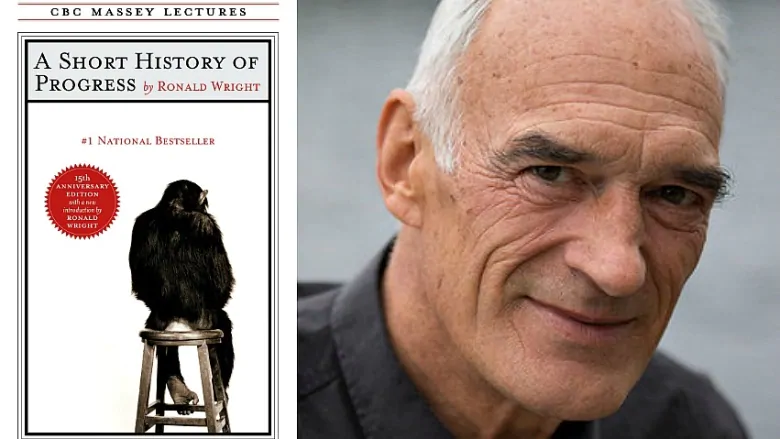
By Ronald Wright: A Short History of Progress Revisited

Ronald Wright - A Short History of Progress

Ronald Wright presented his book “A Short History of Progress” in 2004 via the Massey Lectures that were broadcast by CBC Radio.

It’s my all time favorite lecture series and I’ve listened to it at least a dozen times. You can listen to it here.

Last month Wright launched the 15th anniversary edition of his book and was interviewed by CBC Radio which you can listen to here.

“I almost don’t want to say what I really think.”

Wright also wrote an essay last month updating our “progress” in the 15 years since his book was published.

Wright’s understanding of the gravity and historical precedents of our predicament is excellent. What to do about it, not so much, as he is an archeologist and not an engineer or physicist. Nevertheless, Wright is a brilliant writer with a superb command of history.

https://thetyee.ca/Analysis/2019/09/20/Ronald-Wright-Can-We-Dodge-Progress-Trap/

h/t Apneaman

Can We Still Dodge the Progress Trap?

In the 2004 Massey Lectures, A Short History of Progress, I wrote about the fall of past civilizations and what we might learn from them to avoid a similar fate. Societies that failed were seduced and undone by what I called a progress trap: a chain of successes which, upon reaching a certain scale, leads to disaster. The dangers are seldom seen before it’s too late. The jaws of a trap open slowly and invitingly, then snap closed fast.

The first trap was hunting, the main way of life for about two million years in Palaeolithic times. As Stone Age people perfected the art of hunting, they began to kill the game more quickly than it could breed. They lived high for a while, then starved.

Most survivors of that progress trap became farmers — a largely unconscious revolution during which all the staple foods we eat today were developed from wild roots and seeds (yes, all: no new staples have been produced from scratch since prehistoric times). Farming brought dense human populations and centralized control, the defining ingredients of full-blown civilization for the last five thousand years. Yet there were still many traps along the way. In what is now Iraq, the Sumerian civilization (one of the world’s first) withered and died as the irrigation systems it invented turned the fields into salty desert. Some two thousand years later, in the Mediterranean basin, chronic soil erosion steadily undermined the Classical World: first the Greeks, then the Romans at the height of their power. And a few centuries after Rome’s fall, the Classic Maya, one of only two high civilizations to thrive in tropical rainforest (the other being the Khmer), eventually wore out nature’s welcome at the heart of Central America.

In the deep past these setbacks were local. The overall experiment of civilization kept going, often by moving from an exhausted ecology to one with untapped potential. Human numbers were still quite small. At the height of the Roman Empire there are thought to have been only 200 million people on Earth. Compare that with the height of the British Empire a century ago, when there were two billion. And with today, when there are nearly eight. Clearly, things have moved very quickly since the Industrial Revolution took hold around the world. In A Short History of Progress, I suggested that worldwide civilization was our greatest experiment; and I asked whether this might also prove to be the greatest progress trap. That was 15 years ago.

What has happened — and not happened — since then to alarm or reassure us?

First, our numbers have risen by 1.4 billion, nearly a hundred million per year. In other words, we’ve added another China or 40 more Canadas to the world. The growth rate has fallen slightly, but consumption of resources — from fossil fuel to water, from rare earths to good earth — has risen twice as steeply, roughly doubling our impact on nature. This outrunning of population by economic growth has lifted perhaps a billion of the poorest into the outskirts of the working class, mainly in China and India. Yet those in extreme poverty and hunger still number at least a billion.

Meanwhile, the wealthiest billion — to which most North Americans and Europeans and many Asians now belong — devour an ever-growing share of natural capital. The commanding heights of this group, the billionaires’ club, has more than 2,200 members with a combined known worth nearing $10 trillion; this super-elite not only consumes at a rate never seen before but also deploys its wealth to influence government policy, media content, and key elections. Such, in a few words, is the shape of the human pyramid today.

The 2008 crash triggered by banking fraud was staved off by money-printing and record debt. This primed a short-run recovery, which has in turn revived illusions we can borrow from nature and the future indefinitely — illusions fed by corporate think-tanks, irresponsible politicians, and Panglossian cherrypickers such as Steven Pinker. But what about the long run? In 1923 the great economist John Maynard Keynes famously answered, “In the long run we are all dead.” By that he meant, let’s deal with the problems we see now and leave the unforeseeable to those who come later. Fair enough in the 1920s, when there was only one person on Earth for every four today and the future seemed to have room for endless outcomes, good or bad. Nearly a century later, Keynes’s quip sounds more like dire prophecy, as short-term thinking lures us ever deeper into very difficult problems that science can not only observe but foresee. Predicted consequences of global warming — blighted coral reefs, melting glaciers, spreading deserts, and extreme weather — are already upon us.

One of the sad ironies of our time is that we have become very good at studying nature just as it begins to sicken and die under our weight. “Weight” is no mere metaphor: of all land mammals and birds alive today, humans and their livestock make up 96 per cent of the biomass; wildlife has dwindled to four per cent. This has no precedent. Not so far back in history the proportions were the other way round. As recently as 1970, humans were only half and wildlife more than twice their present numbers. These closely linked figures are milestones along our rush towards a trashed and looted planet, stripped of diversity, wildness, and resilience; strewn with waste. Such is the measure of our success.

The archaeologists who dig us up will need to wear hazmat suits. Humankind will leave a telltale layer in the fossil record composed of everything we produce, from mounds of chicken bones, wet-wipes, tires, mattresses and other household waste, to metals, concrete, plastics, industrial chemicals, and the nuclear residue of power plants and weaponry. We are cheating our children, handing them tawdry luxuries and addictive gadgets while we take away what’s left of the wealth, wonder, and possibility of the pristine Earth.

Calculations of humanity’s footprint suggest we have been in “ecological deficit,” taking more than Earth’s biological systems can withstand, for at least 30 years. Topsoil is being lost far faster than nature can replenish it; 30 per cent of arable land has been exhausted since the mid-20th century.

We have financed this monstrous debt by colonizing both past and future, drawing energy, chemical fertilizer, and pesticides from the planet’s fossil carbon, and throwing the consequences onto coming generations of our species and all others. Some of those species have already been bankrupted: they are extinct.

Others will follow. Whether we are triggering an extinction as severe as that which killed the dinosaurs, when three-quarters of all species were wiped out, is still to be seen. By the time the answer is clear, there could be nobody left to know it. The lesson of fallen societies is that civilization is a vulnerable organism, especially when it seems almighty. We are the world’s top predator, and predators crash suddenly when they outgrow their prey. If the resulting chaos unleashes nuclear war, it could bring mass extinction in a heartbeat, with Homo sapiens among the noted dead.

Awareness of our predicament is spreading, if slowly and with mixed results. The warnings of science are growing more urgent and precise, gaining wider attention and sparking grassroots movements such as Extinction Rebellion and the schoolchildren’s strikes inspired by Greta Thunberg. People are beginning to see the world dying before their eyes. The dwindling of birdlife in their gardens and bugs on their windshields backs up the scientists’ alarm that falling insect numbers threaten a “catastrophic collapse” of natural systems.

Effective reform will take political will at world level. Yet the very idea of international cooperation is under attack — just when it is needed most. As the Intergovernmental Panel on Climate Change says in its October 2018 report, keeping global warming below 1.5 C “is possible within the laws of chemistry and physics” but will require “unprecedented changes” before 2030.

Conservation and environmentalism have had some success, a few species have been pulled back from the brink, a few Green politicians have been elected, a few promising fixes (renewable energy, electric cars, etc.) are being developed. Yet at this writing, the momentum of extraction, consumption, and destruction is still gathering speed, driven by the delusion of endless growth, and the willingness of corporations to set financial profit above life itself. Even if fossil energy were replaced at once by clean sources, our other problems — overpopulation, overconsumption, erosion, deforestation, and accumulating waste — would still persist.

The failure of democratic governments to stand up for the greater good over the long run is fuelling disillusionment with democracy itself. There is something badly wrong with an economic regime in which 26 individuals own as much as half the world’s population. Such extreme disparity has never been seen before. Inequality is the main driver behind rising population and consumption. The highest birthrates are in the poorest places, mainly Africa and the Indian subcontinent. At the other end of the seesaw, obscene wealth — the kind which owns mansions around the world and gigantic yachts with helicopter pads — has a colossal footprint, while its undue influence amounts to a dark tyranny.

Back in Classical Greece, Plato suggested that in a just society there should be no more than a 5:1 spread in income between richest and poorest. That was a hard sell then, and still would be. But what might be reasonable today? Where should the balance be struck to help the weakest while still rewarding effort and achievement? Given the seriousness of what we face, this is a conversation we must have. The wealth already wrenched from nature might just be enough to buy us a lasting future if it were shared, managed, and ploughed into solutions.

Of one thing we can be sure: if we fail to act, nature will do so with the rough justice she has always served on those who are too many and who take too much.


Ronald Wright Quote (Studious Fox)

By Tim Watkins: What Extinction Rebellion is Getting Wrong

It's Not Denial

Tim Watkins, with some help from Chris Martenson, is very good today.

I observe that people fighting for our species to acknowledge its predicament, like Extinction Rebellion, are as much in denial as the people they oppose.

In his last section, Watkins suggests that the environmental movement has a choice to make between two paths. This implies that they understand what is going on. Here I disagree. I think genetic reality denial blocks almost everyone, including environmentalists, from understanding what is going on, as Varki’s MORT theory predicts.

An an aside, there is a Canadian federal election in a few days. I read the platforms of all the parties. Not one has a clue what is going on. I refuse to vote for idiots in denial.

http://consciousnessofsheep.co.uk/2019/10/16/what-extinction-rebellion-is-getting-wrong/

Firstly, there is no net zero because humans have failed to figure out a viable means of capturing and sequestering carbon dioxide for the several centuries that would be required after we ceased burning fossil fuels to restore the climate to something akin to conditions today.  At this point, no doubt, some readers will object that trees and soils are natural carbon sinks; and so we might plant more trees and restore more soils.  The question, however, is which trees and soils, and to what end?  Few trees live beyond a century (especially when some idiot comes along and harvests them to use as “green” biofuel).  And when a tree dies and falls to the floor, it dumps all of the carbon back into the atmosphere.  Similar problems affect attempts at soil restoration since any further use will unlock the carbon stored there.

There is, you will be pleased to know, one natural process that can sequester and lock up all of the carbon that we have dumped into the atmosphere in the course of the last three centuries.  It involves a warmer and wetter climate washing nutrients off the land and out to sea; where plankton and algae blooms can flourish and multiply; giving off noxious hydrogen sulphide – which causes “red tide events” – as a by-product.  As these microscopic plants die, they sink to the ocean floor where, along with the carcasses of any marine creature that happened into the oxygen-starved red waters beneath the surface, they gradually decompose into a glutinous mud.  Over time, layers and layers of this hydrocarbon-rich mud will pile up.  And over centuries it will be subsumed beneath the Earth’s crust, where it will be heated and compressed beneath an impervious layer of rock that prevents it from leaking to the surface.  With the carbon sequestered in this way, over millions of years the climate will cool once more.

My more alert readers will be aware that the process that I just described is the one in which the fossil fuels that we have been burning for the past 300 years were created in the first place.  As far as I am aware, it is the only process currently known that can lock up large volumes of carbon dioxide for the geological time period required to repair the damage that we have already done.


There is enough carbon dioxide in the atmosphere already to raise the temperature above 3 degrees over pre-industrial levels; so that even if we ceased burning fossil fuels today, it is highly unlikely that the global economy and a population approaching 8 billion can survive the devastation.  Indeed, those at the more pessimistic end of the spectrum argue that we will be lucky if there are any humans at all on Earth by 2030.  But even knowing that the current debate is between those who think things are about to get very, very bad and those who think they are about to become fatal will not be enough to prevent humanity from continuing to pump greenhouse gases into the atmosphere.

The reason is simple, the only way in which we can support a global population that is at least eight times the sustainable level; is to use fossil-powered industrial agriculture on a global scale.  And while switching the diet to lower the volume of cow belches will make an insignificant difference, the fact remains that fossil-powered global plant farming is still a major source of greenhouse gases.  Nor do we dare dispense with the fossil-powered global supply chains that have saved the largest part of humanity from the kind of famines that were commonplace just a few decades ago.  Growing excess food in favourable regions and transporting it to less favourable ones has always been the means by which humans combatted famine.  The only difference today is that we do it on a global scale; meaning that disruption in any one supply chain can rapidly undermine the entire system.


At this point, of course, the techo-utopian journalists, politicians and protestors will complain that I am ignoring renewable energy and the fourth industrial revolution.  Once again, the reason for this objection is largely a product of an education system that is not fit for purpose.  In a recent article on the Peak Prosperity website, scientist Chris Martenson refers to the sheer scale of the task that would be involved just in substituting (i.e. ignoring all of the technical engineering challenges involved) the quantity of energy we get from fossil fuels with renewable energy:

“Suppose we agree on the goal to entirely replace fossil fuel energy by 2050.  (We’re going to have to do it by some point, because oil, coal and natural gas are all depleting finite resources.)

“With 2050 as a starting point we can run some simple math.

“We start by converting the three main fossil fuels – coal, oil and natural gas – into a common unit: the “millions of tons of oil equivalent” or Mtoe.

“A million tons of oil = 1 Mtoe, obviously.  And there’s an amount of coal, if burned that has the same energy as 1 Mtoe.  Ditto for natural gas.  If we add up all of the fossil fuels burned in a given year, then we can express that as a single number in the many thousands of Mtoe.

“Roger Pilke has run the math for us in his recent article in Forbes:

‘In 2018 the world consumed 11,743 Mtoe in the form of coal, natural gas and petroleum. The combustion of these fossil fuels resulted in 33.7 billion tonnes of carbon dioxide emissions. In order for those emissions to reach net-zero, we will have to replace about 12,000 Mtoe of energy consumption expected for 2019’…

“So, what would it take to replace those 12,000 Mtoe with alternative fuels by 2050?

“Pilke answers that for us:

Another useful number to know is that there are 11,051 days left until January 1, 2050.

To achieve net-zero carbon dioxide emissions globally by 2050 thus requires the deployment of >1 Mtoe of carbon-free energy consumption (~12,000 Mtoe/11,051 days) every day, starting tomorrow and continuing for the next 30+ years…

“But that’s only half of the story.

“We’d also have to decommission and retire an equivalent 1 Mtoe amount of still-functioning fossil fuel property, plant and equipment.  Do you have any idea how much money and embedded capital is contained in all the world’s current energy infrastructure — including our cars and homes —  that’s built around fossil fuel use?

“Somehow, the world would have to replace the equivalent of the energy contained within 2.4 Ultra Massive crude ships.  Every. Single. Day.  For 11,000 days straight, without missing a single day.  A 7,000 mile long cargo train of ultra massive ships retired at the rate of 2.4 per day for the next 30 years…

“What would that take?  Again from Pilke:

So the math here is simple: to achieve net-zero carbon dioxide emissions by 2050, the world would need to deploy 3 [brand new] nuclear plants worth of carbon-free energy every two days, starting tomorrow and continuing to 2050. At the same time, a nuclear plant’s worth of fossil fuels would need to be decommissioned every day, starting tomorrow and continuing to 2050.

I’ve found that some people don’t like the use of a nuclear power plant as a measuring stick. So we can substitute wind energy as a measuring stick. Net-zero carbon dioxide by 2050 would require the deployment of ~1500 wind turbines (2.5 MW) over ~300 square miles, every day starting tomorrow and continuing to 2050.”

It has taken a Herculean effort in the developed western states just to deploy a relatively small number of wind turbines and solar panels into our electricity generation mix.  The idea that we are going to replace the far larger fossil fuel consumption in transport, building temperature control, industry and agriculture is no more than magic thinking.


This is where the charge of hypocrisy that is often levelled against Extinction Rebellion hits home.  It is doubtful that more than a handful of the protestors is prepared to make even a fraction of the lifestyle changes that would be involved just to lower the rate at which we are dumping greenhouse gases into the atmosphere.  Certainly some will be prepared to give up flying, stop eating meat, use a refillable water bottles and put on an extra layer rather than turn the heating up.  Mobile phones are a different matter – even though the data centres on which they depend are among the most polluting buildings on Earth.  Few, one suspects, will be prepared to take the radical actions such as giving up the right to have children in favour of the birth licensing system that a rapid shift to a zero-carbon economy implies.


In the end, Extinction Rebellion is facing the same dilemma that has plagued the environmental movement from the start:

  • Should it spell out the enormous effort and sacrifice involved in changing course – and thereby risk alienating the majority of those who need to be won over? Or;
  • Should it pretend – despite all the evidence to the contrary – that a few windmills and solar panels will allow us to continue growing our planet-destroying economy without even pausing to draw a breath.

My fear is that – like the various green parties around the world – this latest manifestation of environmentalism will take the second option so as not to scare the horses.  And if those at the gloomier end of the spectrum are correct and that we only have 10 years left, this may not be such a bad thing; after all, they say that dying in your sleep is far preferable than consciously looking death in the face.  Either way, one can count on one hand the number of protest movements that have achieved the change they wanted to bring about.  The enormity of the predicament does not change this fact.  The sad reality is that we are all prisoners of the very system that is killing us; dependent upon it for the food, water, clothing and shelter that sustain us even as it destroys the habitat we depend upon.  We could end it tomorrow if only the majority of us chose to stop playing the game; but the sacrifice is too great… and few of us are prepared to take the hit while others continue to get a free pass.

And so, while I salute those who have taken to the streets this month (my son is among them and I am proud that he is standing up for what he believes in) I would also caution them that the changes that are coming are not the ones they want; still less the ones the leaders of their movement are pretending they can have.  Our current civilisation can be compared to the last moments of the Titanic – holed below the waterline and destined to sink into a watery grave.  Most of those who are protesting are merely akin to the frightened passengers begging a Captain and crew to respond to a situation that they have already lost control of.  The sensible few among the protestors will look to those who are assembling the lifeboats.  But the majority – whether they believe the emergency is real or not – will soon meet their tragic end.  And protesting icebergs and reckless Captains will do nothing to save them – or us – now!