On the Leap Manifesto

The Leap Manifesto is being discussed within Canadian political circles, and is gaining support from prominent environmental leaders.

The intentions of the Leap Manifesto are admirable, but its thermodynamics are flawed.

Society does not subsidize fossil energy. Fossil energy subsidizes everything in modern society to the tune of over 50 energy slaves per person. These slaves have and will continue to demand more pay because the easy to extract oil is gone. What oil remains becomes more expensive to extract with each passing day.

Do not confuse oil price with cost. The oil price today is low because consumers have maxed out their credit cards and can no longer afford to pay their energy slaves.  Oil companies are going broke because it costs more to extract oil than they can sell it for. Think about this. It’s a big problem.

The fact that our energy slaves have become more expensive than we can afford is the root cause of dangerous worldwide public debt growth, and a fragile economy that has required zero percent interest for 8 years. All of the idiot lights are flashing red on our dashboard if we care to look. The weaker countries are already starting to fail.

It takes fossil energy slaves to make renewable energy slaves. And the renewable energy slaves require even more pay than the fossil energy slaves because their muscles are weaker, and they need some fossil energy to stay fit. For example, think about the roads and trucks and tools and parts needed to maintain a windmill or solar panel.

We need renewable energy and we have no choice but to move in their direction. But we can’t run today’s society with them. Don’t take my word for this. Pay attention. Look for any example in the world that contradicts what I just said. But look honestly. You must include all of the energy that is consumed, including, for example, the coal it took to manufacture the goods, and the oil used to produce and transport the food, that was purchased from another country.

We need to understand our predicament before we can construct useful policies.  And we need to reset our expectations. While we might enjoy 50 slaves today we may have to make do with 5 slaves in the future. That’s still a lot better than most people have enjoyed for the last 10,000 years.

It’s also important to understand that no one is at fault. The last few generations got lucky with a fossil energy windfall. Kind of like mice that had a party in an overturned grain truck.

A deep and honest understanding will lead to policies that emphasize conservation, austerity, population reduction, wealth gap reduction, re-localization, and lastly, renewable energy.

I do not see any mention by the Leap Manifesto of the first 3 and most important items in my list. Conservation, austerity, and population reduction. These are important because we are in severe overshoot and would be wise to voluntarily climb down from the cliff.

It’s doable and desirable. Most people in the developed world consume much more than they need to have happy and healthy lives. All of these policies will help to reduce many serious environmental threats like climate change.

By Nate Hagens: A Guide to Being Human in the 21st Century: Resource Depletion, Behavior and the Environment

Nate Hagens gives the best big picture talks on how fortunate we are to be alive at this point in history, and on the challenges we face.

Here is his latest talk given this week at the University of Wisconsin Stevens Point.

If you search this site you will find other work by Nate.

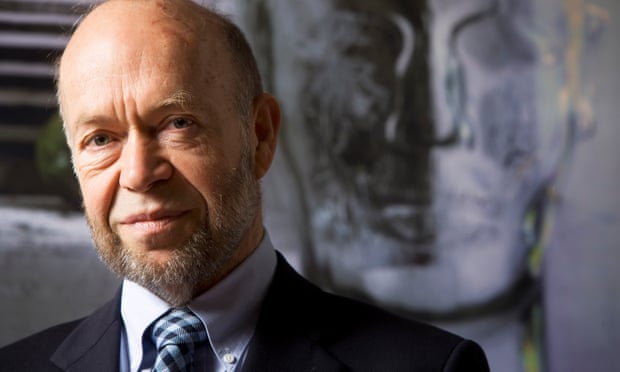
By James Hansen: I Don’t Think I’m an Alarmist

http://www.theguardian.com/environment/2016/apr/12/climate-scientist-james-hansen-i-dont-think-im-an-alarmist

Here is an interview with James Hansen, the world’s leading climate scientist. It’s an intelligent and thoughtful interview until, as usual, Hansen’s final statement:

The one thing, which is most important, is the assertion by the fossil fuel industry and the people who support them, that it would be expensive to solve the problem, is absolutely wrong. There have been economic studies that show if you add a gradually rising fee to fossil fuels, by collecting a fee on fossil fuel companies at the source, the domestic mine, or port of entry, and if you distribute the money to the public, an equal amount to all legal residents, it would actually spur the economy. It would increase the gross domestic product and add millions of jobs. We need to have such a common sense solution, which is revenue neutral, so it doesn’t make the government bigger. Instead of proposing taxes or regulations that conservatives will fight tooth and nail, we should find an approach that both liberals and conservatives would be willing to support. That’s what needs to be understood, that it’s not painful to solve this problem if we are smart, but we have to think this through.

It is remarkable that a really smart scientist could believe something so obviously wrong, and something that conflicts with the laws of thermodynamics that all scientists must bow to.

And why did the interviewer not point out the obvious errors in this statement? After all, she questioned everything else in an intelligent manner. That is, the interviewer questioned everything except the thing that really mattered.

This is so BIG and so COMMON an error that we need a BIG explanation.

I think it has to be evolved denial.

Canadian Federal NDP Party Melt Down

Disagreement within the NDP party on what to do about fossil energy is causing the party to melt down.

They, like all the other parties, lack an understanding of thermodynamics which makes it impossible to have an intelligent debate and to choose an optimal energy policy.

It’s a shame because we need a progressive party ready with policies appropriate for navigating collapse.

By Erik Lindberg: Six Myths About Climate Change that Liberals Rarely Question

I stumbled on this superb essay by Erik Lindberg.

Initially I intended to highlight a few of Erik’s most insightful comments but quickly realized the whole thing is insightful so here it is in whole.

If you don’t have time to read the whole thing then I suggest you skip ahead to the last section: Myth 6: There is Nothing I Can Do.

I’m impressed that Erik gets it with a Ph.D. in English rather than Physics or Engineering, and his education no doubt contributes to the high quality of his writing.

I intend to explore more of his work.

http://transitionmilwaukee.org/profiles/blogs/six-myths-about-climate-change-that-liberals-rarely-question


Myth #1: Liberals Are Not In Denial

“We will not apologize for our way of life” –Barack Obama

The conservative denial of the very fact of climate change looms large in the minds of many liberals. How, we ask, could people ignore so much solid and unrefuted evidence? Will they deny the existence of fire as Rome burns once again? With so much at stake, this denial is maddening, indeed. But almost never discussed is an unfortunate side-effect of this denial: it has all but insured that any national debate in America will occur in a place where most liberals are not required to challenge any of their own beliefs. The question has been reduced to a two-sided affair—is it happening or is it not—and liberals are obviously on the right side of that.

If we broadened the debate just a little bit, however, we would see that most liberals have just moved a giant boat-load of denial down-stream, and that this denial is as harmful as that of conservatives. While the various aspects of liberal denial are my main overall topic, here, and will be addressed in our following five sections, they add up to the belief that we can avoid the most catastrophic levels of climate disruption without changing our fundamental way of life. This is myth is based on errors that are as profound and basic as the conservative denial of climate change itself.

But before moving on, one more point about liberal and conservative denial: Naomi Klein has suggested that conservative denial may have its roots, it will surprise many liberals, in some pretty clear thinking. [i] At some level, she has observed, conservatives climate deniers understand that addressing climate change will, in fact, change our way of life, a way of life which conservatives often view as sacred. This sort of change is so terrifying and unthinkable to them, she argues, that they cut the very possibility of climate change off at its knees: fighting climate change would force us to change our way of life; our way of life is sacred and cannot be questioned; ergo, climate change cannot be happening.

We have a situation, then, where one half of the population says it is not happening, and the other half says it is happening but fighting it doesn’t have to change our way of life. Like a dysfunctional and enabling married couple, the bickering and finger-pointing, and anger ensures that nothing has to change and that no one has to actually look deeply at themselves, even as the wheels are falling off the family-life they have co-created. And so do Democrats and Republicans stay together in this unhappy and unproductive place of emotional self-protection and planetary ruin.

Myth #2: Republicans are Still More to Blame

“Yes, America does face a cliff — not a fiscal cliff but a set of precipices [including a carbon cliff] we’ll tumble over because the GOP’s obsession over government’s size and spending has obscured them.” -Robert Reich

It is true that conservative politicians in the United States and Europe have been intent on blocking international climate agreements; but by focusing on these failed agreements, which only require a baby-step in the right direction, liberals obliquely side-step the actual cause of global warming—namely, burning fossil fuels. The denial of climate change isn’t responsible for the fact that we, in the United States, are responsible for about one quarter of all current emissions if you include the industrial products we consume (and an even greater percentage of all emissions over time), even though we make up only 6% of the world’s population. Our high-consumption lifestyles are responsible for this. Republicans do not emit an appreciably larger amount of carbon dioxide than Democrats.

Because pumping gasoline is our most direct connection to the burning of fossil fuels, most Americans overemphasize the significance of what sort of car we drive and many liberals might proudly point to their small economical cars or undersized SUVs. While the transportation sector is responsible for a lot of our emissions, the carbon footprint of any one individual has much more to do with his or her overall levels of consumption of all kinds—the travel (especially on airplanes), the hotels and restaurants, the size and number of homes, the computers and other electronics, the recreational equipment and gear, the food, the clothes, and all the other goods, services, and amenities that accompany an affluent life. It turns out that the best predictor of someone’s carbon footprint is income. This is true whether you are comparing yourself to other Americans or to other people around the world. Middle-class American professionals, academics, and business-people are among the world’s greatest carbon emitters and, as a group, are more responsible than any other single group for global warming, especially if we focus on discretionary consumption. Accepting the fact of climate change, but then jetting off to the tropics, adding another oversized television to the collection, or buying a new Subaru involves a tremendous amount of denial. There are no carbon offsets for ranting and raving about conservative climate-change deniers.

Myth #3: Renewable Energy Can Replace Fossil Fuels

“We will harness the sun and the winds and the soil to fuel our cars and run our factories.” –Barack Obama

This is a hugely important point. Everything else hinges on the myth that we might live a lifestyle similar to our current one powered by wind, solar, and biofuels. Like the conservative belief that climate change cannot be happening, liberals believe that renewable energy must be a suitable replacement. Neither view is particularly concerned with the evidence.

Conventional wisdom among American liberals assures us that we would be well on our way to a clean, green, low-carbon, renewable energy future were it not for the lobbying efforts of big oil companies and their Republican allies. The truth is far more inconvenient than this: it will be all but impossible for our current level of consumption to be powered by anything but fossil fuels. The liberal belief that energy sources such as wind, solar, and biofuels can replace oil, natural gas, and coal is a mirror image of the conservative denial of climate change: in both cases an overriding belief about the way the world works, or should work, is generally far stronger than any evidence one might present. Denial is the biggest game in town. Denial, as well as a misunderstanding about some fundamental features of energy, is what allows someone like Bill Gates assume that “an energy miracle” will be created with enough R & D. Unfortunately, the lessons of microprocessors do not teach us anything about replacing oil, coal, and natural gas.

It is of course true that solar panels and wind turbines can create electricity, and that ethanol and bio-diesel can power many of our vehicles, and this does lend a good bit of credibility to the claim that a broader transition should be possible—if we can only muster the political will and finance the necessary research. But this view fails to take into account both the limitations of renewable energy and the very specific qualities of the fossil fuels around which we’ve built our way of life. The myth that alternative sources of energy are perfectly capable of replacing fossil fuels and thus of maintaining our current way of life receives widespread support from our President to leading public intellectuals to most mainstream journalists, and receives additional backing from our self-image as a people so ingenious that there are no limits to what we can accomplish. That fossil fuels have provided us with a one-time burst of unrepeatable energy and affluence (and ecological peril) flies in the face of nearly all the stories we tell ourselves about ourselves. Just starting to dispel this myth requires that I go into the issue a bit more deeply and at greater length

Because we have come to take the power and energy-concentration of fossil fuels for granted, and see our current lifestyle as normal, it is easy to ignore the way the average citizens of industrialized societies have an unprecedented amount of energy at their disposal. Consider this for a moment: a single $3 gallon of gasoline provides the equivalent of about 80 days of hard manual labor. Fill up your 15 gallon gas tank in your car, and you’ve just bought the same amount of energy that would take over three years of unremitting manual labor to reproduce. Americans use more energy in a month than most of our great-grandparents used during their whole lifetime. We live at a level, today, that in previous days could have only been supported by about 150 slaves for every American—though even that understates it, because we are at the same time beneficiaries of a societal infrastructure that is also only possible to create if we have seemingly limitless quantities of lightweight, relatively stable, easily transportable, and extremely inexpensive ready-to-burn fuel like oil or coal.

A single, small, and easily portable gallon of oil is the product of nearly 100 tons of surface-forming algae (imagine 5 dump trucks full of the stuff), which first collected enormous amounts of solar radiation before it was condensed, distilled, and pressure cooked for a half-billion years—and all at no cost to the humans who have come to depend on this concentrated energy. There is no reason why we should be able to manufacture at a reasonable cost anything comparable. And when we look at the specific qualities of renewable energy with any degree of detail we quickly see that we have not. Currently only about a half of a percent of the total energy used in the United States is generated by wind, solar, biofuels, or geothermal heat. The global total is not much higher, despite the much touted efforts in Germany, Spain, and now China. In 2013, 1.1% of the world’s total energy was provided by wind and only 0.2% by solar.[ii] As these low numbers suggest, one of the major limitations of renewable energy has to do with scale, whether we see this as a limitation in renewable energy itself, or remind ourselves that the expectations that fossil fuels have helped establish are unrealistic and unsustainable.

University of California physics professor Tom Murphy has provided detailed calculations about many of the issues of energy scale in his blog, “Do the Math.” With the numbers adding up, we are no longer able to wave the magic wand of our faith in our own ingenuity and declare the solar future would be here, but for those who refuse to give in the funding it is due. Consider a few representative examples: most of us have, for instance, heard at some point the sort of figure telling us that enough sun strikes the Earth every 104 minutes to power the entire world for a year. But this only sounds good if you don’t perform any follow-up calculations. As Murphy puts it,

As reassuring as this picture is, the photovoltaic area [required] represents more than all the paved area in the world. This troubles me. I’ve criss-crossed the country many times now, and believe me, there is a lot of pavement. The paved infrastructure reflects a tremendous investment that took decades to build. And we’re talking about asphalt and concrete here: not high-tech semiconductor. I truly have a hard time grasping the scale such a photovoltaic deployment would represent. And I’m not even addressing storage here.” [iii]

In another post,[iv] Murphy calculates that a battery capable of storing this electricity in the U.S. alone (otherwise no electricity at night or during cloudy or windless spells) would require about three times as much lead as geologists estimate may exist in all reserves, most of which remain unknown. If you count only the lead that we’ve actually discovered, Murphy explains, we only have 2% of the lead available for our national battery project. The number are even more disheartening if you try to substitute lithium ion or other systems now only in the research phase. The same story holds true for just about all the sources that even well-informed people assume are ready to replace fossil fuels, and which pundits will rattle off in an impressively long list with impressive sounding numbers of kilowatt hours produced. Add them all up–even increase the efficiency to unanticipated levels and assume a limitless budget–and you will naturally have some big-sounding numbers; but then compare them to our current energy appetite, and you quickly see that we still run out of space, vital minerals and other raw materials, and in the meantime would probably have strip-mined a great deal of precious farmland, changed the earth’s wind patterns, and have affected the weather or other ecosystems in ways not yet imagined.

But the most significant limitation of fossil fuel’s alleged clean, green replacements has to do with the laws of physics and the way energy, itself, works. A brief review of the way energy does what we want it to do will also help us see why it takes so many solar panels or wind turbines to do the work that a pickup truck full of coal or a small tank of crude oil can currently accomplish without breaking a sweat. When someone tells us of the fantastic amounts of solar radiation that beats down on the Earth each day, we are being given a meaningless fact. Energy doesn’t do work; only concentrated energy does work, and only while it is going from its concentrated state to a diffuse state—sort of like when you let go of a balloon and it flies around the room until its pressurized (or concentrated) air has joined the remaining more diffuse air in the room.

When we build wind turbines and solar panels, or grow plants that can be used for biofuels, we are “manually” concentrating the diffuse energy of the sun or in the wind—a task, not incidentally, that requires a good deal of energy. The reason why these efforts, as impressive as they are, pale in relationship to fossil fuels has to do simply with the fact that we are attempting to do by way of a some clever engineering and manufacturing (and a considerable amount of energy) what the geology of the Earth did for free, but, of course, over a period of half a billion years with the immense pressures of the planet’s shifting tectonic plates or a hundred million years of sedimentation helping us out. The “normal” society all of us have grown up with is a product of this one-time burst of a pre-concentrated, ready-to-burn fuel source. It has provided us with countless wonders; but used without limits, it is threatening all life as we know it.

Myth 4: The Coming “Knowledge Economy” Will be a Low-Energy Economy

“The basic economic resource – the means of production – is no longer capital, nor natural resources, nor labor. It is and will be knowledge.” -Peter Drucker

“The economy of the last century was primarily based on natural resources, industrial machines and manual labor. . . . Today’s economy is very different. It is based primarily on knowledge and ideas — resources that are renewable and available to everyone.” -Mark Zuckerberg

A “low energy knowledge economy,” when promised by powerful people like Barack Obama, Bill Gates, or Mark Zuckerberg, may still our fears about our current ecological trajectory. At a gut level this vision of the future may match the direct experience of many middle-class American liberals. Your father worked in a smelting factory; you spend your day behind a laptop computer, which can, in fact, be run on a very small amount of electricity. Your carbon footprint must be lower, right? Companies like Apple and Microsoft round out this hopeful fantasy with their clever and inspiring advertisements featuring children in Africa or China joining this global knowledge economy as they crowd cheerfully around a computer in some picturesque straw-hut school room.

But there’s a big problem with this picture. This global economy may seem like it needs little more than an army of creative innovators and entrepreneurs tapping blithely on laptop computers at the local Starbucks. But the real global economy still requires a growing fleet of container ships—and, of course, all the iron and steel used to build them, all the excavators used to mine it, all the asphalt needed to pave more of the world. It needs a bigger and bigger fleet of UPS trucks and Fed Ex airplanes filling the skies with more and more carbon dioxide, it needs more paper, more plastic, more nickel, copper, and lead. It requires food, bottled water, and of course lots and lots of coffee. And more oil, coal, and natural gas. As Juliet Schor reports, each American consumer requires “132,000 pounds of oil, sand, grain, iron ore, coal and wood” to maintain our current lifestyle each year. That adds up to “an eye-popping 362 pounds a day.”[v] And the gleeful African kids that Apple asks us to imagine joining the global economy? They are far more likely to slave away in a gold mine or sift through junk hauled across the Atlantic looking for recyclable materials, than they are to be device-sporting global entrepreneurs. The Microsoft ads are designed for us, not them. Meanwhile, the numbers Schor reports are not going down in the age of “the global knowledge economy,” a term which should be consigned to history’s dustbin of misleading marketing slogans.

The “dematerialized labor” that accounts for the daily toil of the American middle class is, in fact, the clerical, management and promotional sector of an industrial machine that is still as energy-intensive and material-based as it ever was. Only now, much of the sooty and smelly part has been off-shored to places far, far away from the people who talk hopefully about a coming global knowledge economy. We like to pretend that the rest of the world can live like us, and we have certainly done our best to advertise, loan, seduce, and threaten people across the world to adopt our style, our values, and our wants. But someone still has to do the smelting, the welding, the sorting, and run the ceaseless production lines. And, moreover, if everyone lived like we do, took our vacations, drove our cars, ate our food, lived in our houses, filled them with oversized TVs and the endless array of throwaway gadgetry, the world would use four times as much energy and emit nearly four times as much carbon dioxide as it does now. If even half the world’s population were to consume like we do, we would have long since barreled by the ecological point of no-return.

Economists speak reverently of a decoupling between economic growth and carbon emissions, but this decoupling is occurring at a far slower rate than the economy is growing. There has never been any global economic growth that is not also accompanied by increased energy use and carbon emissions. The only yearly decreases in emissions ever recorded have come during massive recessions.

Myth 5: We can Reverse Global Warming Without Changing our Current Lifestyles

“Saving the planet would be cheap; it might even be free. . . . [It] would have hardly any negative effect on economic growth, and might actually lead to faster growth” –Paul Krugman

The upshot of the previous sections is that the comforts, luxuries, privileges, and pleasures that we tell ourselves are necessary for a happy or satisfying life are the most significant cause of global warming and that unless we quickly learn to organize our lives around another set of pleasures and satisfactions, it is extremely unlikely that our children or grandchildren will inherit a livable planet. Because we are falsely reassured by liberal leaders that we can fight climate change without any inconvenience, it bears repeating this seldom spoken truth. In order to adequately address climate change, people in rich industrial nations will have to reduce current levels of consumption to levels few are prepared to consider. This truth does not change according to our ability to stomach it.[vi]

Global warming is not complicated: it is caused mainly by burning fossil fuels; fossil fuels are burned in the greatest quantity by wealthy people and nations and for the products they buy and use. The larger the reach of a middle-class global society, the more carbon emissions there have been. While conservatives deny the science of global warming, liberals deny the only real solution to preventing its most horrific consequences—using less and powering down, perhaps starting with the global leaders in style and taste (as well as emissions), the American middle-class. In the meantime we continue to pump more and more carbon dioxide into the atmosphere with each passing year.

Myth 6: There is Nothing I Can Do.

The problem is daunting; making changes can be difficult.[vii] But not only can you do something, you can’t not do anything. Either you will continue to buy, use, and consume as if there is no tomorrow; or you will make substantial changes to the way you live. Both choices are “doing something.” Either you will emit far more CO2 than people in most parts of the globe; or you will bring your carbon footprint to an equitable level. Either you will turn away, ignore the warnings, bury your head in the sand; or you will begin to take a strong stance on perhaps the most significant moral challenge in the history of humanity. Either you will be a willing party to the most destructive thing humans have ever done; or you will resist the wants, the beliefs, and the expectations that are as important to a consumption-based global economy as the fossil fuels that power it. As Americans we have already done just about everything possible to bring the planet to the brink of what scientists are now calling “the sixth great extinction.” We can either keep on doing more of the same; or we can work to undo the damage we have done and from which we have most benefitted.
Utopia: What’s Wrong with Curing Malaria?

A clip from the 1st episode of the 2nd season of the TV series Utopia.

By Jack Alpert: How Much Degrowth is Enough?

This analysis by Jack Alpert of what is a sustainable long-term population uses a different approach to that discussed by Paul Chefurka here.

The two independent calculations arrive at roughly the same number of less than 100 million meaning we need more than a 98% population reduction to be sustainable.

By Chris Martenson: We’re Not Going To Make It… without real sacrifice

Slowly but surely Chris Martenson is speaking with more confidence and reality, and less hopium and denial, especially about climate change.

I’m starting to like his new more honest voice.

http://www.peakprosperity.com/blog/97643/we%E2%80%99re-not-going-make-it%E2%80%A6

The world is just not yet serious enough about the urgency of transitioning away from fossil fuels.  The math says that without a tremendous change in behavior, far greater than anything currently on display, we simply won’t “get there” waiting for market forces to do the job for us.

We’ll have to make and adhere to very different priorities. Such as completely redirecting our entire defense budgets to the process of retooling our entire relationship to energy.

We’ll need our buildings to use less energy. And we’ll need to live closer to where we work and play.

Our food will have to be grown differently. And it will have to travel less far to get to our plate.

Electricity will have to come from sources other than fossil fuels too.

Is it possible to figure this out in time? Well, whether it is or not is sort of beside the point. Because these changes are going to be forced on us anyways if we don’t.

So I guess I could be an optimist on the UN panel by telling them that I have 99% confidence that humans will someday be powering 100% of their energy needs from the sun.

I’ll just leave out that what I mean is that, in 100 or 200 years, humans will have painfully reverted back to a 1600’s-style subsistence farming lifestyle.

The point of this article is to refocus our attention on the need for each of us to lead the way, to begin our own individual energy transitions without waiting for some top-down solutions to come forward. The calvary simply isn’t going to show up.

book review: The Vital Question: Energy, Evolution, and the Origins of Complex Life by Nick Lane

Nick Lane has long been one of my favorite science writers, setting aside Varki of course who will always have a special place in my heart.

Nick Lane’s last book Life Ascending: The Ten Great Inventions of Evolution” discussed the 10 most important inventions of evolution: the origin of life, DNA, photosynthesis, the complex cell, sex, movement, sight, hot blood, consciousness, and death. I read the book 4 times, was enthralled each time, and no doubt will read it again.

An earlier book by Nick Lane, “Oxygen: The Molecule that Made the World” discussed the amazing transformation of our planet by photosynthesis. After reading this book I look at grass with different eyes. And I love to tell the story of oxygen to any soul who will listen.

In his latest book “The Vital Question: Energy, Evolution, and the Origins of Complex Life” Lane has outdone himself.

The book is sweeping in scope, tackles the most cosmic question, as well as some important earthly questions, is beautifully written, and reads like a page turning mystery thriller.

There is so much here, where to begin?

Lane presents the latest science on the origin of life and makes a compelling case that prokaryotic (simple single cell) life is probably common throughout the universe because all that is required is rock, water, CO2 and energy, all of which are found within alkaline hydrothermal vents on geologically active planets, of which there are 40 billion in our galaxy alone, and probably a similar number in each of the other 100 billion galaxies.

Life emerges as a gradual and predictable transition from geochemistry to biochemistry. Life is not some spiritual mystery, but rather a predictable outcome of the fact that the universe abhors an energy gradient, and life is its best mechanism for degrading energy.

This theory elegantly explains why LUCA (the Last Universal Common Ancestor of all life) and all life that followed is chemiosmotic meaning that it powers itself with a strange highly unintuitive mechanism that pumps protons across a membrane.

The human body, for example, pumps a staggering 10 to the 21st power protons per second of life.

If life is nothing but an electron looking for a place to rest, death is nothing but that electron come to rest.

Lane then turns his attention to the origin of complex life: the eukaryotic cell. All of the multicellular life on earth that normally interests us such as plants, animals, fungi, and hot girls or guys, have a common eukaryote ancestor, and it appears this ancestor emerged only once on earth about 2 billion years after the emergence of simple life. Lane considers this the black hole of biology. A vital but rarely acknowledged singularity that requires explanation.

Lane presents a theory to explain the emergence of the eukaryote and shows that unlike simple life which is probable and predictable, complex life is improbable and unpredictable. It depended on a rare endosymbiosis (merging) of prokaryotes (simple cells) somewhat analogous to a freak accident. The resulting LECA (Last Eukaryotic Common Ancestor), having 2 genomes that needed to cooperate and evolve in harmony, was probably fragile, sickly, and vulnerable to extinction which forced it to evolve many unusual characteristics common to complex life such as the nucleus, sex, two sexes, programmed cell death, germline-soma distinction, and trade-offs between fitness and fertility, adaptability and disease, and ageing and death.

As the endosymbiont (cell within the cell) evolved into mitochondria (the energy powerhouses), eukaryotes were able to break through the energy per gene barrier that constrained the morphological complexity of bacteria and archaea for 2 billion years. Suddenly there was enough energy to power the evolution of complex structure, multi-cellular life, nail salons, and the iPhone.

How lucky that our minds, the most improbable biological machines in the universe, are now a conduit for this restless flow of energy, that we can think about why life is the way it is.

This theory will be particularly satisfying to students of human overshoot who understand that abundant non-renewable energy is the main reason for the size and complexity of today’s human civilization.

The universe, life, and complexity are all about energy.

I am a fan and student of Varki’s theory that human success is the result of a rare simultaneous mutation for denial of reality and an extended theory of mind.

Combining Nick Lane’s theory with Ajit Varki’s theory, and an understanding of our place on the overshoot curve, leads one to an amazing and almost mystical conclusion.

Intelligent life with an extended theory of mind is the result of a rare and unpredictable double mutation, layered on the emergence of complex cells, another rare and unpredictable accident. Intelligent life in the universe is therefore rare and will probably exist for only a short time before its intelligence fueled overshoot, and denial thereof, causes it to go extinct.

The fact that we are alive to witness and understand a very rare peak of intelligent life in the universe is cause for genuine awe.

We should savor it while it lasts.

Here is Nick Lane talking about some of the ideas in his book. I much preferred the book because the subject is too deep to be covered in a 30 minute talk but it’s a taste if you don’t have time for the full meal.

Here is an excerpt from the book’s epilogue.

All life on earth is chemiosmotic, depending on proton gradients across membranes to drive carbon and energy metabolism. We have explored the possible origins and consequences of this peculiar trait. We’ve seen that living requires a continuous driving force, an unceasing chemical reaction that produces reactive intermediates, including molecules like ATP, as by-products. Such molecules drive the energy-demanding reactions that make up cells. This flux of carbon and energy must have been even greater at the origins of life, before the evolution of biological catalysts, which constrained the flow of metabolism within narrow channels. Very few natural environments meet the requirements for life – a continuous, high flux of carbon and usable energy across mineral catalysts, constrained in a naturally microcompartmentalised system, capable of concentrating products and venting waste. While there may be other environments that meet these criteria, alkaline hydrothermal vents most certainly do, and such vents are likely to be common on wet rocky planets across the universe. The shopping list for life in these vents is just rock (olivine), water and CO2, three of the most ubiquitous substances in the universe. Suitable conditions for the origin of life might be present, right now, on some 40 billion planets in the Milky Way alone.

Alkaline hydrothermal vents come with both a problem and a solution: they are rich in H2, but this gas does not react readily with CO2. We have seen that natural proton gradients across thin semiconducting mineral barriers could theoretically drive the formation of organics, and ultimately the emergence of cells, within the pores of the vents. If so, life depended from the very beginning on proton gradients (and iron–sulphur minerals) to break down the kinetic barriers to the reaction of H2 and CO2. To grow on natural proton gradients, these early cells required leaky membranes, capable of retaining the molecules needed for life without cutting themselves off from the energising flux of protons. That, in turn, precluded their escape from the vents, except through the strait gates of a strict succession of events (requiring an antiporter), which enabled the coevolution of active ion pumps and modern phospholipid membranes. Only then could cells leave the vents, and colonise the oceans and rocks of the early earth. We saw that this strict succession of events could explain the paradoxical properties of LUCA, the last universal common ancestor of life, as well as the deep divergence of bacteria and archaea. Not least, these strict requirements can explain why all life on earth is chemiosmotic – why this strange trait is as universal as the genetic code itself.

This scenario – an environment that is common in cosmic terms, but with a strict set of constraints governing outcomes – makes it likely that life elsewhere in the universe will also be chemiosmotic, and so will face parallel opportunities and constraints. Chemiosmotic coupling gives life unlimited metabolic versatility, allowing cells to ‘eat’ and ‘breathe’ practically anything. Just as genes can be passed around by lateral gene transfer, because the genetic code is universal, so too the toolkit for metabolic adaptation to very diverse environments can be passed around, as all cells use a common operating system. I would be amazed if we did not find bacteria right across the universe, including our own solar system, all working in much the same way, powered by redox chemistry and proton gradients across membranes. It’s predictable from first principles.

But if that’s true, then complex life elsewhere in the universe will face exactly the same constraints as eukaryotes on earth – aliens should have mitochondria too. We’ve seen that all eukaryotes share a common ancestor which arose just once, through a rare endosymbiosis between prokaryotes. We know of two such endosymbioses between bacteria (Figure 25) – three, if we include Parakaryon myojinensis – so we know that it is possible for bacteria to get inside bacteria without phagocytosis. Presumably there must have been thousands, perhaps millions, of cases over 4 billion years of evolution. It’s a bottleneck, but not a stringent one. In each case, we would expect to see gene loss from the endosymbionts, and a tendency to greater size and genomic complexity in the host cell – exactly what we do see in Parakaryon myojinensis. But we’d also expect intimate conflict between the host and the endosymbiont – this is the second part of the bottleneck, a double whammy that makes the evolution of complex life genuinely difficult. We saw that the first eukaryotes most likely evolved quickly in small populations; the very fact that the common ancestor of eukaryotes shares so many traits, none of which are found in bacteria, implies a small, unstable, sexual population. If Parakaryon myojinensis is recapitulating eukaryotic evolution, as I suspect, its extremely low population density (just one specimen in 15 years of hunting) is predictable. Its most likely fate is extinction. Perhaps it will die because it has not successfully excluded all its ribosomes from its nuclear compartment, or because it has not yet ‘invented’ sex. Or perhaps, chance in a million, it will succeed, and seed a second coming of eukaryotes on earth.

I think we can reasonably conclude that complex life will be rare in the universe – there is no innate tendency in natural selection to give rise to humans or any other form of complex life. It is far more likely to get stuck at the bacterial level of complexity. I can’t put a statistical probability on that. The existence of Parakaryon myojinensis might be encouraging for some – multiple origins of complexity on earth means that complex life might be more common elsewhere in the universe. Maybe. What I would argue with more certainty is that, for energetic reasons, the evolution of complex life requires an endosymbiosis between two prokaryotes, and that is a rare random event, disturbingly close to a freak accident, made all the more difficult by the ensuing intimate conflict between cells. After that, we are back to standard natural selection. We’ve seen that many properties shared by eukaryotes, from the nucleus to sex, are predictable from first principles. We can go much further. The evolution of two sexes, the germline–soma distinction, programmed cell death, mosaic mitochondria, and the trade-offs between aerobic fitness and fertility, adaptability and disease, ageing and death, all these traits emerge, predictably, from the starting point that is a cell within a cell. Would it all happen over again? I think that much of it would. Incorporating energy into evolution is long overdue, and begins to lay a more predictive basis to natural selection.

Energy is far less forgiving than genes. Look around you. This wonderful world reflects the power of mutations and recombination, genetic change – the basis for natural selection. You share some of your genes with the tree through the window, but you and that tree parted company very early in eukaryotic evolution, 1.5 billion years ago, each following a different course permitted by different genes, the product of mutations, recombination, and natural selection. You run around, and I hope still climb trees occasionally; they bend gently in the breeze and convert the air into more trees, the magic trick to end them all. All of those differences are written in the genes, genes that derive from your common ancestor but have now mostly diverged beyond recognition. All those changes were permitted, selected, in the long course of evolution. Genes are almost infinitely permissive: anything that can happen will happen.

But that tree has mitochondria too, which work in much the same way as its chloroplasts, endlessly transferring electrons down its trillions upon trillions of respiratory chains, pumping protons across membranes as they always did. As you always did. These same shuttling electrons and protons have sustained you from the womb: you pump 1021 protons per second, every second, without pause. Your mitochondria were passed on from your mother, in her egg cell, her most precious gift, the gift of living that goes back unbroken, unceasing, generation on generation, to the first stirrings of life in hydrothermal vents, 4 billion years ago. Tamper with this reaction at your peril. Cyanide will stem the flow of electrons and protons, and bring your life to an abrupt end. Ageing will do the same, but slowly, gently. Death is the ceasing of electron and proton flux, the settling of membrane potential, the end of that unbroken flame. If life is nothing but an electron looking for a place to rest, death is nothing but that electron come to rest.

This energy flux is astonishing and unforgiving. Any change over seconds or minutes could bring the whole experiment to an end. Spores can pull it off, descending into metabolic dormancy from which they must feel lucky to emerge. But for the rest of us … we are sustained by the same processes that powered the first living cells. These processes have never changed in a fundamental way; how could they? Life is for the living. Living needs an unceasing flux of energy. It’s hardly surprising that energy flux puts major constraints on the path of evolution, defining what is possible. It’s not surprising that bacteria keep doing what bacteria do, unable to tinker in any serious way with the flame that keeps them growing, dividing, conquering. It’s not surprising that the one accident that did work out, that singular endosymbiosis between prokaryotes, did not tinker with the flame, but ignited it in many copies in each and every eukaryotic cell, finally giving rise to all complex life. It’s not surprising that keeping this flame alive is vital to our physiology and evolution, explaining many quirks of our past and our lives today. How lucky that our minds, the most improbable biological machines in the universe, are now a conduit for this restless flow of energy, that we can think about why life is the way it is. May the proton-motive force be with you!

By Gail Tverberg: Why We Have a Wage Inequality Problem

Here is the latest excellent work by Gail Tverberg.

https://ourfiniteworld.com/2016/03/29/why-we-have-a-wage-inequality-problem/

In this essay Gail explains what is causing the discontent that has enabled the rise of Trump, and probably other worse leaders to follow that exploit human hardship.

Gail explores a wide solution space and concludes that there is nothing we can do to avoid collapse other than perhaps kick the can a little longer.

This led me to ponder the following…

If humans were able to break through their evolved denial of reality and understand their predicament, then we might avoid wars and violence associated with blaming others for our misfortune.

However, if the majority understood our predicament the system would likely collapse immediately because it is elevated today in large part by faith and belief.

Given that collapse is imminent regardless of what we believe, I’m thinking I’d prefer a world where people understood what is going on and worked together to make the best of a bad situation rather than seeking scapegoats.

But since life at its core is replicating chemical reactions competing for finite resources, we should expect the worst and be very grateful for anything better.

It would be really nice to “roll back” the world economy to a date back before population rose to its current high level, resources became as depleted as they are, and pollution became as big a problem as it is. Unfortunately, we can’t really do this.

We are now faced with the question of whether we can do anything to mitigate what may be a near-term crisis. At this point, it may be too late to make any changes at all, before the downward slide into collapse begins. The current low prices of fossil fuels make the current situation particularly worrisome, because the low prices could lead to lower fossil fuel production, and hence reduce world GDP because of the connection between energy consumption and GDP growth. Low oil prices could also push the world economy downward, due to increasing defaults on energy sector loans and adverse impacts on economies of oil exporters.

In my view, a major reason why fossil fuel prices are now low is because of the low wages of “ordinary workers.” If these wages were higher, workers around the globe could be buying more houses and cars, and indirectly raising demand for fossil fuels. Thus, low fossil fuel prices may be a sign that collapse is near.

One policy that might be helpful at this late date is increased focus on contraception. In fact, an argument could be made for more permissive abortion policies. Our problem is too little resources per capita–keeping the population count in the denominator as low as possible would be helpful.

On a temporary basis, it is also possible that new programs that lead to rising debt–whether or not these programs buy anything worthwhile–may be helpful in keeping the world economy from collapsing. This occurs because the economy is funded by a combination of wages and by growing debt. A shortfall in wages can be hidden by more debt, at least for a short time. Of course, this is not a long-term solution. It simply leads to a larger amount of debt that cannot be repaid when collapse does occur.