By Ugo Bardi: The road to the Seneca Cliff is paved with evil intentions: How to destroy the world’s forests

Deforestation

Here we have a glimpse of what fossil energy scarcity will do to the environment in the not too distant future. Poor people will do whatever it takes to eat and stay warm. Other species will decline even faster than they do today. Your own land will not be safe.

And we somehow think a one child policy is too barbaric to even discuss. Idiots, all of us.

https://cassandralegacy.blogspot.ca/2018/04/the-road-to-seneca-cliff-is-paved-with.html

h/t Michael Dowd

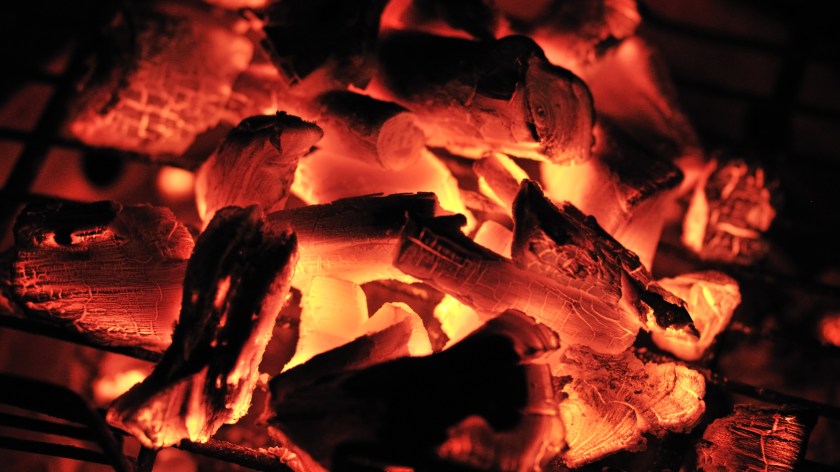
Then, there came the 21st century and with it the increasing costs of fossil fuels. Prices have been going up and down, generating occasional screams of “centuries of abundance.” But, by now, nobody sane in their mind can miss the fact that the old times of cheap fuels will not come back. One consequence has been the diffusion of pellet-fueled stoves in Italy, often done in the name of “saving the environment.” (figure on the right, source) Theoretically, wood pellets are a renewable fuel – but only theoretically. If they are consumed faster than trees can regrow, they are not. And the appetite of Italy for pellets is insatiable: Italians consume 40% of all the pellet burned in Europe while Italy produces only about 10% of the wood it burns.

With the housing market stagnating, someone was bound to realize that the only remaining source of profit from the land would come from turning forests into pellets. The consequence is the just approved evil piece of legislation. All in the name of the universally agreed concept that a tree is worth something only after it is felled, the new law gives to local administrations the power to cut everything, when they want, as they want. Let me leave the description of this disaster to my friend and colleague Jacopo Simonetta, writing in a recent post in “apocalottimismo”.

[The law] says that if the landlords refuse to cut the woods they own, the local administrators can occupy – even without the landlord’s agreement – the land and leave the “productive recovery” (that is the cutting of the trees) to companies or cooperatives of their choice (which means, “the friends of their friends”). And not just that. The companies which obtain the grant to cut the trees will provide economic compensation to the city administration in a form that the administration will define. For example, new streets, new parking lots, new street lighting, or anything the mayor will deem necessary for his or her electoral campaign. Or in the form of money, this time to the regional government, in order to “cash in” something – as people say.


You may wonder whether anyone in Italy is speaking against such a horrible law; shouldn’t the government protect people’s property, including woods? In practice, just a few of the usual suspects have been protesting: environmental associations, a few experts, university professors, and the like – all people without any real power in the Italian society. From everybody else, especially at the political level, the silence has been deafening.

It is understandable: fighting this law implies going against an unholy alliance of 1) local politicians looking for funds for their re-election, 2) people living in the countryside, desperate for a revenue of some kind, of any kind, and 3) city dwellers who want low-cost pellets to warm their homes. And if you are thinking of defending a forest you believe should not be destroyed, you don’t need to live in places where mafia rules to understand that “they” know where your children go to school.

In the end, it is all the result of the harsh law of EROI the energy return on energy invested. Humans exploit first the resources which give them the best yield (high EROI) and, in the recent history, these resources have been fossil fuels. Then, they move to progressively lower EROI resources. Now, it is the turn of woods in Italy, but it is not limited to Italy. Most civilization of the past fell together with a wave of deforestation that destroyed their last resources. Ours is not different, why should it be?


On the Trans Mountain Pipeline

Trans Mountain pipeline

Many environmental groups in my province of B.C. oppose construction of a new pipeline from Alberta to the west coast. The motives of these groups include:

  • preventing dirty oil from contributing to climate change;
  • preventing environmental damage from pipeline and oil tanker spills;
  • concern for First Nation rights.

While these motives are admirable, all of the groups lack an understanding of, and/or deny, the laws of thermodynamics that govern our economy, and our overshoot predicament.

It’s true that climate change is a serious threat. In fact it’s much more serious than most environmental groups acknowledge. We are already locked into a dangerous 2C higher climate with 10m of sea level rise no matter what we do. There are no actions we can take today to solve the climate problem and avoid future suffering. Our choices today are to try to maintain our current lifestyle and increase future suffering, or reduce our population and consumption, and constrain future suffering.

It’s also true that the pipeline will create some new risks for environmental damage, but these risks pale in comparison to the damage the human footprint is already causing. Habitat loss, species extinction, soil depletion, nitrogen imbalance, pollution, deforestation, overfishing, and non-renewable resource depletion are the real threats environmental groups should focus on. As with climate change, nothing can be done about these threats unless we reduce human population and consumption.

In addition, if you want to maintain our current lifestyle, and you are concerned about the risk of oil spills, then there is a good argument to build the pipeline.

With regard to First Nations rights, all 7.6 billion humans descended from one small tribe in Africa about 100,000 years ago, meaning we’re all basically the same. Environmentalists should focus on the rights of all future generations, including First Nations.

Our standard of living is completely dependent on the burning of fossil energy, especially oil. We have already burned most of the cleaner and cheaper oil. That’s why we are mining dirty expensive oil sands, and fracking. To reduce our use of fossil energy we must reduce our standard living and our population.

Put another way, new pipelines will be built for another decade or so, until even the dirty oil is gone, unless we reduce our consumption of oil, and the only way to accomplish that is to shrink our economy, standard of living, and population.

If environmental groups want to make a difference on the issues that matter, as well as lesser issues like preventing new pipelines, they must:

  • set good examples in their personal lives (no more than one child, no long distance travel, reduced consumption of everything);
  • advocate for a global one child policy;
  • advocate for austerity, conservation, and a smaller economy (the simplest and most effective way to accomplish this would be to implement a higher interest rate).

It’s true that our choices are unpalatable, but they are reality, and there is a key point that must be understood when weighing what to do. The remaining affordable fossil energy is depleting quickly. Extraction will, in a decade or so, become too expensive for us to afford, meaning fossil energy will be gone for all intents and purposes. When this happens, our lifestyles and population will collapse, thanks to the laws of thermodynamics, no matter what we choose to do.

The advantages of choosing to voluntarily contract today are threefold. First, we would constrain future suffering caused by climate change. Second, we could use some of our remaining wealth to prepare a softer landing zone and to orchestrate a fairer and more humane descent. Third, we might leave some oil in the ground for our grandchildren so they can enjoy some of the comforts we take for granted. The alternative of doing nothing until thermodynamics forces the issue is chaos, war, and much more suffering for all species, including humans.

This article today suggests that environmental groups may have succeeded in preventing construction of the Trans Mountain pipeline:

https://oilprice.com/Energy/Crude-Oil/Disaster-Hits-Canadas-Oil-Sands.html

Kinder Morgan said it would halt nearly all work on a pipeline project that is crucial to the entire Canadian oil sands industry, representing a huge blow to Alberta’s efforts to move oil to market.

Here is what I predict will happen:

  1. Environmentalists will continue to deny reality and focus on the wrong things.
  2. We will not voluntarily contract the economy.
  3. We will not implement a one child policy.
  4. The Trans Mountain pipeline will be built, provided that our luck persists at avoiding an accidental crash caused by the instability we have created by using extreme debt to maintain an illusion of economic growth.

Let’s check back in a year to see if I am correct.

By Paul Arbair: The World in 2018 (part 4)

Paul Arbair - The World in 2018

I just stumbled on Paul Arbair. I’m very impressed.

I now need two hands to count the number of people in the world that understand and regularly write about the reality of our predicament. Although apparently Paul Arbair is a pen name (his avatar is a Polar Bear), so maybe one hand will continue to suffice.

Here Arbair explains the history and centrality of energy to the success of humans, how economics (and all the other social sciences) are embarrassingly ignorant of this vital relationship, how we have used debt to mask a decline in the quality of energy and to accelerate ecosystem damage, and how we are fast approaching an unpleasant end game.

I note that Arbair concludes his essay by discussing our near universal denial of reality.

Following are a few paragraphs I extracted from the essay, but I recommend you read the whole thing.

https://wordpress.com/read/blogs/102935372/posts/1485


The issues with conventional economic theories and models are many, varied and complex. They include a number of flaws and blind spots, which have been laid bare by the Great Financial Crisis and its aftermath. Most importantly, they include the almost complete ignorance – or rather voluntary omission – of the fundamental biophysical foundations of the economic process. This ignorance of how the flows of energy and matter underpin economic activity – and economic growth – results from the evacuation of the natural world from mainstream economic thought, which occurred in the 20thcentury, when it suddenly looked like homo sapiens had managed to conquer nature and the curse of resource scarcity had been all but defeated.


Losing thrust at high altitude

However, in advanced economies this energy boost started to wear out in the 1970s, for several reasons. First, energy use ran into a classic phenomenon of diminishing returns: the low-hanging fruits of economic growth had been picked first, many large-scale infrastructure investments with a high economic multiplier effect (including electrification) had already been made, and in many industries and sectors maximum machine speed/velocity was already being reached. Just like the average speed of automobiles, motorbikes or planes, the average speed of industrial machines in many sectors increased much faster until the late 1960s/early 1970s than after that. The physical and economic limits to energy-based speed-ups thus probably played a role in the sudden slowdown in productivity growth at the turn of the 1970s. Second, increasing concerns about the atmospheric and ground pollution resulting from fossil energy use – and from material use made possible by fossil fuels – triggered the adoption at the beginning of the 1970s of the first set of environmental regulations in Western countries, which established some constraints on the further expansion of energy use. Third, oil depletion in the U.S. – until then the world’s largest producer – and a subsequent realignment of energy geopolitics lead to a dramatic rise in the price of oil (i.e. the 1973 oil crisis), which rapidly reverberated across the economy. This triggered a considerable slowdown of the rate of increase of energy consumption, resulting in much slower economic growth. The combination of economic stagnation and soaring price inflation came to be known as ‘stagflation’, and lasted until the beginning of the 1980s, when oil prices finally started to decrease. After a sharp growth slowdown in the 1970s, world energy use per capita started to decline slightly in the 1980s and 1990s, an only picked up again at the beginning of the 21st century, as a result of China’s rapid expansion and massive use of domestic coal resources.

Oil depletion and its effects have remained a constant source of concern – and of geopolitical tensions – since the oil crises of the 1970s. The threat of oil supply shortages was partly alleviated in the 1980s and 1990s by the discovery and exploitation of new major oil fields in North America (Alaska) and Europe (North Sea), but it resurfaced in the 2000s when wars disrupted production in the Middle East, oil prices spiked, and fears of an imminent peak and decline of global oil production (‘peak oil’) grew. These fears have since then receded, largely as a result of the exploitation of ‘tight oil’ (also called ‘shale oil’) in North America, using hydraulic fracturing (‘fracking’) and horizontal drilling, as well as to other ‘unconventional’ sources (oil sands, deepwater oil) and to the use of enhanced recovery techniques in conventional oil fields. These are however temporary fixes: shale oil production is expected to peak in just a few years time, and global oil discoveries have fallen to their lowest point since the 1940s, prompting rising fears of a supply crunch – and possible price spike – around 2020.

While concerns about oil depletion – and fossil fuels depletion in general – tend to mostly focus on quantitative aspects (i.e. availability and affordability), qualitative aspects are often overlooked. Yet they are as, or even more, significant. In fact, depletion means that it is getting more and more difficult, costly, resource-intensive and polluting to get oil – and other fossil fuels – out of the ground. It also means that the energetic quality (measured in terms of exergy) and productivity (measured in terms of net energy or EROI) of what is extracted tends to go down, resulting in a decreasing capacity to power useful and productive work, and in a decreasing ability to provide ‘surplus energy’ to society (i.e. energy that can effectively be used for doing other things than finding, extracting, processing, converting, transporting and distributing energy). According to some estimates the EROI of global oil and gas has declined by nearly 50% in the last two decades, meaning that new technology and production methods (deep water or horizontal drilling) help to maintain production but appear insufficient to counter the decline in the energetic productivity of conventional oil and gas. In other words, we are now entering the age of ‘crappy oil’, or at least we are clearly heading that way…

The declining energetic quality and productivity of fossil energy resources has resulted in the last decades in a rising energy intensity of the global energy system. According to the International Energy Agency (IEA), the share of the world’s Total Primary Energy Supply (TPES) used by the energy supply sector (which comprises all energy extraction, conversion, storage, transmission, and distribution processes that deliver final energy to end users) expanded from 24% in 1973 to 31% in 2015, while the share available for Total Final Consumption (TFC) by other sectors of the economy went down from 76% to 69%. Overall, the quantity of energy supplied to end-use sectors (i.e. industry, transport, residential, services, agriculture, etc.) rose by 101% over the period, but the quantity of energy that had to be used by the energy system to supply this energy to end users increased by 196% (source: IEA Key World Energy Statistics 2017). Overall, a rising share of the fossil energy we get out of the ground therefore ends up being used by the energy system itself – or in other words the ‘energy cost of energy’ (ECOE) is rising, and the trend is accelerating. This relative energetic productivity decline not only constrains the growth the amount of ‘net energy’ that the global energy system can make available for use by other sectors, it also increases the share of those sectors’ output that has to be consumed by the energy sector. As the energy sector becomes less productive, it indeed tends to consume not only more energy but also more materials, more labour, more services, etc. A rising share of the output of other sectors has to be dedicated to servicing the needs of the energy sector, which ends up constraining economic growth and eroding economic prosperity (i.e. the capacity for societies to dedicate a rising fraction of economic output to discretionary uses).

Therefore, starting in the 1970s fossil energy progressively ceased to boost global economic growth as it had done since the dawn of the Industrial Revolution, and most particularly during the post-WWII period. The world’s energy-based growth engines, it suddenly appeared, were losing thrust, exposing the global economy to growing and hazardous turbulence while flying fast and at high altitude…


We are now in the tail end of what arguably constitutes the biggest bubble in economic history, the ‘everything bubble’ that has been blown in response to the Great Financial Crisis. This ‘everything bubble’ concerns all asset classes, and its effects directly or indirectly extend to the whole of the global economy. There is no single activity, sector, firm, household or public body in advanced economies – as well as in most emerging economies – whose current economic and financial situation is not either determined, underpinned or heavily influenced by the ‘everything bubble’, and not a single of them will remain unaffected when the bubble pops. To some extent, it could be argued that it’s the global economic and financial system itself that has now become the bubble. Most of us fail to understand or acknowledge it, probably because the bubble is so massive and so extended this time that it is paradoxically more difficult to recognise than more circumscribed and classic asset bubbles. Probably, as well, because our collective intoxication with technology and with the promises of a techno future is increasingly blinding us to the reality of the economic system we’re living in. Probably, also, because the consequences of our global economy being predicated on the existence and perpetuation of an all-encompassing financial bubble are too uncomfortable to contemplate. Yet we are inevitably approaching the unavoidable denouement of our bubble cycle, and the slight economic recovery about which we have been rejoicing of late might now be bringing us there faster as it puts pressure on central banks to tighten monetary policies more rapidly and decisively, thus getting us closer to the point where the bubble edifice starts to unravel.

Debt accumulation and financialisation, globalisation, liberalisation and ‘technologisation’ have thus largely failed, over the last four decades, to adequately compensate the global economy’s waning fossil energy boost. They have nevertheless lifted economic growth enough to continuously push up the use of fossil fuels and of other natural resources, as well as the environmental damage resulting from this use. Half of all oil burned by the human race has been burned since the collapse of the Soviet Union, and almost one-third of all human emissions of greenhouse gases occurred in the last twenty years. After remaining flat during the 2014-16 period, these emissions started to rise again in 2017 as economic growth was picking up. CO2 concentrations in the atmosphere have been rising increasingly fast over the last decades, destabilising the planet’s climate system and setting in motion a climate change dynamic that we only partly understand, that we cannot control, and that we already know we will be unable to fully mitigate. And if climate change is probably the major threat facing humanity, it is also just one of the symptoms of the destabilisation of the Earth system that is occurring and accelerating as a result of homo sapiens’ relentless activity. Every year we consistently increase our use of non-renewable resources, thus drawing down our reserves, degrading our environment and crowding out other life forms ever faster. Earth Overshoot Day (EOD), i.e. the date on which humanity’s resource consumption for the year exceeds the planet’s capacity to regenerate those resources that year, now falls in early August, vs. the end of December at the beginning of the 1970s. Our demand for renewable natural resources and the services they provide is now equivalent to that of more than 1.5 Earths, and is on track to require the resources of two planets well before mid-century. All this, it needs to be remembered, is only occurring because of the burning of fossil fuels and the energy and material input into human activity that it makes possible. Scaling back our use of fossil fuels as quickly as possible, and eradicating it before the end of the 21st century, has now become the only way for humans to avoid terminal environmental catastrophe.


‘The World in 2018’, hence, is a world that has been unable to find adequate substitutes to the long-term economic boost it received from exploiting fossil energy, and that has merely managed to substitute genuine economic growth with debt accumulation and financial manipulation. It is a world that has been deceiving itself through financial leverage about the essence of its economic growth and progress, and that is still very much in denial about the scale of the consequences of the energy and resources binge this growth and progress have entailed. It is a world that has now left itself just a few decades to stop using the energy sources that underpin its modern economy and even modern civilization – or that risks seeing this modern economy crashing down and modern civilization burn itself to the ground. All this, of course, is not exactly how economists and policy makers typically talk about the state of the world or of the economy. It is also not exactly what dominates most people’s perceptions of their economic and financial conditions, which remain largely based on shorter-term considerations. Yet it is nevertheless the reality of our world – a reality that increasingly influences and shapes the course of events around us, and that will increasingly impose itself to all of us over the coming years. A reality, as well, that determines or at least significantly constrains the economic, social and political prospects and options we now have. We will start looking at these prospects and options in more details in the next instalment of this series.

By Steven Spencer: Interview with Richard Nolthenius

Environmental Professionals Postulating

Steven Spencer hosts a new podcast called Environmental Professionals Postulating.

On October 27, 2017 Spencer interviewed Dr. Richard Nolthenius, a professor of climate science at Cabrillo College, Santa Cruz California. I recently discovered Nolthenius and am very impressed, in part because he respects and acknowledges Tim Garrett’s work, and in part because he is so knowledgeable.

I’ve listened to hundreds of interviews with climate scientists over the years and this ranks among the very best.  Spencer asked good questions and Nolthenius responded with lots of depth, breadth, and candor.

Given that Nolthenius understands Garrett’s thermodynamics of climate change you will detect segments where he lapses into denial, but he does far better than most climate scientists.

Highly recommended.

The 3 hour interview was broken into 3 parts:

Part 1 – Policy Mechanisms for fighting Climate Change

Part 2 – Technological Solutions for fighting Climate Change

Part 3 – GeoEngineering and the “Garrett Relation”


Dr. Richard Nolthenius has a background in thermal engineering and astronomy. He currently runs the Astronomy Program at Cabrillo College, Santa Cruz California. He also lecturers and has been a visiting researcher for UC Santa Cruz since 1987. He describes his professional transition in to climate science as “quite a shock, not necessarily a pleasant one”!

Dr. Nolthenius suggests that Professor Tim Garrett’s work on linking global wealth and energy consumption has not been given the attention it deserves, Dr. Nolthenius also concludes that the only way to advert the increasingly critical climate change situation is in line with Prof. Garretts publications and therefore requires sharp, rapid cuts to our use of fossil fuels.

To achieve this end Dr. Nolthenius has compiled a list of 7 Policy Mechanisms which he will discuss in Part one. These include:

  • Tax and Dividend
  • End government subsidies to fossil fuel companies
  • Trade sanctions against all countries who do not enact Tax and Dividend or end fossil fuel subsidies.
  • Devise an efficient mechanism to impose Tax/Dividend on all externalized costs.
  • Tax consumption, not income.
  • End Child Tax Credit, and promote policies which economically discourage population growth.
  • Amend the Constitution.

Dr. Nolthenius explains exactly what the above may involve, and discusses ideas for getting them implemented with a million person Occupy DC movement.

In Part Two Dr. Nolthenius highlights potential technological ‘band aids’ (and their short falls) which could potentially be implemented alongside the Policy Mechanisms discussed in Part 1. These include:

  • Energy technologies (PV, Wind, Hydroelectric, Geothermal and Nuclear).
  • Carbon Capture and storage
  • Artificial capture of CO2 from the atmosphere via ‘Air Capture’
  • Climeworks commercially operated Air Capture CO2 machine.
  • BECCS – BioEnergy with Carbon Capture and Sequestration.

Dr. Nolthenius also points out how even if we ended all our carbon emissions today, the effect of Thermal Inertia would still cause global temperatures to rise.

Part 3 covers GeoEngineering including:

  • Permafrost Carbon
  • How do we choose?
  • Solar Radiation Management
    1. ‘Butterflies’
    2. Asteroids with dust secretion
    3. Reflective Aerosols
    4. Refreezing the Artic using pumped sea water.
  • ‘Loan Shark’ methods that won’t work long term
  • Why there is no ‘Magic Bullet’

Finally, in Part 3 Dr. Nolthenius takes some time to explain how economics is related to climate change, and why we need to stop our obsession with Growth.  The work of Prof. Tim Garrett / “The Garrett Relation” is expanded upon and discussed.

Reference is made by Dr Noltheius to “E.C.S”, although not covered in the series this stands for Equilibrium Climate Sensitivity. More information on this is available in Dr Noltheniuss presentation ‘Earth Climate Change in One (very long) Lecture’ available here: https://www.cabrillo.edu/~rnolthenius/Apowers/ClimateInOne.pptx

Many thanks to Dr Richard Nolthenius for joining me for this 3-part series, I hope I can discuss more issues with him in the future. I highly recommend visiting his website where there is a wealth of information freely available: https://www.cabrillo.edu/~rnolthenius/. His college lecture presentations (powerpoint and pdf versions) relevant to the topics covered can be found at: https://www.cabrillo.edu/~rnolthenius/astro7/A7PowerIndex.html .

Professor Tim Garretts work as discussed can be found here: http://www.inscc.utah.edu/~tgarrett/Economics/Economics.html

All 3 parts where recorded Friday 27th October 2017.

By Richard Nolthenius: The Thermodynamics of Civilization

A7-K43-Garrett

James @ Megacancer posted a link to a presentation on the thermodynamics of civilization by Dr. Richard Nolthenius who is Program Chair of Astronomy at Cabrillo College.

Nolthenius is an admirer of the work of Tim Garrett and here explains and elaborates on Garrett’s work.

Garrett has the best understanding in the world of the relationship between climate change and the economy, so it’s very nice to see a peer amplify Garrett’s novel and important work, which sadly has been mostly ignored to date.

It’s complex stuff and I don’t pretend to have absorbed all 260 pages but it’s worth a read because it conveys the unvarnished reality of the challenge and threat we face, which you won’t often find.

The only possible flaw in the logic that I was able to detect is that both Nolthenius and Garrett appear to think the most probable scenario is that we will continue to achieve 2% economic growth per year until climate change does so much damage to the economy that it can no longer grow and then collapses.

I think economic growth is slowing and the economy will within a few years begin to contract due to the depletion of high quality fossil energy and the resulting decline in net energy and exploding debt.

I recall Garrett saying a couple of years ago that fracking had solved the peak oil problem and you can see this thinking in the presentation.

I suspect that declining net energy will collapse the economy before climate change, but I have no idea if this will occur soon enough to prevent a climate incompatible with what remains of civilization. Maybe war will pre-empt both.

Here is the PDF version and here is the PowerPoint version.

Here is the concluding summary:

Richard Nolthenius - The Thermodynamics of Civilzation - 2018

By Jay Hanson: Reality Report Interview (November 3, 2008)

dieoff.org

For you old-timers this should be a memory lane treat, and for you young’uns this will be an introduction to the one who started it all: Jay Hanson.

Jay Hanson hosted the first online discussion bulletin board for overshoot issues like peak oil and climate change. He devoted a large portion of his life to researching the genetic human behaviors that have caused our severe state of overshoot. Here is a nice overview of his work by Kurt Cobb.

Ten years ago Jason Bradford hosted a weekly interview format radio program on overshoot issues called the Reality Report. I still consider the Reality Report to be the most intelligent show of its type to this day. Today Jason Bradford manages a progressive investment company called Farmland LP that restores depleted conventional farmland into healthy sustainable organic production.

This 10-year-old interview, is to my recollection, the only audio interview done with Jay Hanson. A superficial look at Hanson’s website might lead you to conclude he is a nut job, but the fact is Hanson is extremely intelligent and well read, which this interview helps to reinforce by showcasing the voice behind the radical writings.

I drug this 2008 chestnut out now because the steadily increasing war drums we hear in the media reminded me of a specific prediction Hanson made in this interview that there would be a nuclear war in 10 to 14 years, meaning we are now in the window.

right click save as to download

As an aside, a few years ago I tried to introduce Hanson to Varki’s Mind Over Reality Transition (MORT) theory but was saddened when Hanson aggressively and unscientifically rejected the theory before understanding it. Perhaps even the most open-minded of us will deny unpleasant realities, especially when that reality might undermine a lifetime of work. By undermine, I do not mean invalidate, but rather I think MORT provides an umbrella theory to explain the numerous specific behaviors identified by Hanson and others that have contributed to our predicament.

By xraymike79: Evolutionary Dead-Ends

37009944474_1d0be6f93d_b

Xraymike79 doesn’t write very often anymore, but when he does it’s always worth your time because he’s one of the best, if not the best, big-picture chroniclers of human overshoot.

Here are a few excerpts from his latest essay but I recommend you read the whole thing:

https://collapseofindustrialcivilization.com/2018/03/19/evolutionary-dead-ends/

“It may seem impossible to imagine that a technologically advanced society could choose, in essence, to destroy itself, but that is what we are now in the process of doing.” ~ Elizabeth Kolbert

Have things improved since I wrote my last essay a year ago for this blog? Have we miraculously transformed our entire energy system into one that does not poison and degrade the natural world? Have we slowed the onslaught of plastic pollution choking the planet’s rivers, lakes, and oceans? Have we done anything meaningful to halt the deterioration of the planet’s biodiversity toward mass extinction? Has this global, hi-tech civilization done anything significant to avert its own demise? Despite a constant flow of warnings from the scientific community and even a letter signed by more than 20,000 scientists, the simple answer is no. We have failed to address the complexity of our rising population and a degrading environment. Yes, we are self-conscious and thus able to recognize the fact that we are destroying the only home we have, but will the end result differ much from a population overshoot of bacteria in a Petri dish? Dependent on a continuous stream of finite resources imported from across the globe, modern megacities contain the seeds of their own destruction and that of all other life forms upon which humanity depends for its survival. The exponential growth of modern civilization ensures that one of the next doubling times will produce an absolute increase in overshoot that tips the world into unavoidable collapse. Enough damage may well have already been done; we’re just waiting for inertia to catch up to the impacts.


2017 set a global record for the most skyscrapers built in a single year and 2018 is predicted to eclipse it. The fossil fuel energy spent to construct those concrete and steel buildings translates into a melting cryosphere. Not to mention the fact that the carbon footprint of some of the world’s biggest cities is 60% bigger than previously estimated. “Renewable energy” still only comprises a tiny fraction of global energy consumption and plans for a total transition will take decades, if it’s even possible. Any growth in ‘renewable energy’ has been offset by increased consumption of fossil fuels in the developing world. 2017 marked a new record high in CO2 emissions with 2018 set to break that record. Global CO2 emissions have yet to peak, and the UN has warned that we are on course for a 3C world. It doesn’t help that the current U.S. administration plans to cut funding for alternative energy R&D, with the Energy Department expecting no drop in the U.S. carbon footprint through 2050. Having embedded itself in the U.S. government over a century ago, the fossil fuel industry has consistently worked to block climate change action and undermine environmental laws. A UK shipping executive recently admitted his industry is guilty of doing the same to protect their bottom line. The utilities companies knew the dangers as well. Like most corporations, the viability of their business model depends on perpetuating an unsustainable way of life. With warnings ignored since the late 1800s starting with the work of Svante Arrhenius, it should be obvious by now that intelligence without sapience has produced deadly results. A new study finds “the most accurate climate change models predict the most alarming consequences.” The recently released U.S. National Climate Assessment has similar findings:

While climate models incorporate important climate processes that can be well quantified, they do not include all of the processes that can contribute to feedbacks (Ch. 2), compound extreme events, and abrupt and/or irreversible changes. For this reason, future changes outside the range projected by climate models cannot be ruled out (very high confidence). Moreover, the systematic tendency of climate models to underestimate temperature change during warm paleoclimates suggests that climate models are more likely to underestimate than to overestimate the amount of long-term future change (medium confidence). (Ch. 15)

In a new ominous research finding, the evil twin of climate change(ocean acidification) is threatening the base of the marine food chain by disrupting the production of phytoplankton. This is yet another positive feedback loop increasing the rate of global warming. Climate feedback loops and ice sheet modeling are two weak areas of climate science, which means many unpleasant surprises. This is why researchers are constantly astonished. Adaptation is not a luxury most organisms have at the present rates of change. Techno-fixes are but a pipe dream.


Humans share two behavioral traits with all other species that are critically important to (un)sustainability. Numerous experiments show that unless or until constrained by negative feedback (e.g., disease, starvation, self-pollution) the populations of all species:

• Expand to occupy all accessible habitats.

• Use all available resources.

Like mindless bacteria bent on their own success, humans are victims of their own DNA and ingenuity. Any civilization that develops energy harvesting technologies allowing for rapid population growth will generate entropy which will in turn almost certainly have strong feedback effects on the planet’s habitability. Our exponentially growing economy is on a collision course with an immovable ecosphere.

The end of the world is coming for the naked ape, not by a cabal of bankers or any sort of cockamamie conspiracy tale like chemtrails, but by us –the entire human race– and the economic system we have developed. We have become hostages to complex structures, and ever more intricate specialization, to exploit diminishing resources. Pollution and waste are of little concern for capitalism until they become a significant drain on overall profitability and new frontiers to exploit are exhausted. When profitability on a global scale is finally threatened by climate change, it will be far too late. The response will be militarized and authoritarian.


The crisis of civilization is planet-wide this time. We’ve turned a utopian world of plenty into a dystopian world of fascist-leaning governments, industrial disasters, collapsing ecosystems, and technological addiction. We have a Commander in Chief who tweets bizarre debunked conspiracies at 3 am, gets his intel briefings from right-wing TV shows, dismantles any remaining hindrances to unbridled capitalism, and doesn’t know the difference between weather and climate. Public discourse has been dumbed down to the level of Fox news talking points and tribal groupthink. Those who can discern actual ‘fake news’ from scientific fact are left to watch in horror as mainstream scientific projections continue to prove overly optimistic. Not only are regulations being cut left and right, they are not being enforced. Government science advisors are being purged and replaced with mouthpieces for industrial polluters. In fact, this administrations is actively working to delegitimize and destroy government institutions. A sizable population of low information voters supports such actions, but it’s only to their own detriment. Of course, both major parties are under the sway of corporate power, but Trump and company represent an exceptionally predatory class of people. The Union of Concerned Scientists is monitoring the current administration’s war on science and public health; their latest report is here:

The administration’s one-year record shows an unprecedented level of stalled and disbanded scientific advisory committees, cancelled meetings, and dismissed experts. The consequences for the health and safety of millions of Americans could be profound.


We live in an age of unparalleled technological advancement, while at the same time we turn a blind eye to the disintegrating natural world that gave birth to us, having forgotten that our destiny lies in our relationship with the earth. Like Icarus who, in his exuberance, ignored his father’s warnings and flew too close to the sun, modern man with his technology has ascended to great heights without heeding sound advice.

“We’ve arranged a civilization in which most crucial elements profoundly depend on science and technology. We have also arranged things so that almost no one understands science and technology. This is a prescription for disaster.” ~ Carl Sagan

By Tim Morgan: The need for new ideas

20180222_170822


This latest post by Tim Morgan may be my new all-time favorite essay because it discusses the topics that are near and dear to my heart:

  1. Growth is over due to surplus energy depletion.
  2. We are denying 1. with debt.
  3. Viable debt requires growth.
  4. We are denying 3. with printed money and low interest rates.
  5. We are denying the dangerous implications of 4.
  6. We should be acting to minimize harm, instead we are maximizing harm.
  7. We can’t address 6. until we confront our genetic denial.

I don’t think Morgan is aware of Varki’s MORT theory, but denial is central to the essay and reinforces my belief that the first step to developing a rational response to our predicament must be broader awareness of our genetic tendency to deny unpleasant realities.

I’ve extracted a few noteworthy paragraphs below but the whole essay is worth your time to read carefully. There is nothing more important for citizens to understand, except of course denial.

https://surplusenergyeconomics.wordpress.com/2018/02/23/120-the-need-for-new-ideas/


This article explores an issue that is always at or near the centre of where the economy is going. Worldwide, the long years of growing prosperity are over, and this change fundamentally invalidates many things that government, business and the public have always taken for granted.

The reason why growth is over, of course, is that we no longer have access to cheap energy. Where geographical expansion and economies of scale once drove down the cost of accessing energy, the driving factor now is depletion, which is pushing costs upward, and is doing so in an exponential way.


Thus far, and in spite of all the accumulating evidence, we haven’t recognised that growth in prosperity is over. Rather, we’ve tried to delude ourselves, by using cheap and easy debt, and latterly ultra-cheap money as well, to pretend that perpetual growth remains alive and well.


But prosperity in the developed West, already in decline, is set to deteriorate steadily. Comparing 2030 with 2016, prosperity is likely to be 7% lower in the United States, for example, and 10% lower in Britain. These projected declines are in addition to the deterioration that has already happened – prosperity has already peaked in the US, Canada, Australia and most European countries.


Worldwide, we’re subsidising an illusory present by cannibalising an already-uncertain future. We’re doing this by creating debt that we can’t repay, and by making ourselves pension promises that we can’t honour. So acute is this problem that our chances of getting to 2030 without some kind of financial crash are becoming almost vanishingly small.

Finally, any ‘business as usual’ scenario suggests that we’re not going to succeed in tackling climate change. This is an issue that we examined recently. Basically, each unit of net energy that we use is requiring access to more gross energy, because the energy consumed in the process of accessing energy (ECoE) is rising. This effect is cancelling out our efforts to use surplus(net-of-cost) energy more frugally.

The exponential nature of the rise in ECoEs is loading the equation ever more strongly against us. This is why “sustainable development” is a myth, founded not on fact but on wishful thinking.


The lure of denial

These considerations present us with a conundrum. With prosperity declining, do we, like Pollyanna, try to ignore it, whistling a happy tune until we collide with harsh reality? Or do we recognise where things are heading, and plan accordingly?

There are some big complications in this conundrum. Most seriously, if we continue with the myth of perpetual growth, we’re not only making things worse, but we may be throwing away our capability to adapt.

You can liken this to an ocean liner, where passengers are beginning to suspect that the ship has sprung a leak. The captain, wishing to avoid panic, might justifiably put on a brave face, reassuring the passengers that everything is fine. But he’d be going too far if he underlined this assurance by burning the lifeboats.


We know that supplies of petroleum are tightening, that the trend in costs is against us, and that burning oil in cars isn’t a good idea in climate terms. Faced with this, the powers-that-be could do one of two things. They could start to wean us off cars, by changing work and habitation patterns, and investing in public transport. Alternatively, they can promise us electric vehicles, conveniently ignoring the fact that we don’t, and won’t, have enough electricity generating capacity to make this plan viable, and that we’d certainly need to burn in power stations at least as much oil as we’d take out of fuel tanks. At the moment, every indication is that they’re going to opt for the easy answer – not the right one.

This is just one example, amongst many, of our tendency to avoid unpalatable issues until they are forced upon us. The classic instance of this, perhaps, is the attitude of the democracies during the 1930s, who must have known that appeasement was worse than a cop-out, because it enabled Germany, Italy and Japan to build up their armed forces, becoming a bigger threat with every passing month. Hitler came to power in 1933, and could probably have been squashed like a bug at any time up to 1936. By 1938, though, German rearmament reduced us to buying ourselves time.

Burying one’s head in the sand is actually a very much older phenomenon than that. The English happily paid Danegeld without, it seems, realising that each such bribe made the invaders stronger. It’s quite possible that the French court could have defused the risk of revolution by granting the masses a better deal well before 1789. The Tsars compounded this mistake when they started a reform process and then slammed it into reverse. History never repeats itself, but human beings do repeat the same mistakes, and then repeat their surprise at how things turn out.


Needed – vision and planning

The aim here is simple. There is an overwhelming case for preparation.  With this established, readers can then discuss what might constitute a sensible plan, and try to work out how any plan at all is going to be formulated in a context of ignorance, denial and wishful thinking.


As the cost of energy rises, economic growth gets harder. We’ve come up against this constraint since about 2000, and our response to it, thus far, has been gravely mistaken, almost to the point of childish petulance. We seem incapable of thinking or planning in any terms that aren’t predicated on perpetual growth. We resort to self-delusion instead.


Since the global financial crisis (GFC), we’ve added monetary adventurism to the mix. In the process, we’ve crushed returns on investment, crippling our ability to provide pensions. We’ve accepted the bizarre idea that we can run a “capitalist” economic system without returns on capital. We’ve also accepted value dilution, increasingly resorting to selling each other services that are priced locally, that add little value, and that, in reality, are residuals of the borrowed money that we’ve been pouring into the economy.

We seem oblivious of the obvious, which is that money, having no intrinsic worth, commands value only as a claim on the output of a real economy driven by energy. When someone hands in his hat and coat at a reception, he receives a receipt which enables him to reclaim them later. But the receipt itself won’t keep him warm and dry. For that, he needs to exchange the receipt for the hat and coat. Money is analogous to that receipt.


The first imperative, then, is recognition that the economy is an energy system, not a financial one, in which money plays a proxy role as a claim on output. In this sense, money is like a map of the territory, whereas energy is the territory itself – and geographical features can’t be changed by altering lines on a map.

It’s fair to assume that the reality of this relationship will gain recognition in due course, the only question being how many mistakes and how much damage has to happen before we get there. No amount of orthodoxy can defy this reality, just as no amount of orthodoxy could turn flat earth theories into the truth.

With the energy dynamic recognised, we’ll need to come to terms with the fact that growth cannot continue indefinitely. Rather, growth has been a chapter, made possible by the bounty of fossil fuels, and that bounty is losing its largesse as the relationship between energy value and the cost of access tilts against us.

In one sense, it’s almost a good thing that this is happening. If we suddenly discovered vast oil reserves on the scale of another Saudi Arabia, we would probably use them to destroy the environment.


Meanwhile, the invalidation of the growth assumption will have profound implications for debt, and may indeed make the whole concept unworkable. If borrowing and lending ceased to be a viable activity, the consequences would be profound.

To understand this, we need to recognise that debt only works when prosperity is growing. For A to borrow from B today, and at a future date repay both capital and interest, A’s income must have increased over that period. Without that growth, debt cannot be repaid.

There are two routes to the repayment of capital and the payment of interest, and both depend on growth. First, if A has put borrowed capital to work, the return on that investment both pays the interest, and also, hopefully, leaves A with a profit. Alternatively, if A has spent the borrowed money on consumption, A’s income has to increase by at least enough to for him to repay the debt, and pay interest on it.

In an ex-growth situation, both routes break down. Invested debt isn’t going to yield a sufficient return, because purchases by consumers have ceased to expand. A’s income, on the other hand, won’t have increased, because prosperity has stopped growing.

This scenario – in which repayment of debt becomes impossible – isn’t a future prediction, but a current reality, and a reality that is already in plain sight.

We need to be clear that the slashing of rates to almost zero happened because earning enough on capital to be able to pay real rates of interest has become impossible.

Businesses which aren’t growing cannot – ever – pay off their debts, and neither can individuals whose prosperity is deteriorating.


Financial exercises in denial (including escalating debt, ultra-cheap money and the impairment of pension provision) have already created a stark division between “haves” and “have-nots”. Essentially, the “haves” are those who already owned assets before the value of those assets was driven upwards by monetary policy. The “have-nots” are almost everyone else, especially the young.


A logical conclusion, then, is that we need a new form of politics, just as much as we need a new understanding of economics, new models for business and a new role for finance. Co-operative systems might succeed where corporatism – both the state-controlled and the privately-owned variants – have failed.

All of these new ideas need to be grounded in reality, not in wishful thinking, denial or ideological myopia. But reality becomes a hard sell when it challenges preconceived notions – and no such notion is more rooted in our psyche than perpetual growth.

On Burning Carbon: The Case for Renaming GDP to GDB

Burning Carbon

Following is a single sentence description of our predicament that includes a simple proposal for how we might increase awareness and shift behavior in a positive direction.

Given near perfect historic correlation,

and sound physics to expect causation,

between energy consumption and wealth,

more specifically US$1 (1990) = 10 mW;

and given over 85% of energy comes from burning carbon,

including ancient (oil, coal, gas), old (wood), and recent (biomass),

and the remaining 15% of energy requires burning carbon

for materials, construction, maintenance, and energy distribution,

for example, cement from natural gas, steel from coal, and diesel

machines to mine and transport the concrete, steel, and uranium,

required to build and operate hydroelectric dams and nuclear plants;

and given wind and solar can’t scale up to replace 18 TW of burning carbon,

which, for comparison, is 300 billion 60 watt bulbs, about 40 per person,

because of low power density, intermittency, and high storage cost,

and because wind and solar requires burning carbon

for materials, construction, maintenance, and energy distribution,

for example, concrete, steel, copper, glass, silicon, and composites,

and diesel trucks to transport, install, and maintain the equipment,

and diesel machines to build and maintain the access roads,

and because wind and solar equipment wears out and must be replaced

after 25 years, when there will be little remaining oil to do so;

and given that most do not understand the tight dependencies between:

burning carbon to create the wealth we enjoy and want more of, nor

burning carbon to make the nitrogen fertilizer our food requires, nor

burning carbon to pump the water we drink and irrigate crops with, nor

burning carbon for tractors and combines that permit us to specialize, nor

burning carbon to transport everything we depend on to survive, nor

burning carbon to make the concrete, steel, and glass we live in, nor

burning carbon for the vacations, recreation, and internet we enjoy, nor

burning carbon and population growth from 1 to 8 billion, nor

burning carbon and climate change that threatens our children, nor

burning carbon and sea level rise that threatens many cities, nor

burning carbon and aerosols that mask 0.5+C additional warming, nor

burning carbon and ocean acidification that is killing coral reefs etc., nor

burning carbon and the sixth great extinction, nor

burning carbon and the collapse of fisheries, nor

burning carbon and rising ground level ozone that is killing trees;

and given that most are not aware of, or preparing for,

the coming shitstorm, caused by

an energy price high enough to cover extraction costs,

that are rising 10+% per year due to depleting low-cost reserves,

is an energy price too high to permit economic growth,

and without growth, debt defaults causing a depression;

so we conjure growth with new money,

created out of thin air by increasing debt,

which is a useful trick when real growth is possible,

but a deadly trick when there are limits to growth,

because it is equivalent to eating seed corn;

and this debt is exploding to unprecedented levels worldwide,

because it now takes more than $3 of debt for $1 of growth,

with total debt about US$300 trillion, triple that in 2000,

forcing central banks to print money to keep interest rates low,

0% interest is not normal, as all grown-ups know;

and this free money has created an illusion of oil abundance,

because fracking companies can operate despite losing money,

meaning much oil will disappear when interest rates rise;

and this free money has created bubbles of unprecedented size,

in stocks, bonds, real estate, education, healthcare, etc.,

that must eventually burst and revert through their mean,

hurting even the innocents who did not participate;

thus printing money will someday cause suffering and social unrest,

via a deflationary or hyperinflationary monetary collapse,

depending on how politicians respond,

from a much higher and harmful elevation than it needed to be,

because there is no such thing as a free lunch,

and we chose not to acknowledge limits and to live within our means,

despite being warned of the dangers since at least 1972,

even though our means compared to most of history are excellent,

for example, a poor Canadian lives better than a pharaoh;

with our real wealth of net energy per person falling,

so falls our productivity,

because everything we do uses energy,

for example, 1 barrel of oil does 4.5 years of manual labor,

so $80 of oil replaces $120,000 of minimum wages,

and we burn about 33 billion barrels of oil per year,

meaning each of our 7 billion is helped by 20 energy slaves,

plus a similar number from coal, gas, hydro, and nuclear;

and because we’ve already captured most efficiencies,

so falls our real incomes,

for all except the upper 1%, which profit from money printing;

and in addition to using debt,

we further masked declining real incomes,

by lowering the cost and price of manufactured items,

by consolidating shopping at Walmart and Amazon,

and by moving good paying manufacturing jobs to poorer countries,

which made us more vulnerable to supply chain disruptions,

because everything we need is now made elsewhere,

and because trucks, trains, and ships all burn diesel oil,

and cannot practically be made to run on anything else;

and this loss of good jobs further lowered incomes,

making citizens angry, for example, Brexit and Trump;

and if citizens continue to not understand the cause of decline,

nor the plentiful reasons to be thankful,

they may someday support a despot, like Hitler,

who was supported because of harm from Weimar money printing,

and who blamed other tribes and promised war for gain;

but unlike past wars that rewarded victors with booty,

for example, the US empire and its reserve currency,

the next war will return few rewards to the victor,

because we’ve already burned most of the good booty,

and we’ll burn a lot more waging war,

and we’ll risk annihilation with nuclear weapons,

that a desperate country without oil and hope may use;

so it’s therefore a really good idea for citizens to understand,

that geology, biology, and thermodynamics caused our predicament;

so citizens can’t be persuaded to blame another person or tribe;

and so citizens see the blessing for their children of burning less carbon,

because a 1C rise caused the climate problems we’ve already experienced,

and another 1C rise is baked in no matter what we do,

because CO2 passed 400 ppm, and is still rising,

meaning our great, great, great, great, grandchildren

already have to contend with at least 10 meters of sea level rise,

and we’re on a catastrophic path to another 2C rise, or more,

meaning most humans in a few generations will not survive,

unless we soon mostly stop burning carbon,

which depletion will force anyway, unfortunately too late;

and so citizens see the wisdom of using some remaining carbon wealth,

to build a softer landing zone,

in preparation for a world with local food and local economies,

and much less energy, wealth, complexity, and population;

and given that our culture, leaders, and news,

focus almost exclusively on GDP growth,

which, as we’ve seen, is actually growth in burning carbon;

and given our need for constant reinforcement,

to fight our human tendency to deny unpleasant realities,

which blocks awareness, discussion, and action,

on every issue that matters, for example,

climate change, peak oil, and over-population,

all symptoms of overshoot,

which the Green Party doesn’t even mention;

we should seize a simple public education opportunity,

by renaming

GDP (Gross Domestic Product)

to

GDB¹ (Gross Domestic Burn);

so every time we discuss the economy we worship,

we are reminded how fortunate we are to be alive,

on an extraordinarily rare and beautiful planet,

with extraordinarily rare and beautiful eukaryotic life,

with an extraordinarily rare and intelligent brain,

during the brief 100 year period, out of 4 billion,

with abundant burning carbon,

and the many reasons for

thankfulness and temperance².


¹I first heard the term “GDB” in a presentation by Nate Hagens.

²tem·per·ance /ˈtemp(ə)rəns/ (noun): moderation or self-restraint in action, consumption, statement, etc.

A good place to go next is You know you are in trouble when…

 

Learn Not to Burn


Or, if you prefer to read as a paragraph…

Given near perfect historic correlation, and sound physics to expect causation, between energy consumption and wealth, more specifically US$1 (1990) = 10 mW; and given over 85% of energy comes from burning carbon, including ancient (oil, coal, gas), old (wood), and recent (biomass), and the remaining 15% of energy requires burning carbon for materials, construction, maintenance, and energy distribution, for example, cement from natural gas, steel from coal, and diesel machines to mine and transport the concrete, steel, and uranium, required to build and operate hydroelectric dams and nuclear plants; and given wind and solar can’t scale up to replace 18 TW of burning carbon, which, for comparison, is 300 billion 60 watt bulbs, about 40 per person, because of low power density, intermittency, and high storage cost, and because wind and solar requires burning carbon for materials, construction, maintenance, and energy distribution, for example, concrete, steel, copper, glass, silicon, and composites, and diesel trucks to transport, install, and maintain the equipment, and diesel machines to build and maintain the access roads, and because wind and solar equipment wears out and must be replaced after 25 years, when there will be little remaining oil to do so; and given that most do not understand the tight dependencies between: burning carbon to create the wealth we enjoy and want more of, nor burning carbon to make the nitrogen fertilizer our food requires, nor burning carbon to pump the water we drink and irrigate crops with, nor burning carbon for tractors and combines that permit us to specialize, nor burning carbon to transport everything we depend on to survive, nor burning carbon to make the concrete, steel, and glass we live in, nor burning carbon for the vacations, recreation, and internet we enjoy, nor burning carbon and population growth from 1 to 8 billion, nor burning carbon and climate change that threatens our children, nor burning carbon and sea level rise that threatens many cities, nor burning carbon and aerosols that mask 0.5+C additional warming, nor burning carbon and ocean acidification that is killing coral reefs etc., nor burning carbon and the sixth great extinction, nor burning carbon and the collapse of fisheries, nor burning carbon and rising ground level ozone that is killing trees; and given that most are not aware of, or preparing for, the coming shitstorm, caused by an energy price high enough to cover extraction costs, that are rising 10+% per year due to depleting low-cost reserves, is an energy price too high to permit economic growth, and without growth, debt defaults causing a depression; so we conjure growth with new money, created out of thin air by increasing debt, which is a useful trick when real growth is possible, but a deadly trick when there are limits to growth, because it is equivalent to eating seed corn; and this debt is exploding to unprecedented levels worldwide, because it now takes more than $3 of debt for $1 of growth, with total debt about US$300 trillion, triple that in 2000, forcing central banks to print money to keep interest rates low, 0% interest is not normal, as all grown-ups know; and this free money has created an illusion of oil abundance, because fracking companies can operate despite losing money, meaning much oil will disappear when interest rates rise; and this free money has created bubbles of unprecedented size, in stocks, bonds, real estate, education, healthcare, etc., that must eventually burst and revert through their mean, hurting even the innocents who did not participate; thus printing money will someday cause suffering and social unrest, via a deflationary or hyperinflationary monetary collapse, depending on how politicians respond, from a much higher and harmful elevation than it needed to be, because there is no such thing as a free lunch, and we chose not to acknowledge limits and to live within our means, despite being warned of the dangers since at least 1972, even though our means compared to most of history are excellent, for example, a poor Canadian lives better than a pharaoh; with our real wealth of net energy per person falling, so falls our productivity, because everything we do uses energy, for example, 1 barrel of oil does 4.5 years of manual labor, so $80 of oil replaces $120,000 of minimum wages, and we burn about 33 billion barrels of oil per year, meaning each of our 7 billion is helped by 20 energy slaves, plus a similar number from coal, gas, hydro, and nuclear; and because we’ve already captured most efficiencies, so falls our real incomes, for all except the upper 1%, which profit from money printing; and in addition to using debt, we further masked declining real incomes, by lowering the cost and price of manufactured items, by consolidating shopping at Walmart and Amazon, and by moving good paying manufacturing jobs to poorer countries, which made us more vulnerable to supply chain disruptions, because everything we need is now made elsewhere, and because trucks, trains, and ships all burn diesel oil, and cannot practically be made to run on anything else; and this loss of good jobs further lowered incomes, making citizens angry, for example, Brexit and Trump; and if citizens continue to not understand the cause of decline, nor the plentiful reasons to be thankful, they may someday support a despot, like Hitler, who was supported because of harm from Weimar money printing, and who blamed other tribes and promised war for gain; but unlike past wars that rewarded victors with booty, for example, the US empire and its reserve currency, the next war will return few rewards to the victor, because we’ve already burned most of the good booty, and we’ll burn a lot more waging war, and we’ll risk annihilation with nuclear weapons, that a desperate country without oil and hope may use; so it’s therefore a really good idea for citizens to understand, that geology, biology, and thermodynamics caused our predicament; so citizens can’t be persuaded to blame another person or tribe; and so citizens see the blessing for their children of burning less carbon, because a 1C rise caused the climate problems we’ve already experienced, and another 1C rise is baked in no matter what we do, because CO2 passed 400 ppm, and is still rising, meaning our great, great, great, great, grandchildren already have to contend with at least 10 meters of sea level rise, and we’re on a catastrophic path to another 2C rise, or more, meaning most humans in a few generations will not survive, unless we soon mostly stop burning carbon, which depletion will force anyway, unfortunately too late; and so citizens see the wisdom of using some remaining carbon wealth, to build a softer landing zone, in preparation for a world with local food and local economies, and much less energy, wealth, complexity, and population; and given that our culture, leaders, and news, focus almost exclusively on GDP growth, which, as we’ve seen, is actually growth in burning carbon; and given our need for constant reinforcement, to fight our human tendency to deny unpleasant realities, which blocks awareness, discussion, and action, on every issue that matters, for example, climate change, peak oil, and over-population, all symptoms of overshoot, which the Green Party doesn’t even mention; we should seize a simple public education opportunity, by renaming GDP (Gross Domestic Product) to GDB¹ (Gross Domestic Burn); so every time we discuss the economy we worship, we are reminded how fortunate we are to be alive, on an extraordinarily rare and beautiful planet, with extraordinarily rare and beautiful eukaryotic life, with an extraordinarily rare and intelligent brain, during the brief 100 year period, out of 4 billion, with abundant burning carbon, and the many reasons for thankfulness and temperance².


On Garrett Hardin’s Tragedy of the Commons

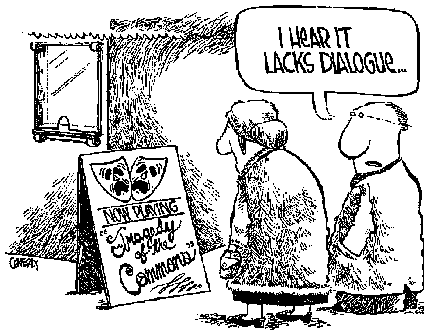
Tragedy of the Commons, Lacks Dialogue

“Freedom in a commons brings ruin to all.”

“The maximum is not the optimum.”

“We can’t cure a shortage by increasing the supply.”

“Birth control does not equal population control.”

“Exponential growth is kept under control by misery.”

– Garrett Hardin

Garrett Hardin (1915-2003) was a respected ecologist and philosopher who warned on the dangers of overpopulation. He wrote a famous 1968 paper titled “The Tragedy of the Commons” which you can download or view in full here.  More information on Garrett’s accomplishments and beliefs can be found at the Garrett Hardin Society site.

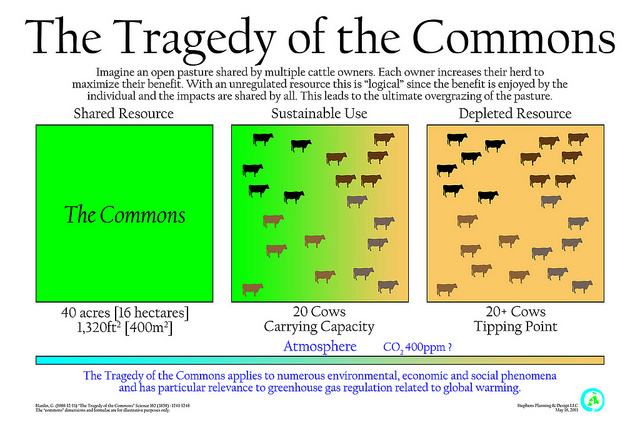
The central idea of the tragedy of the commons is that the collective effect of individuals making independent, well-intentioned, rational decisions regarding the use of a shared resource, leads to the degradation of the resource such that it can no longer support the individuals that depend upon it.

Tragedy of the Commons, Pasture and Climate

The classic example, and one we have repeated many times since we came to depend on agriculture 10,000 year ago, is the overgrazing of a pasture shared by herdsman.

A more modern example is someone who emits large quantities of CO2 into the atmospheric commons by flying long distances on a regular basis to spend quality time with family members whose lives will soon be harmed by climate change.

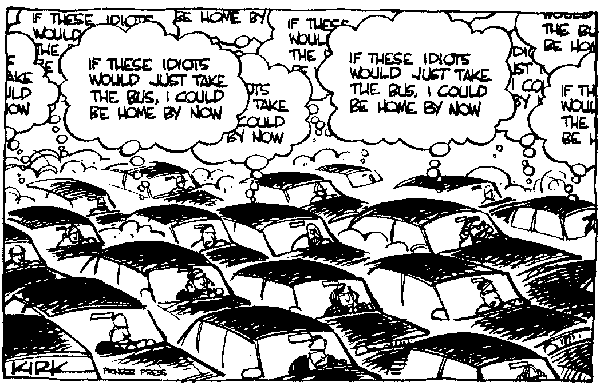
Tragedy of the Commons, Drivers

I was familiar with the concept of the tragedy of the commons but I was not aware that Garrett Hardin was the first modern scientist to write on the topic until a friend recently brought his paper to my attention. I read the paper, learned quite a bit, and recommend it to others.

I was particularly impressed with Hardin’s clear and direct thinking on the threat of over-population and what must be done to prevent it. Here are a few noteworthy excerpts from his essay.

The tragedy of the commons is involved in population problems in another way. In a world governed solely by the principle of “dog eat dog”–if indeed there ever was such a world–how many children a family had would not be a matter of public concern. Parents who bred too exuberantly would leave fewer descendants, not more, because they would be unable to care adequately for their children. David Lack and others have found that such a negative feedback demonstrably controls the fecundity of birds. But men are not birds, and have not acted like them for millenniums, at least.

If each human family were dependent only on its own resources; if the children of improvident parents starved to death; if, thus, overbreeding brought its own “punishment” to the germ line–then there would be no public interest in controlling the breeding of families. But our society is deeply committed to the welfare state, and hence is confronted with another aspect of the tragedy of the commons.

In a welfare state, how shall we deal with the family, the religion, the race, or the class (or indeed any distinguishable and cohesive group) that adopts overbreeding as a policy to secure its own aggrandizement? To couple the concept of freedom to breed with the belief that everyone born has an equal right to the commons is to lock the world into a tragic course of action.

Unfortunately this is just the course of action that is being pursued by the United Nations. In late 1967, some 30 nations agreed to the following:

The Universal Declaration of Human Rights describes the family as the natural and fundamental unit of society. It follows that any choice and decision with regard to the size of the family must irrevocably rest with the family itself, and cannot be made by anyone else.

It is painful to have to deny categorically the validity of this right; denying it, one feels as uncomfortable as a resident of Salem, Massachusetts, who denied the reality of witches in the 17th century. At the present time, in liberal quarters, something like a taboo acts to inhibit criticism of the United Nations. There is a feeling that the United Nations is “our last and best hope,” that we shouldn’t find fault with it; we shouldn’t play into the hands of the archconservatives. However, let us not forget what Robert Louis Stevenson said: “The truth that is suppressed by friends is the readiest weapon of the enemy.” If we love the truth we must openly deny the validity of the Universal Declaration of Human Rights, even though it is promoted by the United Nations.

It is a mistake to think that we can control the breeding of mankind in the long run by an appeal to conscience. Charles Galton Darwin made this point when he spoke on the centennial of the publication of his grandfather’s great book. The argument is straightforward and Darwinian.

People vary. Confronted with appeals to limit breeding, some people will undoubtedly respond to the plea more than others. Those who have more children will produce a larger fraction of the next generation than those with more susceptible consciences. The difference will be accentuated, generation by generation.

In C. G. Darwin’s words: “It may well be that it would take hundreds of generations for the progenitive instinct to develop in this way, but if it should do so, nature would have taken her revenge, and the variety Homo contracipiens would become extinct and would be replaced by the variety Homo progenitivus”.

Perhaps the simplest summary of this analysis of man’s population problems is this: the commons, if justifiable at all, is justifiable only under conditions of low-population density. As the human population has increased, the commons has had to be abandoned in one aspect after another.

The most important aspect of necessity that we must now recognize, is the necessity of abandoning the commons in breeding. No technical solution can rescue us from the misery of overpopulation. Freedom to breed will bring ruin to all. At the moment, to avoid hard decisions many of us are tempted to propagandize for conscience and responsible parenthood. The temptation must be resisted, because an appeal to independently acting consciences selects for the disappearance of all conscience in the long run, and an increase in anxiety in the short.

The only way we can preserve and nurture other and more precious freedoms is by relinquishing the freedom to breed, and that very soon. “Freedom is the recognition of necessity”–and it is the role of education to reveal to all the necessity of abandoning the freedom to breed. Only so, can we put an end to this aspect of the tragedy of the commons.

I summarize Hardin’s position as follows:

  • Failure to control population growth will result in ruin.
  • Population control via appeal to reason or conscience, or threat of shame, will not work, and will in fact make the situation worse. Population can only be effectively controlled by coercion, that is, laws with penalties for overbreeding.
  • The key to passing population control laws is to educate citizens on the reality that if they do not relinquish the freedom to breed they will lose all of their freedoms, including eventually the freedom to breed.

Garrett Hardin was a wise and prescient man who attempted to warn his fellow citizens of a serious threat to their well being, and most importantly, told them what they needed to do and why.  Other great people have attempted to do the same, for example, Dennis Meadows and his collaborators on the 1972 Limits to Growth study.

Hardin’s essay was written 50 years ago when the world’s population was 3.5 billion, a level already far in excess of what can be sustained without abundant, affordable, non-renewable, finite, and depleting fossil energy.

Over the last 50 years the population more than doubled to 7.6 billion and many new overshoot threats backed by solid scientific understanding have emerged like climate change, net energy decline, and ground level ozone.

There’s been plenty of information and (opportunity for) education. We can therefore conclude that Hardin’s assumption that education is the key to preventing overshoot is wrong.

As readers of this blog know, I think the key impediment to changing human behavior in a positive direction is the fact that humans evolved to denial reality, as explained by Varki’s MORT theory.

How can a majority emerge to support a contentious law to control breeding when the vast majority of the 7.6 billion people on the planet deny the existence of overshoot?

Much has been written by many people on the tragedy of the commons. Commentators typically fall into one of two groups:

The first group appreciates the centrality of the commons problem to human existence and spends much energy arguing how best to address the problem with the usual divisive, inconclusive, and unproductive positions of right vs. left, private vs. public, capitalism vs. socialism, libertarian vs. autocratic , etc.

The second group denies a commons problem exists, or thinks innovation and technology will solve any problems.

Where is the most important and missing third group?

That would be the group searching for an understanding of how an otherwise uniquely intelligent species can deny its obvious predicament. Brief reflection leads to the obvious conclusion that until we understand the genetic basis for our ability, on the one hand, to understand highly complex topics, like the laws of  physics that explain the creation of the universe and life, and on the other hand, to selectively deny much simpler and plainly obvious facts, like human overshoot and our own mortality, we have no hope of addressing the tragedy of the commons, or any of the other behaviors that threaten our species.

A few people have achieved some insight into our tendency to deny reality but I observe that they usually soon thereafter drop their pursuit of understanding.  I find this very curious because if you have a deep understanding of the human predicament there is nothing more import to understand and to raise awareness of than reality denial.

If you deny the existence or implications of overshoot, then it is logical to embrace one or more of the many arguments against a one child law, austerity, and conservation. On the other hand, if you embrace the reality of overshoot, then a one child law, austerity, and conservation not only become perfectly reasonable, they become the most important, ethical, moral, and rational things we must do.

There is an exciting (for me) passage in Hardin’s essay that hints he may have  understood or anticipated at least a portion of the MORT theory.

…the rational herdsman concludes that the only sensible course for him to pursue is to add another animal to his herd. And another; and another…  But this is the conclusion reached by each and every rational herdsman sharing a commons. Therein is the tragedy. Each man is locked into a system that compels him to increase his herd without limit–in a world that is limited. Ruin is the destination toward which all men rush, each pursuing his own best interest in a society that believes in the freedom of the commons. Freedom in a commons brings ruin to all.

Some would say that this is a platitude. Would that it were! In a sense, it was learned thousands of years ago, but natural selection favors the forces of psychological denial (8). The individual benefits as an individual from his ability to deny the truth even though society as a whole, of which he is a part, suffers.

Education can counteract the natural tendency to do the wrong thing, but the inexorable succession of generations requires that the basis for this knowledge be constantly refreshed.

Hardin demonstrated a flash of denial insight by correctly identifying the key issue, but then neglected to explore further in his tragedy of the commons essay.  Unfortunately the reference for his comment on denial is the book “Population, Evolution, and Birth Control“, which is a collection of essays by different authors that Hardin published in 1964, in which Hardin himself contributed an essay titled “Denial and the Gift of History”, and is not available on the internet. I would be grateful if a reader has a hard copy of this book and would be kind enough to provide a summary of his essay.

My expectation is that Hardin did not elaborate on denial of reality because there was ample opportunity for him to do so in his other books, papers, and interviews that I downloaded and searched.

I did find this one excerpt from an interview but it is not very insightful and he clearly thinks the solution is more education:

RUSSELL: Okay. The idea of statistics and the population–I have no reason to really go over that. The other one, of denial and the gift of history, which was a fascinating idea. Our view of working at it, our immortality.

HARDIN: Yes. Well, I think everybody, as he grows older and accumulates more experience and more observation of other people–of himself, too–is impressed with how often we try to fool ourselves. It’s an inescapable human tendency. This is part of original sin, trying to fool ourselves, and always to make things look better than they are. The question is, since we’re so ingenious at pulling the wool over our own eyes, what contrary measures can be taken? It seemed to me that this is one of the great apologies for teaching history: when you see other people in the past, people with whom you have no connection, making the same mistakes, then you can, I think, be more objective about yourself, and say, “Well, maybe I’m just repeating what this guy did two- or three-hundred years ago.” And this, I think, is one of the great gifts of history. It gives us long arms for holding instructive examples far enough from our eyes.

A search also suggested that no one else in 50 years thought Hardin’s comment on reality denial was worth discussing. Many people saw and see merit in Hardin’s work, but all seem to have missed his most important point, including perhaps Hardin himself.

I also note that Ajit Varki, the only surviving author of the MORT theory, is no longer researching, or attempting to spread awareness of his theory. Varki is instead leading some research on Glycobiology, which with time, will prove to be insignificant compared to MORT.

Because we understand the dangers, we do not permit alcoholics, or epileptics, or schizophrenics, or blind people to fly our planes.

If we understood our genetic tendency to deny reality, we might not permit reality deniers, which by the way are very easy to detect, to run for elected office.

Many impressive scientists and leaders are working hard to shift the needle on human overshoot. All have failed, and all will continue to fail, if they do not embrace the MORT theory.

We need some scientists and leaders of stature to step up and push awareness of the MORT theory.

A cranky old retired electrical engineer writing a blog doesn’t cut it.

It is too late to avoid a lot of suffering, but with awareness of our predicament we could reduce future suffering, and we might avoid harmful emotional reactions like nuclear war or revolutions.

If we have a hope, MORT awareness might be our only hope.