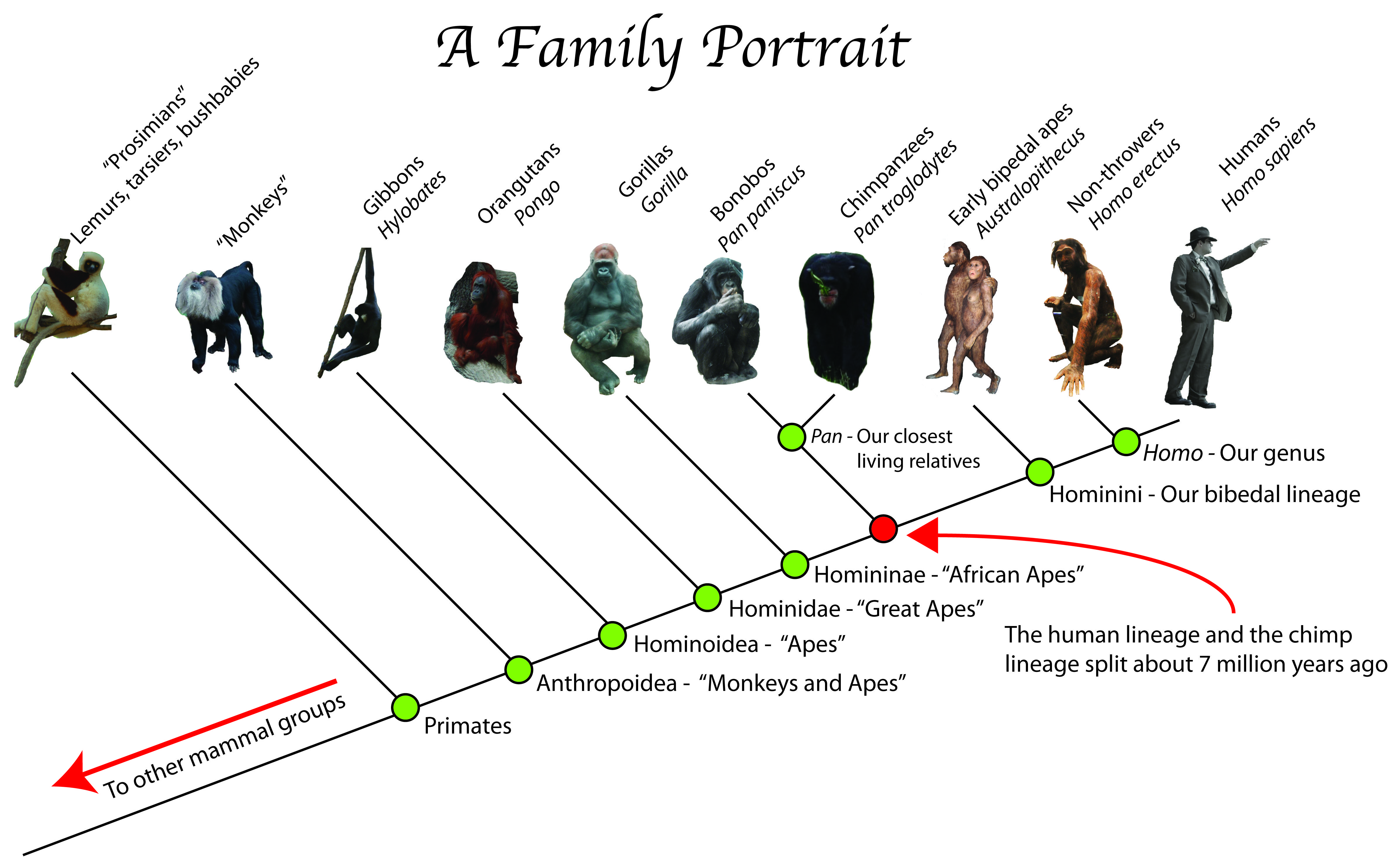
Today’s guest post is by un-Denial regular Mike Roberts. Mike has on several occasions commented that “humans are a species” and this best explains our overshoot predicament. In this essay Mike nicely elaborates his idea.
I was a regular reader of Dave Cohen’s posts at Decline of the Empire. He had a great writing style and was always very rational in laying out his arguments (although, as always, that’s a personal opinion). Many of his posts made the point that humans are a species and what you see is what you get.
Here is an example in which he makes a pertinent point:
If you want to know how late Stone Age humans might have behaved in the 21st century, look in the mirror, read a newspaper, watch TV, or browse the internet. They were us, and we are them.
This kind of analysis eventually made me realise that humans are a species and so its characteristic behaviour (what you see humans doing in a collective sense) is built in. The characteristic behaviour of a species can’t be altered by wishing it. It can only be altered, over deep time, through an external consistent influence, like a changing climate, which may ultimately lead to a new species or simply to a superficial change in a population (like skin colour).
Our polycrisis could be regarded as a profound stressor which could alter collective human behaviour. But though it’s happening quite rapidly, compared to environmental changes of the past, it’s still too slow for humans to really take it seriously enough that it becomes a consistent stressor which can alter behaviours. It will only be enough once a significant minority are having their lives forcibly changed and most everyone else notices. There is no way out, and it just is what it is. It will have to play out. This is the kind of thinking I was applying at the time.
However, my thinking was honed more with much of the information that was flowing through un-Denial.
A Nate Hagens round table featuring William Rees, Nora Bateson and Rex Weyler confirmed that humans are a species and should act like other species insofar as the consumption of resources go. Any species who is given easy access to resources which help them (immediately – there is no forward thinking) will use whatever they can, as quickly as they can. Any genes which enhance this ability will be much more likely to propagate in the population, thus being self-reinforcing. This is until the resources become harder to access (perhaps through depletion, competition or environmental change). Eventually, the ecosystem settles into a relatively stable state, the climax state, until something perturbs it again (e.g. climate change or an invasive species). Humans are fairly well adapted to accessing resources as they have opposable thumbs and a quite large encephalization quotient, making them clever. Consequently, they are likely to become the apex predator in any ecosystem that they encounter.
Recent posts have also introduced the Maximum Power Principle: organisms that capture and use more energy than their competition will have a selective advantage in the evolutionary process. This reinforces the idea that humans are a species, acting like other species but being more successful because they are able to capture and use far more energy and resources than other species.
We’re now getting at the essential idea, not that human behaviour can’t be voluntarily changed, but that humans really act like all other species. How could it be otherwise?
Sapolsky’s views on free will add further support to these ideas. As he mentions, we all recognize that the world, including us, is made up of various molecules, atoms, electrons and so on, but still, some of us think there is room for something else, that can manifest as “free will.” No-one can explain how this other stuff interacts with our molecules to cause the actions involved in our free will decisions. With no known mechanism (nor any empirical, or mathematical knowledge of this other stuff) for this to happen, it is easy to deduce that it doesn’t happen, that there is no other stuff. A belief in free will may well require a belief in an all-powerful creator who can simply imbue humans with a mechanism which does not require adherence to physical laws. So, all species arose by the same mechanism (filtered random variation), even if we haven’t yet figured out how the first species emerged, and so we should expect all species to act in the same way, at the most basic level.
There have been many studies trying to determine the mechanism of how we make decisions. For example, this study appears to suggest that decisions are made subconsciously well before (in some cases, up to 10 seconds before) we are aware of those decisions. This fits quite well with Sapolsky’s position. Our apparent free will is simply us rationalising decisions which our subconscious has already made. And decisions made in our subconscious mind can only be due to all the factors that lead to where we are at the time of our decision; our genes, our upbringing, what we read yesterday, what the weather was like on our way to where we are, and so on.
Of course, humans are unique, in many ways, but so are many other species. They all have special qualities and abilities that can’t be found in other species, or only in a very limited number of other species. But in the essential attributes of a species, humans are identical to all other species. Consequently, it seems reasonable to conclude that the Maximum Power Principle, MORT and other attempts to figure out why humans act like we do, are simply consequences of our being a species. It can’t be any other way. I’m afraid that there really is no way out. The unique human ability to understand stuff should make these realisations hard to take. We can’t even think, “what if we had done something different at that point in history,” because almost nothing would have changed except the timeline. Other species are largely employed at staying alive, as are some members of our species, but most of us have the luxury of spare time to contemplate other stuff and, to some extent, to enjoy living.
Still, maybe I’m wrong. Maybe Cohen, Sapolsky, Lotka and Wyler were wrong. Apparently, it’s in our genes to be optimistic, and no-one can predict the future. So we can live in hope for the rest of our lives even if society and civilisation are crumbing around us, even if the environment is collapsing. Maybe someone will think of something and delay the inevitable for a few centuries. Or decades. Or years.
 un-Denial
This is an example of the sort of in-denial nonsense we are subjected to in Aotearoa New Zealand:
“In NZ, whilst our electricity is predominantly green our overall energy use is still dominated by fossil fuel. This is such an important fact. There is no room for complacency in the transition of our homes, businesses and modes of transport away from fossil fuels.
Whilst we need more clean electricity to replace fossil fuels, we also need to reduce our energy demand. Government support to continue improving choices for public transport, cycling and walking, rail freight and upgrading wowfully substandard housing is critical.
Once we get off our fossil fuel addiction, and appreciate the financial and health benefits it will bring, we’ll look back and wonder why on earth it took so long.”
LikeLiked by 1 person
Yes. Mind you, this kind of nonsense is world-wide. I particularly cringe when the phrase “clean energy” is used. There is no such thing.
LikeLiked by 1 person
I started this blog because I did not believe so many smart educated people could be so ignorant of so many things so important and so obvious.
When you explain the science and evidence and implications they still do not see reality.
LikeLiked by 2 people
Mike did you see this in the news? Just another species indeed!
https://www.stuff.co.nz/science/301038121/we-now-know-what-killed-humans-largest-relative–and-its-eerie
LikeLike
I saw that in The Guardian. I’m aghast at the belittling of the story by including Chewbacca (a fictitious creature of unknown species) in the comparison of size. Looks like the giant ape couldn’t adapt as climate changed, though it seems there is much to learn. Still just another species, though!
LikeLiked by 1 person
I saw the Chewbacca too! WTF haha
LikeLike
Maybe the robots won’t take all our jobs after all.
https://dothemath.ucsd.edu/2024/01/reasoning-with-robots/
LikeLike
Happy new year to everybody! Sorry, it’s a bit late, but only my first comment of the year. Mainly, I wish you all to enjoy the ongoing ride. Lots of things to see as the world reconfigures.
I made a calendar of my own and like to think we are now in year 4 of Degrowth 🙂
I feel 2024 is going to be good: the veil on the untenability of our current living arrangements is gradually falling and the foolishness of growth/techno-fantasies are getting obvious by the day. I mean, who is going to send us to the stars, once the Musk universe goes bankrupt?
I wanted to thank you all, especially Rob, for the continuous stream of news, comments and discussions. It’s just the right flow for me and the only site I regularly check. I particularly appreciate the civility and reasoned argumentations.
OK, here are a few thoughts (mainly questions) that came to me these last days. This is all going to be mixed up, sorry:
This article https://www.bioticregulation.ru/life/life11.php gave three numbers I found interesting. The power of the human body: 100W, the mean global productivity of the biosphere: 0.5W per square meter, the natural territory each of us should be able to exclusively roam in relationship to our size as a mammal: 4 square kilometers. According to this paper, we are like animals in captivity. To me, it shows the incredible level of adaptability of the human being (at the cost of sanity and life’s joy).
Guillaume Faburel, a french geographer is saying here
we should now start spreading the population and limit city sizes to 30000 people with a 30 km diameters (one day walk). He wants to allocate everybody 4000 square meters to meet all needs (housing, feeding, heating… in a local and low consumption lifestyle). He is talking about cities as the urban mines we will have to gradually dismantle and exploit. I noted that the term de-growth, which is too frightening, has been replaced by the expression post-growth societies. The talk is in french, but I believe the automatic youtube translation is quite good.
The (french again, sorry) historian Jean-Baptiste Fressoz
is attacking the notion of the green transition from yet another direction than Derrick Jensen (with the reality of the true ecological impacts of green) or Simon Michaux (lack of minerals). He says the notion of transition is an historical fallacy, there has never been any phasing out of wood/coal/… It has always been additive (more coal is produced today) and even multiplicative (wood allowed mining for coal, coal allows steel, and diesel is necessary for mining for the green energies…). I wonder if this multiplicative effect will reverse and become divisive on the down slope. It’s is often said we will cut more trees once the other energy sources will not provide enough. But I am really not sure: it all boils down to about rates. Some tree cutting operations require a lot of transport and modern equipment for their scale. What do you think? Can this be modelled?
In France, inflation is still officially at 3.7% (food inflation at 7.1%) while the economy is tanking, unemployment is going up and housing prices are collapsing (-11% in Paris). Since 2007, french public debt grew 3.2 times more than GDP. There has recently been a debate on un-denial about inflation vs. deflation (https://un-denial.com/2023/12/25/by-mike-roberts-humans-are-a-species/#comment-92873). I don’t know if what I am going to say makes sense. It seems to me this is playing like a tug war between central banks and every body else. The context is deflationary but the crazy amount of debt creates inflation. This debt is created on purpose: in order to maintain central power, there must be a certain level of inflation so that everybody is running the treadmill. At some point, however, unless the system reforms itself (while staying in control as a proxy, which I believe is not feasible) people will just give up central money. This goes hand in hand with a conversion from a centrally distributed energy source (fossil) vs. locally acquired specks of sun.
I was wondering if many players (at every levels) will start hoarding once de-growth has become obvious and selling later at a higher price may make sense. Aren’t food stocks at the individual level already a first sign of that? What’s your opinion on that?
This all made me think (again) about the various “strategies” and axis of de-growth: lower population levels/lower individual quality of lives, central planning/decentralization of power, switching from secular energy stocks to solar flows, the power of love (low scale, low intensity patient work with life)/the corruption of concentrated power (careless large-scale power-intensive exploitation).
Oh, and by the way, nobody reacted to this recent comment by Preston Howard (maybe because it was on the previous blog entry): https://un-denial.com/2023/12/05/dr-tom-murphys-infinite-growth-with-a-finite-brain/#comment-92910. Maybe he is feeling a bit sad that interested parties on un-denial.com are overlooking it 🙂 I am mentioning it here because it seemed worthy of interest.
LikeLiked by 1 person
Happy new year to you too Charles. Thanks for the most interesting post.
I also like those three numbers. I think about the 100 watt human body a lot. Other numbers that stick in my mind are a square meter of sunlight is about 1000 watts, the best solar panels convert 20% during daylight (100 watts/sq m) to electricity, plants convert about 5% during daylight (25 watts/sq m) to carbohydrates, and one human uses 20,000,000,000,000/4,000,000,000 = 5000 watts 24/7.
I also think a lot about your idea that the downslope might be multiplicative. Everything is so complicated and interconnected. Reduce one key thing and the speed of simplification could be breathtaking.
I dislike the word inflation because it has different meanings depending on the context. We all think of inflation as price increases. Central bankers think of inflation as the total supply of money increasing. They have to keep the money supply growing to provide the new money required to pay interest. If they don’t the system will collapse. So I don’t see central banker’s actions as having any plan or intent other than they know the money supply must grow or else everyone, including themselves, will suffer.
Thanks for pointing out Preston’s post. It was good and I just replied.
LikeLike
About money, tell me if I am wrong. This is a complex topic for me.
Ultimately, I understand money as an instrument of central power (https://un-denial.com/2023/06/14/by-marromai-energy-economy-and-the-role-of-money/).
And in its current form, it has the growth imperative built-in: be it low or high central bank’s interest rates, the debt must, at some point, be repaid (with more debt, sucks 😦 ). Since, the flow of debt issuing goes from central bank to state to banks to individuals, there is a top-down hierarchy of control. By that, I mean banks, the state and maybe the central bank decide where to invest and thus direct the expansion.
So I really see money as an expansion and wealth sucking device. (physical wealth being gradually converted from the environment, extracted from physical stocks of wealth to pay back the debt).
With low interest rates, the money supply will tend to expand, as it is easier to come and ask for a loan. But money will lose its value relative to goods (if the stock of goods is relatively constant). High interest rates goes in the opposite direction.
Low interest rates make life easier for the state and banks at the expense of people who hold money. With high interest debt, the opposite. This is just playing on the length of the leash.
I think a lot of misinvestment comes from the growth imperative and the central nature of the money system. Since real growth is not physically possible any more, the state invests in any scheme which may seem to pay back. Since this is tightly coupled to the beliefs of the people making the investments, we get green growth (sucking a few more out of the planet), service/bullshit jobs (pretending to do something useful to a society which is somewhat captive), military (the promise of expansion), tech (promises of new horizons) and surveillance (in case these shenanigans ultimately all fail, as a way for the state to retain its central power)
So I would say the central bankers, indeed are just doing their job as top predators in the money food-chain: doing what they believe must be done to avoid the system crashing (preventing states and banks to be unable to repay their loans).
But doing so, they perpetuate the system until the next round. A system which is not acknowledging reality and in consequence is making everybody behave foolishly.
It seems to me it is long time the monetary system evolves. And this is connected to the organization of the power structure in society. Maybe big reset/bitcoins/central digital currencies and gold are experiments in this direction. Experiments where, curiously, some lose more than others 😉
It’s still a subtle power play. Sometimes, the top predators lose too…
LikeLike
Charles you are smack in the midde of one of the most complex things to understand and to explain. I could spend a couple days trying to fully respond to your points and I’d still get some of it wrong because I still do not understand some of it despite years of trying.
Some of your beliefs are shared by many but are in fact wrong.
1) Money creation does not flow from central banks, to state banks, to individuals. Most money is created independent of central banks by commercial banks when they make loans to business and individuals. Central banks regulate commercial banks and are lenders of last resort when commercial banks get into trouble.
2) Central banks have less control over interest rates than most imagine. Most of their power comes from influencing emotions, not direct control. They do have a some control over short duration loans and very little control over long duration loans. Interest rates are mostly set by the market’s expectations for price inflation and economic growth. High inflation causes lenders to demand higher rates so they do not lose money when being repaid with inflated dollars. Low economic growth causes demand for loans to fall so banks lower interest rates to stimulate demand to keep themselves in business.
3) Lower interest rates do not necessary mean faster money supply growth. Lower interest rates mean the economy is struggling to grow, which can mean risks are higher, which can cause banks to choose to lend less.
4) Most price inflation is caused by governments spending more than they tax. As we have hit physical limits to growth, governments are borrowing more and spending more trying to keep some growth going.
5) The size of the economy is proportional to our impact on the environment. Our impact grows because our economy grows, and our economy must grow given the debt-backed fractional reserve design of our monetary system. All countries use this monetary system because it maximizes the amount of available credit which is good when we are small and far from limits, and very bad when we are large and facing limits.
LikeLiked by 1 person
One more key point.
When governments run deficits so large that there is insufficient demand in the market to buy all of the government debt at the interest rate desired by the government, then central banks step in to facilitate the purchase of government debt by commerical banks, thus keeping interest rates lower. This is called QE. Many people claim QE is not money printing. Technically they are correct. Practically they are wrong because the governments are going to have to default or hyperinflate at some point.
LikeLike
Thank you Rob. Very complex.
I knew point 1) and I knew it represented most of the money supply.
However I didn’t include it in my previous comment because I thought, from the perspective of the nature of the system, ultimately it is the core money of the central bank which matters. Isn’t the core money created by the central bank done with an interest rate too? So that it is impossible to repay it back, unless taking more loan. Isn’t this the root of the trap? Also, it seems to me commercial banks take a risk when they lend money at a lower interest rate than the central bank’s. So they will tend to loan at higher rate than the central one?
QE seems like a late patch to me, so that the system can survive the current situation for a while even if growth is not possible anymore.
I don’t know… Too difficult…
LikeLike
I’m not sure what you mean by core money. Are you refering to bank reserves? If yes this is an area I do not understand well. Bank reserves are a different mysterious type of money that never leaves the banking system. It seems bank reserves do not influence the things we care about. The best expert I have found on how bank reserves work is Jeff Snider.
https://www.youtube.com/@eurodollaruniversity/featured
LikeLike
Honestly, I didn’t study the matter enough to say I understand it.
But when I approach a complex system, I try to to strip it down to its simplest (yet still foundational) elements possible and then try to imagine the dynamic of this simpler system.
Then I add successive layers to the construction to see if and how they modify the dynamic.
I guess, I won’t get to the end of this process with the monetary system because: I am not that interested in this system and there are a lots of hacks on top of each other so it can be time-consuming.
I got the term “core”, from this video : https://www.youtube.com/watch?v=4xgHbW2A9KE.
I tried to describe the smallest and simplest, but yet foundational subsystem which is made of the monetary core (central bank), and the actors it interact with.
In this page (https://en.wikipedia.org/wiki/Central_bank), in the “monetary policy instruments” section, it is stated that “For example, if the central bank wishes to decrease interest rates (executing expansionary monetary policy), it purchases government debt”. Which is consistent with Chris Martenson’s crash course (https://www.youtube.com/watch?v=p3_Q1SiRN-A&t=77s).
So, the system, in its absolute simplest form, amounts to a central bank and a government. The government emits bonds and gets money in return from the central bank. But the bond comes with an interest rate. When the bond expires, the government has to pay back the bond and the interest with money. It has no way to get that new money except by issuing a new slightly larger bond. There is, already at the root, the growth imperative.
It seems to me that everything else is roughly built upon this mechanism through a hierarchy of money issuers (private banks) who have less and less importance the further from the fed (even if they may de-multiply the amount of money to astronomical levels extremely fast, but what matters is the small part: the fed interest rate, which fractally bounds the system at every levels). This chain of bonds ensures the hierarchical structure of society and imposes obligations all the way down. Somehow, it’s the nervous system of our society.
It’s a very ingenious system. It can start fairly small and will expand as a virus (as long as the group of people which obey this system have enough power to gradually incorporate societies which are outside in order to grow).
In a way, money is a faustian bargain with the devil: if you want to change the world at scale today, you raise funds through debt. Even if you know you won’t be able to pay, you receive the privilege to impact reality today. It is only natural the richest people on Earth are upbeat, risk-loving, delusional individuals in complete denial of limits: they don’t self-control. I see debt money as an embodiment of our belief in a better tomorrow through private enterprise. And the fed is the ultimate arbiter of growth. It can choose the speed and direction of growth.
Can it be said that money is a tool with various functions and that different forms of monetary system embody different values? I have read somewhere, there were very complex monetary systems, with tokens of various natures which could only be exchanged in some particular places, because the primary value of money in this culture was to encourage diverse social interactions. Today, we have got a system whose primary goals are growth and centralization.
It seems to me the system should be changed at its root to be in coherence with the physical reality (the fed could distribute money to every-body evenly and allow negative interest rates when needed? I don’t even know that’s a good idea). If this empire follows the path of previous ones, this will not be done, but rather the gradual depreciation of money will be chosen. And at some point, something else will take place (not even necessarily the same something everywhere)
LikeLike
Charles this is a very interesting article about using trees in the olden days read https://energyskeptic.com/2021/how-to-make-biomass-last-longer/
Also there is some kind of ratio with gathering wood as fuel. You can only gather it a certain distance from your house before the energy burned to walk that far isn’t worth it. E.g. if you had a horse pulling a cart
LikeLike
Yes, and when you need a horse to make a living you have to swap 1/3 of your land from growing human food to growing horse food.
LikeLiked by 1 person
Thank you. Nice article.
Yes indeed, coppicing and EROEI.
LikeLiked by 1 person
Hundreds of bodies found behind Mississippi Jail.
https://www.pbs.org/newshour/show/families-in-disbelief-after-hundreds-of-bodies-found-buried-behind-mississippi-jail
LikeLiked by 1 person
Sickening
LikeLike
Alice Friedemann today with an excellent take-down of EV semi-trucks.
https://energyskeptic.com/2024/tesla-semi-trucks-hauling-corn-chips/
LikeLiked by 3 people
I think Alice is one of the people I’d like to have a long conversation with, I really admire her work over the years.
I just looked up the tank capacity of the B-doubles that we have running around here on Australia’s roads. They are pretty much double semi trailers. Anyway the prime movers have around 1100 litre fuel tanks. A full tank is holding 11.5Mwh worth of energy in the form of diesel. The newest engines are around 50% thermal efficiency, something people promoting EVs don’t want people to know.
The below link confirms this efficiency and has a photo of a B-double…
https://primemovermag.com.au/diesel-lives/
To replicate the potential performance an EV truck would have to have a battery of over 7Mwh capacity, to allow for the electrical efficiency of ~80% and never running the batteries to low. Even assuming a battery at 350wh/kg, would equal over 20 tonnes for the battery alone…
Trying to beat a 12,700wh/kg (diesel) energy density with 350wh/kg (Li-ion battery) was never going to work, and never will. Neither will 400wh/kg nor 500wh/kg if technology ever gets there ‘cheaply’.
Of course the magic trick is then to change the game to we’ll use synthetic fuels from renewables, which have appalling real world efficiencies in the manufacturing process.
IMHO we are being fed deliberately misleading information about our future, I no longer think it is a case of experts accidentally leaving out parts of the equations in working out the EROEI of renewables or nuclear. I suspect every conspiracy theory out there, including all the covid mistakes are deliberate attempt to keep those who look, away from looking at the big picture of the future of civilization, or should I say lack of a future…
LikeLiked by 4 people
On the one hand, the “errors” are so large and obvious it is hard to imagine they are not deliberate attempts to mislead.
On the other hand, I can point to brilliant polymaths who believe the BS, and continue to believe the BS when presented with science and evidence.
So it might be deceipt or it might be genetic reality denial. Most likely some of both.
LikeLiked by 2 people
I think they believe they are helping by lying. That we need to keep investing in EVs, and then hope that eventually the maths will make sense. They don’t accept that physics makes some things impossible.
LikeLike
Amyris’s development efforts to make diesel hit the end of the road. I guess I won’t be getting an update on when I can blend it into the tank of the 02 Chevy 1 ton dually. We sold the 97 E-300d before we left CA.
https://www.reuters.com/business/biotech-firm-amyris-files-bankruptcy-us-2023-08-10/
LikeLike
We’re really barking down the wrong road with electric semis… Didn’t Rudolf Diesel design his engine so that it could run on fuel derived from bio feedstock grown locally?
LikeLike
This 2007 talk by David Fridley is the best I’ve seen on why biofuels will not help our predicament.
https://archive.org/details/Myths_of_Biofuels
LikeLike
Apparently, catenary trucks aren’t viable either.
https://energyskeptic.com/2015/all-of-california-electricity-per-year-to-power-16000-catenary-trucks-on-2400-to-8275-miles-of-highway/
LikeLiked by 1 person
The world court trial of Israel for crimes of genocide seems to be a big deal. I find it to be a glimmer of hope for our ability to do the right thing. I hope that the covid leaders will be tried in the world court.
LikeLiked by 1 person
Here is the full PDF of South Africa’s case against Israel.
Click to access 192-20231228-app-01-00-en.pdf
LikeLiked by 2 people
preptip
I tested the shelf life of evaporated milk by tasting a can 3 years past the best-by date. It was perfect. From a previous test I know evaporated milk should be assumed bad at 8 years past best-by. I’d guess 5-6 years past best-by will be ok.
I also tested the shelf life of sweetened condensed milk by using a can 3 years past best-by to make Dulce de leche (aka caramelized milk).
https://en.wikipedia.org/wiki/Dulce_de_leche
It’s the simplest dessert recipe I know:
– remove label from can
– place unopened can in pot, cover with water, and bring to a boil
– cover and simmer for 2 hours (light caramel) to 3.5 hours (dark caramel)
– allow to cool before opening can
– transfer to sealed container and store in fridge
It’s an economical dessert because it’s very rich so a couple tablespoons is plenty and one $2.50 can will provide about 10 servings.
If you want a good reason to break your sugar fast for a treat, this is a good one.
P.S. Shelf life data on the internet is shockingly bad. Everyone just makes shit up with no testing to verify claims. All the “experts” say evaporated milk has a shelf life of 1 year. My tests say at least 4 and maybe 6 years. The same experts say once opened and refrigerated evaporate milk must be consumed in 3-5 days. I suspect this is also bullshit so I’m doing a test and expect at least 10 days.
LikeLiked by 2 people
I use powdered milk for recipes and I’ve had the same bag in my fridge for a while. The BB date was 2 years ago and I made pudding recently with it, came out fine, smells and tastes normal.
LikeLiked by 1 person
Thanks. Powdered milk was my original plan but its shelf life is not as good as other dehydrated foods. I also found out mice love powdered milk so to store it you have to place the bags inside a plastic tote. Also powdered milk is usually skimmed milk and I like fat. I did find a high fat powdered milk but its shelf life was much shorter than the already short regular powdered milk. For these reasons, plus the fact I drink no little milk and just want some for cooking and baking and bartering, I have decided to store canned evaporated milk.
LikeLiked by 1 person
Opened evaporated milk was perfect for 25 days in fridge before turning sour.
LikeLike
Now 24 days open in fridge and still ok.
LikeLike
el gato malo today explains how they are attempting to hide the increase in cancer and heart disease since billions were transfected with a new untested mRNA technology.
https://boriquagato.substack.com/p/upticks-in-cancer
LikeLiked by 1 person
Art Berman takes down Doomberg today. Watching to see if facts and evidence over power denial and cause a change in Doomberg’s beliefs. I’m betting no.
https://www.artberman.com/blog/doomberg-goes-off-the-rails/
LikeLiked by 2 people
Berman double taps Doomberg for good meaure in a second essay.
https://www.artberman.com/blog/doomberg-embarrasses-himself/
LikeLiked by 1 person
Gail Tverberg either forgot her WordPress password or got hacked. Her latest essay is currently only available on Substack.
https://gailtverberg.substack.com/p/2024-too-many-things-going-wrong
Good news, God might save us.
Just in case God forgets about me, I’m buying more long-term food.
LikeLiked by 2 people
She mentioned to FE that she’s having trouble with her WordPress account but didn’t elaborate
LikeLike
She’s had multiple issues with WordPress. She seems to be only half logged in. Sounds like WordPress support is poor, even for those who’ve paid for a site, like Gail. She still wants to publish to her WordPress site, so is trying to sort it out. The problem with Substack is that there is no way to get a comment feed (only notifications of replies to one’s own comment) so no way to filter out Fast Eddy, who seems to have half of the comments already. And Gail replies to some of them!
LikeLiked by 2 people
The case for Eco-socialism.
He has some good ideas but he is energy and population blind.
LikeLike
If you really wanted to do something useful about our overshoot predicament you would need a global authoritarian government with socialist principles.
There seems to be a force pushing us in that direction via EU, NATO, WEF, WHO, etc. and those forces are ready to fight big obstacles like Russia.
I have a hunch that it is the young generation quietly providing the political power for this force. I think the young understand what a mess they are inheriting and that a new global order is required to change things.
Just a hunch, I have no evidence.
LikeLiked by 1 person
I guess it’s a matter of preferences.
Personally, I’d very strongly rather not have a global authoritarian government. This would give too much power to too few people. Don’t we have the covid fiasco as an example of how things can rapidly turn sour? I kind of like the balance of power this messy world somewhat provides…
Also, I strongly believe we are at best on a global energy plateau, and most probably towards the end of it. Once energy degrowth sets in, I believe it’s preferable to let people operate freely locally. They are the ones who know best and they will be constrained by the energy supply anyway.
If there is anything I’d like to have globally (but not centrally) provided, it would maybe be a platform for the free exchange of information (text-only would be sufficient, a kind of lowtech internet I guess).
Note: about the energy plateau, looking at the “Global primary energy consumption by source” on this page https://ourworldindata.org/grapher/global-energy-substitution?facet=metric (with “split by source” selected in settings), it seems to me that except for renewables (which do not amount for much), the peaks (at least ceilings) were reached:
– in 2000, for biomass at 12,500 TWh (a hope with respect to deforestation?)
– in 2006, for nuclear at 7,654 TWh
– in 2014, for coal at 44,858 TWh
– in 2019, for oil at 53,513 TWh
– in 2020, for hydropower at 11,448 TWh
– in 2021, for natural gas at 40,671 TWh
This graph is easier to read, but for whatever reason does not include biomass: https://ourworldindata.org/grapher/primary-sub-energy-source
I thought world per capita energy use would be noticeably declining (since world population is still increasing), but it’s not: https://ourworldindata.org/grapher/per-capita-energy-use?tab=chart&country=OWID_WRL and https://ourworldindata.org/explorers/energy?tab=chart&facet=none&country=~OWID_WRL&Total+or+Breakdown=Total&Energy+or+Electricity=Primary+energy&Metric=Per+capita+consumption.
I don’t understand, different data-set?
Nuclear, coal and hydropower are: https://ourworldindata.org/grapher/per-capita-nuclear?tab=chart&country=~OWID_WRL, https://ourworldindata.org/grapher/coal-consumption-per-capita?tab=chart&country=~OWID_WRL, https://ourworldindata.org/explorers/energy?tab=chart&facet=none&country=~OWID_WRL&Total+or+Breakdown=Select+a+source&Energy+or+Electricity=Primary+energy&Metric=Per+capita+consumption&Select+a+source=Hydropower
Oil production is, but not oil consumption: https://ourworldindata.org/explorers/natural-resources?tab=chart&facet=none&country=~OWID_WRL&Resource=Oil&Metric=Production&Count=Per+capita vs. https://ourworldindata.org/explorers/natural-resources?tab=chart&facet=none&country=~OWID_WRL&Resource=Oil&Metric=Consumption&Count=Per+capita. Strange (the effect of processing?)…
LikeLiked by 2 people
I so agree with your opinion. History shows that as material / energy wealth declines, it becomes impossible for central authorities to maintain control. Look what happened to the Roman Empire.
If we know that’s how it plays out, then we should be empowering local communities to make their own decisions locally. Perhaps some global principles would we helpful, but it’s doubtful anyone will follow them.
Moreover, as we head into global resource wars, there will be little political will for a global centralised govt.
And centralised authorities like the WHO have a track record in being worse than useless….
LikeLiked by 1 person
I also agree that decling energy will force relocalization. I was just speculating on where the force for globalism is coming from. I guess it could be the elites but there seems to be too much support for what our leaders are doing for it to be explained by the elites alone.
LikeLiked by 1 person
Charles, looks like you’ve got the kernel of a guest post there.
LikeLiked by 1 person
Hello Rob. Thank you for the kind offer.
I don’t feel knowledgeable enough on the topic to present it to others, though (as evidenced by Hideaway’s comment just below)
Also, to be honest, these days, I feel disinterested in most things, except interacting with nature. Yet, I still have to cope with too many activities and too many people that feel totally out of touch with reality (as I understand it). So I am being easy on myself and others, just disengaging 🙂
LikeLiked by 2 people
I understand. Much healthier to enjoy nature than to think too much about overshoot.
LikeLike
Charles, I was not trying to have a go at your numbers, apologies if it came across like that.
I was being critical of the information out there that we all often use.. I would really appreciate an article from you as well, I think there are a lot of aware people we need to hear more from..
LikeLike
Hello Hideaway,
I know. It didn’t come across like that. Don’t worry 🙂 Still, thank you for stressing it out 🙂
It’s just that it would take me quite some time to write an article around the topic of energy use on a global and per capita level, where it is, where it is going… To make the post really interesting, I think it would be worthy to start by explaining the units of energy and show some examples to give an idea of the scales (consumption of the body, some devices, cities and states). I have intuitions about all these topics, but if I wanted to elaborate on them at the level of quality I’d like, it would take some time and research… So I am just being lazy right now 🙂
Also, I am under the impression more energy is used to keep the flows running, to maintain the network of the power structure (control), than it is used just from the point of the human animal survival. The per capita numbers are probably misleading: lots of this energy is not really going to the individuals. At some point, the meek shall inherit the earth, again.
Not many people talk about this: https://the-fifth-law.com/pages/press-release. Maybe, because it’s not a valid theory? But it seems to me, this chart makes sense: https://cdn.shopify.com/s/files/1/2371/3107/files/Heat_Engine_Layout_High_25042018-Final-1-small_1024x1024.jpg?v=1524652923. And also implies, in the long run, we won’t be able to do better than biomass (solar is a joke). This civilization is simply running on borrowed time stockpiled by far-sighted organisms for our exclusive use 🙂
What would be your take about this fifth law?
In any case, really, don’t we know the general direction this is all going (even though, the details are infinite)? Only denial is blocking it from just being obvious. We are surrounded by things that follow the exact same pattern, over and over again, at different time-scales. The truth is hiding in plain sight (can’t be any other way, it’s the truth after all, there is nothing else :). And then there is the overarching effort by the human mind to capture it in language, the game of interpretation. I get lost in trying to weave the never-ending tapestry of reality 🙂
Hinduism has this syllable A+U+M+the (open secret) silence (the principles of creation, sustenance and annihilation, and the secret I won’t tell you ;), which can both be considered as a whole, or as the succession of its individual components. It seems to me this civilization is starting to chant the third sound.
LikeLike
Hi Charles, it’s quite funny or ironic, that I’d spent a bit of time reading about the fifth law only a few hours before I read your post.
I don’t discard it, nor do I fully believe it, though a pattern is emerging in all my research on EROEI that shows that the fifth law is very close to true.
Actually trying to write this post I’ve changed my mind several times as I can think of examples where this law seems very real and others when it is false, depending on what we mean by “energy generating device”.
Wood is a form of energy, it comes from a tree that started as a tiny seed. Does the energy to make the seed exceed the quantity of energy provided by a 300 year old Mountain Ash tree that’s nearly 100 metres tall with a girth of 5 metres?? The law is about entropy internal to matter, and like other thermodynamic ‘laws’ is not related to just humans.
More likely though, getting myself confused further, there are no energy generating devices, we build energy converting devices, none of the things we build generate any energy, which means to me the original author of the theory is confused about energy, so it isn’t a valid ‘thermodynamic law’ at all..
LikeLike
Yes, your are right, the author is confused or unable to state his law precisely.
However, it still feels like he is on something (which may not be an additional law, but maybe just a corollary of the existing ones, or just something obvious stated in an obfuscated way)
Rephrased, the way I understand it is: “the energy which is output by an energy transformation device (an engine), can not exceed the energy which is expanded to build and maintain the device”
Would this make more sense?
Would it be possible to check if this statement is at least plausible:
* is more energy expanded in building a solar panel than the energy it will ultimately output?
* is more energy expanded in building and maintaining a coal power plant than the cumulative output?
* is more energy expanded in building and repairing a car, than is retrieved in movement (or than is present in the fuel consumed times 60%, for a motor with 60% efficiency)?
The case for the seed/plant is similar. Here is how I would reason about it. Basically, the seed needs to first build its first leaf, then it gets “free” additional energy from the sun, which is converted into chemical energy (and the process goes on). This energy is then used to maintain and extend the structure (structure which can be transformed into something else when harvested after 300 years). I guess the proposed 5th law, in the case of plants, states that the energy expanded to build the seed+the energy expanded to maintain the first leaf is more than the energy that will ever be produced by this leaf… I don’t know if it is true, but it sounds plausible. Does it make sense to you?
This made me think about Tim Garrett’s relationship between energy consumption and the integral of GDP (https://journals.plos.org/plosone/article?id=10.1371/journal.pone.0237672), in that most energy is expanded just to maintain infrastructure which grew in the past.
LikeLike
I have a big issue with the way they portray the “our world in data” energy use. The ‘substitution method’ used, gives a false sense of how big solar, wind, nuclear and hydro really are, making out that electricity is the only form of energy that counts. They have multiplied the real output of the non fossil fuel electricity sources by 2.5 to give the numbers we see in their graphs….. From their explanation of the substitution method…. “It tries to adjust non-fossil energy sources to the inputs that would be needed if it was generated from fossil fuels. It assumes that wind and solar electricity is as inefficient as coal or gas.”
Why not also do that with ‘biomass’? Like so many things in the world it is artificial. Real world nuclear electrical output is 2,545Twh in 2022 (from World Nuclear Association) in the graph of world energy use they have 6,702Twh in 2022 for nuclear.
The ‘substitution method’ also totally discounts that fossil fuels give us many products, that would have to be made by electricity and captured carbon in a fossil fuel free world.
To present an honest approach to world energy output, they would put the real numbers for solar, wind, nuclear, hydro, then adjust the coal and gas used for electricity production only by the .4 factor, then add the rest of coal and gas as the real numbers, than add all oil. They don’t want to do that as it would be very clear that the world runs on oil, with coal and gas being very much major contributors, with the rest being minor
Does anyone expect them to reveal the real size of civilization’s problem??
There is an underlying assumption in ALL discussion about climate/energy, nearly everywhere; that being we can substitute all energy use from fossil fuels to electricity and everything else in the background remains the same.. We’ll be able to keep mining for coal, oil and gas for ‘other’ uses, while the world goes on as normal. No attention whatsoever to resource depletion, environmental damage, biodiversity loss etc..
LikeLiked by 3 people
I’ve seen this denial thousands of times and it’s still fresh and amazing. That’s why I started un-Denial.
LikeLiked by 1 person
My point being that even Charles in his use of ‘peak’ values for each electricity delivery method, used the adjusted numbers for both nuclear and hydro. The peak values for these were only 40% of that number…
The values for solar and wind of course being only 40% of the numbers given, but also the intermittency issue is regarded as irrelevant, when it comes with a huge cost. It’s not just denial, it’s deliberate misuse of the information, hoping others also misrepresent the real situation based on their dodgy numbers.
LikeLiked by 1 person
Sorry about this: I don’t like to propagate disinformation.
In any case, thank you for pointing it out. It was interesting.
It seems to me, the further we are from direct experience, the harder it gets to stay true.
LikeLiked by 1 person
Something like this?
LikeLiked by 1 person
Do world leaders have any plan to handle or avert this?
Climate Change will create over 1 billion climate refugees.
https://www.vice.com/en/article/59n9qa/climate-change-will-create-15-billion-migrants-by-2050-and-we-have-no-idea-where-theyll-go
LikeLiked by 1 person
mRNA?
LikeLiked by 1 person
We just had a situation this week that shows what you could be dealing with after TSHTF. This week our basement floor drain started backing up on Wednesday and water was coming in our basement. When we bought the house in 1999 we didn’t think to find out where the drain went to. I had to call Roto Rooter and have someone come out with a camera to find out where the clog was. He had to send a couple guys out with a backhoe to dig the pipe up find the clog and repair it. If this was a SHTF situation I don’t know what we could have done . I have an electric pump that I used to prevent a total disaster.
The point is if you want to maintain your current life after SHTF you are going to run into problems like this. Doesn’t matter how much condensed milk you have stock piled.
LikeLiked by 4 people
If you are trying to set up for ‘surviving’ after TSHTF, then you need to rely upon both water systems and sewerage that work form simple gravity only. You need to have a large enough garden/farm that you can grow your own food and surplus from your own soil and wastes (ie great quality soil, preferably volcanic in origin), plus be able to irrigate your garden/s from a gravity fed water supply. Then either hope or be prepared to defend what you are growing. Hence the ‘surplus’, to feed others that will aide you in the defense of your food and water. Remoteness from towns and cities will help, but is no guarantee..
It would be so much better if the world went with a path of immediate massive degrowth, population control and reduction. Instead what we get are false beliefs that the future will be bright for over 8B people without fossil fuels…
LikeLiked by 2 people
All true. I’m not pretending to be sustainable for the long term. I’d like to make it another 10 or 15 years before expiring from natural causes. Hoping my health holds up so I can continue to help a small local farm in exchange for partial food security.
LikeLiked by 3 people
The covid dissidents are eating each other. It’s as if some powerful force is fanning the flames. Or maybe they’re going crazy just like our leaders are going crazy.
LikeLiked by 1 person
An American history lesson.
Note that the channel owner has socialist leanings.
LikeLiked by 1 person
B today on the fall of the west.
https://thehonestsorcerer.substack.com/p/the-end-of-the-colombian-age
LikeLiked by 1 person
It seems Art Berman had some pent-up things to say, and now that he has a blog, he’s pouring them out.
I really like today’s essay. Short, clear, and true.
https://www.artberman.com/blog/climate-change-is-a-narrow-view-of-the-human-predicament/
LikeLiked by 2 people
Finally, some calm intelligent debate on the “no contagious virulent virus” hypothesis. Still looking for rational discussion on Dr. Joe Lee’s String Theory.
https://pierrekorymedicalmusings.com/p/debate-was-covid-19-a-pandemic-caused
LikeLiked by 1 person
https://www.inc.com/jessica-stillman/for-95-percent-of-human-history-people-worked-15-hours-a-week-could-we-do-it-again.html
I suspect that a large amount of work in today’s society does not do much to improve human or planetary well being, but instead is done solely to keep growth going, so that the debt ponzi scheme won’t collapse.
LikeLiked by 2 people
Jay Hanson agrees and suggested a “society of sloth” as perhaps the only way to avoid WWIII.
The original paper:
http://theoildrum.com/node/5377
My discussion of the idea:
LikeLiked by 2 people
There is a weakness in Jay Hansen’s argument, highlighted by this bit…. “With modern technology, probably less than 5% of the population could produce all the goods we really “need”.”
It makes the assumption that all the materials are easily ‘available’ likewise for the energy to extract, process, transport everything, and there is always more. Does this system allow the other 6-7 Billion people on the planet that don’t have a modern western style of life the opportunity to do so, or are they expected to stay uneducated, in poor health with poor diets and no safety net forever? I’m afraid this type of utopia just doesn’t make any sense, unless we cull the human population by over 90%.
Even if we did somehow get rid of 90% of humans, there is still a limit on how long ‘modern’ civilization can go on. Entropy and dissipation of everything we make, combined with lower mineral ore grades guarantees that long term ‘modernity’ is not possible, thinking in terms of thousands of years. As Tom Murphy has pointed out, even the recycling of 90% of any mineral, means you are down to 10% of it after 22 generations of use.
Copper a highly recycled metal, only makes up around 5 million of the 24 million tonnes we need/produce each year.
IMHO modern civilization is a self terminating lifestyle. The only question that remains is do we take most of the remaining species with us as we deny reality and try to maintain modernity at any cost. Unfortunately I think the answer is yes.
LikeLiked by 2 people
All good points.
My favored response, rapid population reduction, delays, but does not prevent, the inevitable. A lower population will reduce the damage we’ll do while simplifying, which is a good thing, because that will reduce total suffering for all species, and increases the chance we can continue with a hunter-gatherer lifestyle.
I think Jack Alpert’s plan has the best chance of continuing an advanced civilation, yet he acknowledges his plan assumes we will find a way to make nuclear fusion work before the hydro dams that provide power for a few million people silt in.
LikeLiked by 2 people
A young, VERY angry, overshoot aware, white racist Euopean male, explains why he will not have a child.
https://www.rintrah.nl/overshoot-the-great-liberator/
LikeLike
Just in the last couple days, I’ve encountered people from USA and Canada who are still very worried about covid. Multiple jabs, still wearing N95s, latest variant etc. And they are trying to guilt trip others for not doing the same. This is mind boggling to me – no one really cares about covid anymore in New Zealand, unless you have legitimate concerns like immuno compromised, elderly. It’s beginning to be treated like flu – a genuine life threatening illness for a few, and just a terrible sickness for most people.
Unfortunately for these people who are obsessed with covid, they can’t contend with the following:
– How do we determine whether long covid is from covid or from being vaccinated? Number of times you catch covid increases risk of long covid – but how does the data control for vaccination status??
– By maintaining strict hygiene controls, you will make your immune system more vulnerable. Give it a couple of years of never being exposed to any viruses and a common cold might be quite dangerous for you.
– Why does Covid get all this special attention, but other serious illnesses that kill heaps of people do not?
– What about the significant damage covid controls do the economy (which ultimately drives people’s wellbeing) and people’s mental health. etc.
Very strange
LikeLiked by 1 person
When I moved to this area of the PNW (near Corvallis, Oregon) it was out of a desire 10 years ago to be in a “college town” area that was tacitly “liberal”. I didn’t want to be in the rural “fly over country” that was populated by conservative nut-jobs. Boy was I wrong. I can go into Corvallis any day of the week and still find stores where all the clerks and most of the patrons are still wearing masks. Also where billboards advertise Covid testing. Now I wish I had move to somewhere more pragmatic and logical – are there any of those places?? I doubt it.
AJ
LikeLiked by 3 people
Sounds like a lefty hell hole! And I thought NZ was bad! I would consider myself and old school lefty. But yea the last 6-10 years have really made me question. You’d probably like the culture in NZ. Most people here don’t have any time for extreme views – be they left or right
LikeLiked by 1 person
Well, it still worries me. Not so much the immediate symptoms but the longer term effect. Most of the science I’ve read on COVID-19 suggests accumulating immune system and brain damage, and long term, sometimes debilitating, symptoms for a significant fraction of sufferers. However, I do see that almost everyone pretty much ignores it, which is a powerful peer pressure on me.
LikeLike
The long term sufferers are indeed a concern. But the question is, how do we know how much damage is from covid, and how much is from being vaccinated and boosted? Also chronic long-virus does happen with other common viruses as well – e.g., getting shingles later in life. Chronic illness is statistically higher in women and has long been ignored by health authorities and researchers. With long covid, many people are only just learning about chronic illness.
I just listened to a very interesting podcast on chronic health issues:
https://mythicmedicine.love/podcast/sarah-ramey
LikeLiked by 1 person
Tom Murphy excels again: https://dothemath.ucsd.edu/2024/01/free-will-good-riddance/
It’s very much along the lines of my post here. The only real variation is that Tom believes humans can act in their own long term interest. I left a comment on his blog (he turned on comments for the latest post).
LikeLiked by 2 people
I see AJ also wrote a substantial comment.
I find the free will debate to be kind of pointless because given that our brains block most people from seeing important and unpleasant realities, like overshoot, what difference does it make if we have free will? You can’t make a decision on evidence that you can’t see.
LikeLike
Understanding the lack of free will is a major part of the realisation that we’re a species. But I suppose that’s pointless also.
LikeLike
Another one today from Art Berman, this time explaining why nuclear is not a “solution” to oil depletion.
It took me a few years to say everything I wanted to say on un-Denial. At this rate Berman might burn out in a few months. Rookie mistake?
https://www.artberman.com/blog/can-we-just-get-over-nuclear/
LikeLiked by 1 person
I think he’s got the goods!
Chris Martenson still seems hooked on the hope of nuclear.
The best person to follow for dashing all nuclear delusions is Alice Friedemann.
LikeLiked by 1 person
Dr. Joe Lee explains why many vaccines including mRNA cause clots, and why vaccinologists are stupid.
LikeLike
I don’t know most of these medical words 😦 Need more medical professionals to take his claims seriously and debate them
LikeLike
I agree. It’s telling that the authorities and experts are silent on Dr. Lee’s string theory. If they had a good rebuttal we’d of heard it by now. Ditto that governments are not publishing data demonstrating the benefits of mRNA, and instead seem to be reducing the reporting of mortality causes and vaccination status.
LikeLike
Saw a post on LinkedIn this morning that scared me. Someone in Germany who does the same work I do saying he can’t find work. We never run out of work in my field because we help any industry sell to Government.
He also said he was struggling to even find a retail or service/hospo job. Not a good sign for Germany. Do German companies have nothing to sell or can’t sell (yes hyperbole)? Is the German Government not buying. Recession looming?
When will this happen to other similar countries?
LikeLike
I’m far away with a very superficial view but it looks like Germany is broke. They agreed to destroy their heavy industry by cutting off Russian energy, and now they are forced to remove diesel subsidies provided to farmers. Of course they still have money to support Ukraine.
LikeLiked by 1 person
About the farmer protests – there seems to be a pattern in the western world:
Is there a globalist agenda to expropriate small and middle farms all over the western hemisphere to accumulate land for big corporations by our so called “philantropes”?
https://apolut-net.translate.goog/warum-die-bauernhoefe-in-die-pleite-getrieben-werden-und-worum-es-wirklich-geht-von-thomas-roeper/?_x_tr_sl=de&_x_tr_tl=en&_x_tr_hl=de&_x_tr_pto=wapp
This makes sense, if you take a look at the main expenses of the state:
Subsidies for farmers: 0.9 bn €
But:
-Migration cost: 50 bn €
-Development aid (e.g. for China and India): 33 bn €
-“Bürgergeld” (Welfare cost): 39 bn €
-Ukraine support: 22 bn €
-Climate fund: 6 bn €
If you’re tight of money, wouldn’t it make sense to cut the big spendings first?
The German government is definitely working against the German people…
LikeLike
I agree the numbers don’t make sense.
I have been assuming the European assault on farmers had something to do with worried desparate leaders trying to do something meaningful about climate change but not really understanding agriculture nor the climate problem. But I really don’t know, and I have not looked at the details of what’s going on.
LikeLike
I remember telling Nate Hagens 5 years ago that climate change was a bigger threat than peak oil and he telling me I was wrong. He sent me a collection of papers and videos to prove his point but I did not find them persuasive. It seems he now agrees with me.
Maybe in another 5 years he will understand the significance of Varki’s MORT.
LikeLiked by 1 person
Is peak oil are more imminent threat that climate change though, in your opinion? I worry about the long future with climate change, but not the next few years. Anyway I will watch the video
LikeLike
Yes, I agree peak oil is a bigger short term threat, but in the longer term climate will dominate our problems.
LikeLiked by 1 person
sorry about my typos btw, I should have proofed before replying
LikeLike
No problem, I try to fix typos when I see them but did not notice anything obvious in your posts. If you or anyone else wants a comment changed, post another comment with the change, I’ll make the change and then will delete your comment with the request.
LikeLiked by 1 person
I think it’s hard to tell which predicament will get us first. As far as I can tell, November 2018 is still the peak of crude oil production and yet the global economy seems to be able to find the energy to power itself. I think there are some nuances with “other liquids” which may substitute for crude oil to a degree. So it seems peak oil is somehow being masked over. That can’t be done with climate so climate may be the more immediate threat. Perhaps we’ll know at the end of 2025, assuming el Nino is over and la Nina has taken over. Will the reduction in aerosols show up, in 2025 as a year close to 1.5°C of warming?
What the future holds, no-one knows (other than very broad trends). I’m not sure that one can prepare for societal collapse, whatever causes it.
LikeLiked by 1 person
Depends on what type of “threat” we are talking about.. Is it modern civilization, or any civilization or extinction or something else?? Or ‘threat’ to species other than human?
To modern civilization, then not only peak oil, but accelerating declines in availability will end it, so more than a threat. For civilization of any type, there will be places where it emerges again without fossil fuels, so peak oil is not a threat. Peak oil is less of a threat to extinction than climate change.
Modern civilization could go on despite massive climate change so CC not really a threat. With unlimited energy use supplied by (theoretical) unlimited energy we could do anything, including living in some ‘protecting’ domes or underground with artificial lights etc.
Within 600 million years, climate change will cause extinction anyway as the sun expands towards red giant warming the planet above human and most other life’s tolerances.
The more I research, the more I’m aware of narrow thinking and interpretations of everything. I keep reading from FE on OFW about how everything is fake. I’m inclined to believe him on an increasing number of widespread topics, mostly outside the range of usual conspiracy theories and covid stuff. I still think that we are mostly being distracted from the really big issues.
LikeLiked by 1 person
I’d be interested to know how modern civilisation could go on, with “massive climate change.” Massive climate change will cause increasingly unstable weather with extreme events becoming more extreme and sea level rise in the metres. Add to that the effects that rapid and significant warming has on agriculture, pollination and forestry. So it’s hard to see modernity continuing in that environment, even if resource depletion (and the associated environmental impacts of resource extraction) were not a factor.
LikeLiked by 1 person
My reading of the geologic history says any form of civilzation could not survive the climate change that now appears locked in. Agriculture and sea level rise being the most important climate threats. It might take a while though and big peak oil problems including nuclear war are likely to arrive first.
Some of what FE says is probably true but please don’t say you think the moon landings were faked.
LikeLiked by 2 people
not that I have an opinion but what evidence do you have for yourself that shows conclusively that they weren’t faked. Even Dmitry Orlov says they were faked. Considering so much, for so long has been misrepresented or blatantly lied about I would not put it past the US to lie about that one. But I don’t care to argue a side on it but the more you investigate it the more likely it seems to have been faked. Guess we would only find out if someone goes back to the moon and sees all that stuff still there.
NikoB
LikeLike
Do you respect and trust Dr. Tom Murphy? I do. He has impeccable intellectual integrity. Murphy spent a good chunk of his career bouncing lasers off of the mirrors placed on the moon’s surface by the Apollo missions.
LikeLiked by 2 people
That’s the evidence I use in discussions with some friends who believe the moon landings were faked. IMHO Tom Murphy who is very aware of our overshoot predicament, has spent years bouncing lasers off the reflectors left by Apollo astronauts.
I pretty much don’t believe in any of the conspiracy theories out there, as I’ve worked with the top levels of government a couple of decades ago. No way could they keep anything a secret, nor would they be organised enough to do it. I would put decision making at highest levels much closer to blind panic than careful conspiracy, with the English TV series Yes Minister being the closest to accurate.
Is there malice or gross incompetency at highest levels? I’d suggest there is lots of malice done very incompetently.
On the moon landings, I fully believe they were real, but the footage we saw ‘could’ have been staged, in other words they ‘could’ have had a crew on earth for the footage mimicking what they were doing on the moon being filmed as the technology to beam footage from that far may not have been good enough at the time. Whatever, it’s not something I worry about one way or the other.
The other aspect is that Russia would have called fake very quickly if NASA had not landed on the moon during the cold war. The conspiracy theorists all think Russia was ‘in on it’, when I raise this. That’s when I shake my head and laugh at them…
LikeLiked by 3 people
Dmitry said the lasers reflectors were placed there by unmanned russian missions. The russians lead the way on every aspect of the space race, the americans being behind on everything and then suddenly we got a man on the moon. The russians apparently went along with it for whatever reasons at the time made it desireable/necessary. Again I don’t know if any of this is true.
My biggest sticking points are the following.
The crossing of the van allen belts would cause lethal radiation exposure that to this day NASA says they don’t know how to solve.
All files and plans were lost by NASA.
The moon rocks brought back were found to be petrified wood when Netherlands actually examined them (this could be hoax within hoax too).
The Astronauts at their press conference afterwards did not have the demeanor of men who had just been successfully to the moon but more of those that were ashamed and hiding something.
The interview with Stanley Kubrick claiming he made films of the moon landing in a movie set.
Again this is nothing that proves anything either way but it all feels fishy.
They lied about JFK, 911, covid etc – all the constructed narratives that suit their purposes.
The truth is out there but I don’t care anymore to find it or spend the time looking.
Disease X is coming and the WHO needs our full compliance – another moonshot.
NikoB
LikeLike
I think the more you investigate it, the more likely it is to be true. If one only sees sites claiming the conspiracy theory then one may get a different view. It’s not important, anyway, but, if you’re interested, you might try starting with Phil Plait’s rebuttal of a FOX TV program.
LikeLike
It’s really hard to keep a completely open mind to all evidence once we’ve formed an opinion.
I’ve read so much about the fraud and harms associated with mRNA that when I see someone arguing that its benefits outweigh harms I immediatley assume she is paid by pharma or is an idiot, and I stop paying attention.
LikeLike
I started watching the video. It is informative and sobering.
Maybe he thought that peak oil would prevent the worst effects of climate change.
LikeLiked by 1 person
Yes, exactly.
Nate thought there was not enough affordable oil left to cause a serious problem with the climate. He was quite aggressive and tried to make me out to be a dim doomer.
Now we see that climate change is already very bad and peak oil will make it worse as economic activity and associated aerosols decrease. I was expecting this based on the work of James Hansen.
LikeLiked by 1 person
Alice had the same thoughts because the IPPC modelling included more oil than there is. So if IPPC is broadly correct, then no we won’t get lots of warming. But if IPPC is conservative, then we should be very concerned.
Alice wrote a book review for Under a Green Sky. Fascinating and scary reading.
“Ward’s description of what “life” was like during the Triassic greenhouse mass extinction to give you an idea of where Earth is headed for again: “No wind in the 120-degree (48.8C) morning heat, and no trees for shade. There is some vegetation, but it is low, stunted, parched.”
https://energyskeptic.com/2022/will-global-warming-drive-us-extinct/
LikeLike
Very good. Peter Ward is an excellent and important writer. I read his book Rare Earth on my last camping trip. It explains what a rare and improbable gig we have on this planet. We’re wrecking it without any appreciation of what we have.
LikeLiked by 1 person
https://www.artberman.com/blog/eagle-ford-shale-a-preview-of-permian-decline/
LikeLiked by 1 person
“We’re doomed because human nature made these things inevitable.” https://www.collapsemusings.com/the-1-reason-i-became-a-doomer/
There is even a mention of Varki, with denial of reality being a main theme.
LikeLiked by 2 people
Thanks! A new promising writer to follow. Not brave enough to use his real name.
Maybe he and B and James and others are wise.
I remember Gail Zawacki being very worried that when SHTF the mobs would come looking for the doomers.
LikeLiked by 1 person
I don’t know if Alan Urban is his real name (there are quite a few Alan Urbans on a Net search). What makes you think it’s not?
Anyway, he also has a story about how he changed from climate denier to doomer. It reminded me of my journey on that path, also. It’s amazing how just deciding to find out for oneself can alter one’s world view.
LikeLiked by 1 person
Thanks, there is no author listed on his essays, nor an about page, so I assumed he was anonymous. I later saw him using his name in the comments section.
His essay on why he became a climate doomer is very good. I like his logic for why climate change is not a hoax:
LikeLiked by 3 people
I’ve seen his essays elsewhere, with a name but his articles don’t seem to always be attributed.
LikeLike
That’s why I use the ‘nic’ Hideaway, I believe, and constantly see evidence, that ‘shoot the messenger’ is very much alive and well.
I suspect it will be very likely that we have government sources coming after all doom type blogs and posters for ‘disseminating false information’ or something like that, in a slightly more dystopian future coming soon.
Realistically, why wouldn’t governments try and shut down discussion about the reality of how bad the future will become, when they are selling hopium and falsifying data to make economies look much better than they are?
We only have to look at the censorship introduced during covid to see what can happen very quickly, when the government and large corporations agree with one set of information being ‘real’ and shutting down all dissent.
Mike that’s another great find, thanks, another person that gets it.
LikeLike
I imagine to combat this blogs or info will move to fully encryted peer to peer sources. Wouldn’t be hard to set up but maybe risky if laws criminalize it.
nikoB
LikeLike
Alice Friedemann today with advice on what to do and how to cope.
https://energyskeptic.com/2024/mental-health-coping-with-the-future-notes-from-jackson-jensens-an-inconvenient-apocalypse/
LikeLiked by 3 people
Everyone here should live through a little collapse to see how prepared they are.
I’ve been trying to live more sustainably since I moved here to the PNW (central coastal mountains), now almost 10 years ago.
When I moved here I cleared about 3 acres of undergrowth (blackberries, weeds, various brush species) around my house. I thinned a little of the Douglas Fir forest (about 3 acres) around the cleared area, removing deadfall trees, alders and undergrowth. The remaining 18 acres remain second growth Douglas Fir about 75 years old with 1 old growth Doug Fir (the original loggers missed) and numerous 200 year old Oak trees. The highway side of my land has a border of blackberry bushes and 200 year old Oaks.
I planted 3 large gardens and I have 12 apple and pear trees that were planted 20+ years ago by a prior owner.
There is a large pond (20′ x 50′ 10′ deep) that is spring fed (where we get the house water) and a seasonal creek flowing out of the pond for about 8 months of the year.
I put in a 5Kw solar array grid tied system, with a 260 amp hour lead acid battery storage. (all of this was a serious mistake – as the sun is nonexistent in the PNW on a north facing slope for most of December – March).
So, Starting last Sunday we had a Freezing Rain (Ice Storm). First we lost power for 12 hours. Not bad, my battery storage kicks in and runs a few things (pump, sterilizer, freezer, internet). Not the heat pump or the water heater. The house gets chilly downstairs fast when its 20 degrees F outside. Upstairs we have a wood stove so I can survive. (The house has a poorly designed layout – when we bought it the shell of the home had been built but not completed – I finished the building). I can cook outside with a small propane stove and I have a generator for emergencies. The power came back on for about 6 hours, all the while trees are falling from the accumulating freezing rain. Not surprisingly the power went out again and this time for about 60 hours. At that point my battery storage fails and I am reduced to running the generator and burning a lot of wood to stay warm. Also trees are falling all around, 4 or 5 of my neighbors 200 year old oaks in the field across the highway fall over. I have at least 10, 8″ diameter 40′ willow trees topple over in my front yard. A 40′ cedar tree topples over (roots in the air) due to the ice load and it standing next to my stream. My oaks are “shedding” 8″ diameter limbs – I move very rapidly when walking under them. The power was restored and supposedly the ice storm/freezing rain was to end. Nah, the weather didn’t cooperate with the weatherperson’s forecast. Needless to say we had 6 hours of power and then off again. Slowly the temps rose above freezing. 12 hours later the power is on, hopefully for a while now.
And this is not the season that I fear. Summer is coming and then I have to worry about being burned out.
AJ
LikeLiked by 3 people
Wow. Thanks for the story. What an ordeal, glad you’re ok.
According to the Hagens interview with Leon Simons, this summer will test whether his hypothesis that warming will continue to accelerate was right. Not looking forward to finding out. I also live in a risky area if a fire gets started.
LikeLiked by 1 person
In Southern Australia, we live in one of the worst places for ‘bushfires’ in the world, especially with all the oils in the eucalypt leaves. We try to treat the land in the bush areas the same as the indigenous people did for many thousands of years. In fact the eucalypt bush is only here because of the human activity over the last 60,000 years. It was a different forest before them.
Who knows how climate will affect us, but so far this summer, it has been much cooler and wetter than normal, as the low pressure systems keep developing over the southern part of the continent, bringing easterly winds from the Tasman sea, because of global warming.
The high pressure systems being pushed much further south than they were 40 plus years ago is what is changing our climate rapidly in this location. The high pressure systems use to develop over the southern part of the country, then drift eastwards, bringing strong north to north westerly winds from the centre of the continent to the southern areas, plus temperatures in the 40 degree celsius range and high winds.
We actually bought here as I expected the fire danger to reduce because of the above happening. However in the early 80’s when the land was cheap, I didn’t understand how the vegetation in this area will be devastated by the climate change, and this will happen around the world. Climate change will radically change what vegetation can grow in different areas, perhaps humans spreading so much vegetation all over the world gives the opportunity for new colonies of vegetation to form in areas they wouldn’t normally without our ‘help’, while the climate changes very rapidly.
In our modern world, I don’t think it is possible to live sustainably, as anyone that owns land knows they have to earn money to pay the property taxes as a minimum. That means producing a surplus of ‘something’ that can be sold. If you don’t pay the taxes, then the government will take the land off you and sell it to someone else that will try to make a surplus and pay taxes.
I also don’t think agriculture in any form is sustainable in the long term, as in many thousands of years. We just don’t have any examples of it. Eventually Liebig’s law of the minimum will make growing food impossible in an area, just from natural rainfall runoff taking some nutrients from the land and natural climate change.
We had somewhere between 4-10 million humans in the world for most of the last couple of hundred thousand years. That’s probably the number the world could ‘sustainably’ contain for millions of years into the future, assuming we don’t damage the environment to the point we wipe ourselves and most other species out. I suspect most of us doomers know this, but still show an element of denial by trying to have a higher level of ‘sustainability’ than those living in cities anyway.
LikeLiked by 5 people
Connie Barlow, the spouse of recently deceased Michael Dowd, tries to help nature adapt to a rapidly changing climate by transplanting plants into neighboring regions with climates that are becoming suitable for the plants.
LikeLiked by 1 person
https://www.outsideonline.com/outdoor-adventure/environment/spruce-trees-arctic-alaska-climate-change/
Spruce trees are already migrating to the arctic faster than predicted.
LikeLiked by 1 person
Hi there Hideaway,
We’re on the same page (as well as same country!) here and it’s good to know you’ve found your own little packet of land that you and your family can call your retreat. Hope you’re enjoying the summer and yes, I’m very pleasantly surprised that bushfire hasn’t been the issue here in Tassie so far, but as we know, anything can happen anytime now.
I am a relative newcomer to the realisation that agriculture has probably sealed our doom, when we first came here to Tassie 25 years ago from the States, we were young and eager to save the planet by growing our own food and reducing our footprint by becoming more self-sufficient. If everyone did their bit, even growing their own herbs in a container, we could make a difference! A fortune of dollars (representing countless kJ of energy) and year on year back-breaking labour later, we are not really closer to real sufficiency for 3 people, although we do have a bounty of seasonal fruit and sometimes veg to make us feel better for all our efforts. If you read my earlier comment you can see how in just a couple weeks we have probably undone all the conservation we may have achieved in our lifetime, so a freezer full of fruit just doesn’t balance the scales.
Now we are resolved to just live the remainder of our lives (and we are prepared for that to be shorter but hopefully not too brutish and cruel) trying to do less harm to fellow human beings and other earthling creatures, through our more simplified day to day activities (which still include driving as needed and for me, regular air travel, so that’s kind of a joke). It’s amazing though to see how changed are our perspectives and behaviours over the years. I was once a real “foodie” (having lived some time in San Francisco, a melting pot of culinary delights) and one of my passions was cooking (I had a cookbook collection of nearly 300 books, good thing SF was also a used bookshop haven). I would enjoy preparing complicated recipes calling for all sorts of equipment and ingredients (SF also had a lot of kitchen gadget shops), taking hours to produce a meal that would be scarfed down in minutes. Now I am happy with eating plain steamed veggies and grains and beans as they are with maybe a splash of tamari, vinegar and sesame oil. I use my pressure cooker for almost everything, one pot meals are my specialty and I have given up many of my pots and pans, especially since becoming vegan 15 years ago. But I still receive the same enjoyment from my much simplified food (and generally this is accompanied by gratitude to just have enough food) at the same time doesn’t take away from the pleasure I had in the past. If you told me 25 years ago that I would be content with beans and rice, no meat (by the way, I was a yum cha addict, chicken feet my favourite!) no desserts, I would have thought you from another planet, maybe universe. Interesting, isn’t it?
So maybe we will get used to no electricity somehow; I think we’ll have the opportunities to practice soon.
Namaste friends.
LikeLiked by 4 people
I love one pot meals. I’ve mastered a few but would like to learn more. Do you have a favorite recipe book for this style of cooking?
LikeLiked by 1 person
Hiya Rob,
My cooking now is more or less totally off the cuff and I tend to use whatever I have available and work with several tried and true flavour combinations or families, like Asian inspired using tamari, ginger, toasted black sesame oil, plum vinegar or Italian with basil, thyme, oregano, sage, red pepper flakes, and another favourite is Eastern European with caraway, dill, paprika, and coconut yogurt mixed at the end, for example. Of course there are numerous curry mixes to try and I have found that peanut butter is an excellent stir through at the end, whether or not you also used coconut milk. I use fennel seeds (saute them in oil until fragrant then add other ingredients) in just about everything as I think it goes well with just about everything.
The easiest way to make anything one pot is to use our go-to piece of cooking equipment, the pressure cooker, which I know you love as much as I do. Just take any soup or stew recipe and adjust the timing for pressure cooking and to make it heartier, I often add red lentils and/or steel cut oats, even just a quarter cup of each can make a difference (depending on the volume of your pot). A great pressure cooker recipe author is Lorna Sass who now specialises in vegetarian dishes but her earlier works feature meat. Recipes from an Ecological Kitchen, Great Vegetarian Cooking Under Pressure and Cooking under Pressure are some of her titles, you can find them on eBay if they happen to out of print. I would be very happy to gift you my copy of Cooking Under Pressure (her original pressure cooker cookbook) which has a range of dishes including meat ones if you just send me your postal address. It’s a small gesture of thanks for everything that you have given to everyone here, and I hope it will be a very practical and enjoyable addition to your very fulfilling life.
Namaste.
LikeLiked by 1 person
That’s so nice of you Gaia to offer me your book but international shipping is very expensive. I checked my e-book library and I already have Cooking Under Pressure but have not read it yet. I will put it at the top of my cookbook queue.
I love my pressure cooker but it seems you are using it for many more things than me. I use it when a higher temperature significantly reduces the cooking time, like dried large beans, bone broth, and pot roast.
I do not use a pressure cooker for vegetables, or stews, or soups because these dishes cook about as fast as it takes me to chop the ingredients, add them to the pot, make a side salad, clean up after myself, and set the table. I add a lot of grains to my soups and stews, like rice, lentils, pot barley, quinoa, and chia seeds, but I find if I add these first they are cooked by the time I’ve added all the other ingredients plus say another 10 minutes. One advantage of cooking in a regular pot is that you can sequence adding the ingredients based on how long each takes to cook. With a pressure cooker everything gets the same cooking time.
What is it about a recipe that makes you decide to use a pressure cooker?
LikeLiked by 1 person
Hi Rob,
I just wrote a longish reply to your call-out for a recipe book and it didn’t load. Very much dislike when that happens! I’ll try to rewrite it another time but my main point was that I would like to gift you one of my pressure cooker cookbooks that I think you would like, if you could send me your postal address by email? It’s a small gesture in thanks to you for everything you do here for all of us and I hope it will be a practical and enjoyable addition to your fulfilling life.
Namaste.
LikeLiked by 1 person
Sorry about that, WordPress sent your post to spam. I just restored it. I’ve never known WordPress to permanently delete anything. If you or anyone else ever have a comment disappear, please wait a few hours for me to restore it.
I’ll reply to the topic on your original post.
LikeLiked by 1 person
Golly AJ, that’s some experience you, your family and your community have gone through. Glad that you’re okay and much credit to your resilience and longstanding preparation to navigate this storm relatively smoothly. We all know these climate disasters are happening all around the planet but when it literally hits home, one truly understands the level of doom and being at the mercy of these forces.
I am totally on board with your anticipation and dread that these events are more severe and frequent. Our clinging to normalcy depends on our first world responses with rescue crews in huge machinery that get the power poles back up in some reasonable time frame (our electricity provider here in Tasmania still gives refunds when they break their service charter of 48 hrs, how much longer is that going to last!), soon this expectation will be a pipedream of the past and then we shall know what it will be like to try to live without consistent electricity.
Here in Australia, we are being hammered by freak storms all along the east coast, bringing deluges that are breaking records and have caused billions in damage in just a few weeks time. No sooner than one area gets hits by wild weather and begins the clean up, another wave of disaster looms, for example at this very moment another cyclone is brewing that could re-devastate the same region as the last one only a month ago. How much energy and resources can even a very wealthy country like Australia keep squandering on constant clean up and repair of infrastructure? People in general are still thinking this is just an anomalous season and things will get “back to normal” but even the insurance companies know better now after repeated years of massive disaster pay outs. Many households have to work a full month of the year (or more) just to cover the house insurance, and many others including pensioners are foregoing it altogether because of the insane premium increases, up to 400%. When flood insurance starts costing $10,000+ a year, that is unsustainable for both insurer and insured and as more people drop out, the costs will increase for the rest.
It was to be a catastrophic bushfire summer season down under but so far, it’s water that’s causing even more damage to property and agriculture. Either way, it’s a doomslope all the way down. Sometimes I still have to pinch myself when I step back to really contemplate that we are the generations on this planet to live through this time, we hit the jackpot of all convergences!
On a personal observational note, I am just suspending all disbelief and hope to absolve my responsibility and guilt for the fact our little 3 member family is currently consuming a lion’s share of energy just to prepare one rural property for sale. Over this past week, we had up to 10 tradespeople on site per day, each bringing their big utes (Aussie for utility truck, what do they call these in the States nowadays, pick-up trucks?) loaded with gear. There’s been the dull roar of power tools, both petrol and battery powered, non-stop. We’ve had a mini excavator to rip and tipper truck to cart away tons of green matter (all hail the blackberry vine, the undisputed evolutionary success of plants!) I think the team has taken away 15 loads and there’s more! It’s heartrending to think we could have composted it but there’s just no place or time for us to deal with it now, and because of lack of time it got to be this mess in the first place. And whilst one lot of stuff is being carted out, we’ll be needing loads of mulch and gravel being carted in by more diesel fuelled trucks! Oh how we’re doing our bit to stimulate the local economy by further destroying the planet. I am feeling sick and sorry to confess all of this but then again, I deserve it. Sigh, let this time pass soon and then I will seek some kind of atonement in solitude and austerity living.
Namaste, friends.
LikeLiked by 5 people
Has anyone else noticed that Nate Hagens’ videos never have ads or sponsors on them?
LikeLike
I recently looked at his organization’s financials and it appears he is funded from donations and possibly some large individual donors. He’s certainly not racking it in like Daniel S
LikeLike
I suspect Nate’s funded by Pfizer because he never ever discusses the plandemic or transfection by mRNA. I believe he’s the only overshoot aware journalist that has never discussed covid.
LikeLike
I have also found it rather odd that Nate has never discussed Covid-19, even in relation to other issues he talks about such as climate change, biodiversity loss, and the economy. I don’t know what the reason for that is. Personally, I am unsure about the origins of Covid but I know that they used it as an opportunity to enact policies that they would not normally be able to implement.
You never let a serious crisis go to waste. And what I mean by that it’s an opportunity to do things you think you could not do before. -Rahm Emmanuel, Former Mayor of Chicago. (He isn’t the first person to say that of course).
LikeLiked by 1 person
I was of course joking about Pfizer but his covid silence must be related to his funding. Ditto on why he never discusses the need for population reduction policies. Most people with money don’t want to be associated with anti-vaxxers or population reducton.
LikeLiked by 1 person
I suspect that Nate Hagens knows about the need for population reduction. He has discussed human population with Paul Ehrlich and William Rees on the podcast.
LikeLiked by 2 people
He has never publicly said the most important thing we must do is reduce the population quickly.
LikeLiked by 1 person
Maybe he’s the silent “lead by example” type? Nate has made it prominent knowledge that he has no kids (but a ton of animals whom he considers family). I still reckon his hands and mouth are tied because of his affiliation with the university system and also because he has a foot in the government advisory sector.
I wonder how he’s going on his retreat, hope it provides what he is seeking, we all need more peace and enlightenment at this time.
LikeLiked by 2 people
Maybe. Or maybe all of his efforts will be for naught, just like the last 50 years work of environmental organizations, because they focussed on the wrong things.
LikeLiked by 1 person
From all available evidence, I think Naught is going to be the real winner in all of this. Every thing we did or didn’t do, it was for Naught! Can Naught be our real god? This could get philosophical if I don’t end up cracking up first.
LikeLiked by 1 person
Yeh, naught is the destination. I’ve been clearling some clutter from my life including a bunch of my mother’s favorite things that I carefully boxed up when she died 10 years ago. It seems nothing really matters.
LikeLiked by 1 person
Years of work creating dozens of photo albums is going in the dumpster. 😦
LikeLiked by 1 person
Hello there Rob,
Thank you for honoring your mother by taking the time to bear witness to some of the items that meant so much to her while she was alive. They served their purpose long ago in giving her joy and meaning and in that these material tokens mattered greatly. It is your task to release the physical side of what they represent as objects and collections of past moments, but the most tangible keepsake now is your loving memory of your mother. Thank you for going through this process and feeling whatever emotion that may arise. Sooner or later, we will all have a taste of this bittersweetness and I hope it will be a gentle time.
Namaste.
LikeLiked by 1 person
Thank you. My plan is to carefully look at every page in her photo albums, extract a small number of photos that I’d like to keep, and throw the balance in the dump. It will be a sad day.
LikeLiked by 1 person
Every stock is consumed, yet the flow never ends…
Hoping this cheers you up! This is the best I could come up without being accused of believing in eternal life 🙂
LikeLiked by 1 person
I think Nate wants a larger audience and more mainstream scholarly guests so he avoids anything perceived as conspiracy adjacent. Anytime I’ve even hinted something might be off about C19 I’m suddenly a qanon wildeye conspiracy theorist, if I voice worry about population or migration I’m a racist, if I express concerns about climate, pollution, or supporting the right not to to reproduce or live alternative lifestyles then I’m a commie lib against business and family formation. Nate might’ve experienced similar things and feels he has to tiptoe around many topics to grow his channel. Hopefully new people near from him then draw their own conclusions and discover other authors.
LikeLiked by 1 person
Quite possible. Running a successful YouTube channel is like running a central bank. You need growth so you deny reality.
LikeLiked by 1 person
There’s a war on between covid dissidents. Every once in a while I lob a grenade into the middle of a skirmish.
LikeLiked by 1 person
“And the combat ceased for want of combatants.”
https://en.wikisource.org/wiki/The_Cid#ACT_THE_FOURTH.
Both sides battle, until they squander all resources and the matter of their feud is rendered meaningless. So is energy dissipated and peace attained.
(Same in Ukraine, btw)
Ah ah ah 🙂
LikeLiked by 2 people
Another battle on between 2 good men: Dr. Bret Weinstein & Dr. Joe Lee.
https://josephyleemd.substack.com/p/bret-weinstein-3-chastising-the-little
LikeLiked by 1 person
This one from Rintrah is als very good!
https://www.rintrah.nl/time-for-a-laugh/
Saludos
el mar
LikeLiked by 2 people
Excellent. I added a few excerpts to your post.
LikeLiked by 1 person
Populations growing in certain countries because of immigration is less of an issue that the global population, as a whole, growing. That people move around is less interesting.
I often point out to degrowthers that degrowth is inevitable and always ask how their version of degrowth would work in detail. I’ve never seen a detailed proposal despite an extensive search.
LikeLiked by 1 person
I’ve never seen a good explanation of how social chaos and despots can be avoided when:
1) the monetary system is debt-backed fractional-reserve;
2) debt levels are high;
3) the economy shrinks for any reason including peak oil, climate change, or deliberate population reduction policies.
I still think we should reduce the population because the economy is going to shrink regardless of what we do, as will the population, only with a lot more suffering if we let nature manage the population reduction.
LikeLiked by 1 person
Yes, would like to see good (or bad) explanations for those situations. I agree that population reduction is needed. We can achieve population reduction and avoid suffering somewhat by removing all health interventions other than pain relief and assisted dying.
LikeLike
I’m very pleased that Canada now has a medically assisted death program that seems to be growing, however I’m seeing a lot of people attacking it because they think it’s wrong to help people commit suicide for any reason including terminal illness.
LikeLiked by 1 person
Oh yes, I’m sure there would be lots of people against these ideas, even when implemented. After all, it’s up to God when people die (medical interventions to stop it are not regarded as a violation of the principle, somehow).
LikeLiked by 3 people
Nice one 🙂
LikeLike
Yes, degrowth is inevitable. However, I think their point is pre-emptive degrowth.
What kind of detailed proposal are you looking for? Are you asking about the destination (what would degrowther like to aim for ultimately) or the way to plan and get there?
And, isn’t this kind of a straw man argument?
I mean, it’s very difficult to come up with a detailed proposal without being attacked by all parts.
And, it’s always harder to imagine what doesn’t exist yet, than go on with the current trends.
And there seems to be quite a lot of diverse proposals out there (from half earth rewilding to lone survivalists, with some kind of neo-feudalist, neo-agrarian permaculturists or neo-tribal hunter gatherers in between). It’s a collective societal experiment in progress.
In any case, it is often not necessary to have a precise vision or plan in order to make decisions which would be sounder than the ones currently being implemented on the ground. Most decision makers still ascribe to the growth paradigm (for instance, my city is having more housing projects, more streets built, when it should convert some to food production and discourage further population growth; the end-of-life health discussion is another good example; France still has pro-natalist policies; immigration is yet another topic; debt too…) I mean, sure it is too late to land the plane safely, but shouldn’t we be in triage and damage control mode by now? (instead of increasing debt to fund wars or the creation of new apps)
There is a difference between the collective good and the ideals of the rulers of an obsolete system (because right now, we are still mainly living in the midst of their dream)
I think many actor would perform differently with the inevitability of degrowth internalized.
LikeLiked by 1 person
I’m referring to how society and the economy would operate. How businesses are started and ended, whether people develop a career and what they should expect from it, whether there are loans and, if so, how the lender makes money, if at all. What about pensions. Is there a stock market? How is it decided what products and services are too frivilous to allow. Do people take vacations and where to? Just day to day life. Then a plan for how to get there from here.
Of course highly detailed explanations are perhaps too much, but I’d like to see at least some of the above questions addressed. I think I’ve seen a vague attempt to address loans but no real detail. I haven’t seen anything other that very vague statements which are hard to argue against.
LikeLiked by 1 person
It’s a fun exercise you propose here. It would make a nice collective constructive post… (we debate over “utopias”, then describe them and the path to get there)
However, these are questions which seem to me too hard or impossible to answer. Mainly, because, I think they are framed within the fiction of our current society. So, most notions won’t really be relevant any more. Economy, business, career, pensions, stock market, vacations. These are recent concepts (industrial revolution, I guess).
I believe survival of most species, ours included, is at stake. So, if it’s going to be that extreme, aren’t we aiming towards an hyper-simplified, decentralized economy with almost no surplus, not much left of the current world? Probably, tribal organizations again? It would certainly be organized around the necessity of food and protection. I would like to additionally have life restoration as a foundational value (that’s a personal wish). No businesses, no pensions, raw tough lives. No vacation, but almost no hierarchy, so work is not work.
Maybe, there could be some slightly more organized “institution” left somewhere to encourage surplus people to migrate to deserts zone and gradually convert them into forests… (real deserts, previous industrial zones, and in the worst case failed nuclear power plants zones or past nuclear war zones…)
I guess this doesn’t sound attracting at all 🙂 Modern man is too soft… And maybe I am being too extreme…
The plan to get there is all about gradually relinquishing central power: dismantle cities, spread population, allow the rise of local economies (local moneys, independent regions)… This is a plan no central power will voluntarily follow (self-destruction).
Maybe, we will still get there, involuntarily, negotiating with reality all the way down…
Just for fun part…
If I’d go further towards SF, I would say, we will convert deserts into oases, because there will be hallucinogenic plants growing there. The human species will eventually diverge between the people living in vastly degraded zones (nuclear/industrial) and the rest (exchange will be limited, outlaws sent there)… The technological, low populated, highly militarized centres will be assaulted by local warlords. Until entropy levels this out. Plant species from all over the world will spread, entire ecosystems will change and be less hospitable to humans (edible marine life down, invasive aggressive species up). There will be more heat, more extreme events of unprecedented strength, more moisture, more fungus and trees.
LikeLiked by 1 person
Charles, sounds like you have a good guest post idea.
LikeLike
You could well be right, Charles. I’m fairly sure that there is no way modernity can survive. My beef with degrowthers, though, is that there is no flesh on the bone. Sure, stock markets probably wouldn’t exist even under their ideas but there is no description of how we get there from here. A steady state economy seems to have no basis in reality, which is why I’d like to see even a possible scenario from them; what they want to get to, how they get there, and what daily life is like for all sectors of their target economy and society. Then we can discuss whether their vision is at all possible and whether it’s sustainable (I think not).
Sounds great, though, since everyone would have to be at the same standard of living (otherwise, some kind of growth would have to be possible to allow those on less to work their way up, which would scupper the degrowth and steady state ideas completely).
Anyway, still looking for a good description.
LikeLiked by 1 person
Mike, I agree there is no flesh on the bone for ‘degrowthers’, of which I’m one. I would much prefer we went down in a planned manner than the crash that humanity is heading for. However, there are 8.1 Billion humans on the planet. There is pretty much no way this number can be brought down to a sustainable human population in the time required!
I tend to lean towards Jack Alpert’s plan of lottery for those few allowed to breed, so only a few million are born each year, world wide, plus available means for people to end their own lives, safely and without pain, instead of spending years in nursing homes wasting resources as now happens in most western countries.
Even this this will likely take too long to avoid crash/collapse.
IMHO there would be no stockmarkets, no pensions, hospital care only for those younger for injuries, not for chronic conditions that will leave them handicapped/useless to society. There would be a planned demolition of cities, with building materials used for new small villages in the good soils areas. Basically a compulsory simplification of civilization, reintroduction of skills mostly lost, blacksmithing, cooper, baker using fired ovens etc. The real long term future is probably hunter gatherer, as all metals suffer from entropy and dissipation. We have used all the east to mine stuff already.
BTW Rob, I sent you a message on the ‘contact’ page yesterday, did you receive it??
LikeLiked by 1 person
I just read your email and replied.
LikeLike
I had to leave a NZ degrowth group because I couldn’t even get them to talk honestly about economics. Just me trying to explain exactly where we are now was enough to have them calling me a white supremist (ridiculous considering who I’m married to – also I hate that term, just say racist). If they are so scared of having an honest conversation about the current state of things, there is no way they are mentally equipped to describe a possible journey to a future state. Far too much denial. Also the idea that money is a somewhat proxy for diesel was practically blasphemy to them – which I found amusing. Anyway they will get their degrowth future one way or another
LikeLiked by 1 person
That was quite funny. It reminded my of the ‘For the Wild’ podcast which does exactly as follows
“It’s just a massive giant circlejerk of peddling buzzwords back and forth at each other: “ecosocialism!” “justice!” “community!” “feminism!” “care!” “indigenous!” “queer!” It’s like they’re not really trying to think, but rather, they’re trying to gather the words they like and then they try to find some sort of rhetorical string to tie them all together with. Then they present that garbled nonsense as if it were a solution.”
LikeLiked by 1 person
“The further a society drifts from the truth, the more it will hate those that speak it.” — Dr. Thomas Binder
LikeLiked by 2 people
Brace for impact. The WEF just launched covid.v2 at Davos.
LikeLiked by 1 person
It is very popular among lefty elites to role out the token indigenous person so they appear cultured and considerate
LikeLiked by 1 person
https://consciousnessofsheep.co.uk/2024/01/19/it-doesnt-really-work-like-that/
LikeLiked by 2 people
lol “parliament is stuffed full of professional gobshites” I think Tim might be familiar with The Juice Media.
https://www.youtube.com/@thejuicemedia
LikeLiked by 4 people
I used to like this channel until they became full bright green gobshites themselves
LikeLike
Kunstler explains how Dr. Geert Vanden Bossche’s latest prediction will be explained away by our leaders.
https://kunstler.com/clusterfuck-nation/the-goddess-of-the-wef/
21-Dec-2023: An inscrutably complex interview of Dr. Bossche by Dr. Philip McMillan.
23-Dec-2023: Dr. McMillan attempts to decode what Dr. Bossche said:
24-Dec-2024: Dr. McMillan discusses how to prepare for what Dr. Bossche predicts:
13-Jan-2024: A panel of experts discuss Bossche’s predictions (this one’s a MUST WATCH):
18-Jan-2024 Dr. McMillan explains how Disease-X is an attempt to hide covid policy mistakes.
LikeLiked by 1 person
FFS, 4 years later, experts with integrity still say Ivermectin is the best response to correct the error we made by mass vaccinating in the middle of a pandemic with a non-sterilizing transfection gene therapy.
LikeLiked by 1 person
Dr. Tom Murphy introduces some good podcasts, three of which I had not heard of.
https://dothemath.ucsd.edu/2024/01/recommended-podcasts/
LikeLiked by 1 person
These guys, WTF?
One day it’s peak oil and minerals with Simon Michaux, the next day it’s telepathic channeling. It feels like un-Denial is the only sane place left on the planet.
LikeLiked by 1 person
From the materialist rational point of view, one could say: they are creating a new culture. In itself, a powerful way to influence reality.
To give a concrete example, I mean, what works best to prevent people from vaccinating?
* appeal to reason: this vaccine is still new and experimental, it uses cutting-edge technology that has been pushed quickly through the door to maximize revenue stream
* appeal to emotions: they are part of a cabal controlled by demonic entities to enslave everyone, we have to fight back and shouldn’t accept their elixir
From an open-minded point of view: maybe they are experimenting with an aspect of reality we don’t acknowledge yet, understand, or have access to, for whatever reason. How did language appear? Is telepathic channelling really incompatible with the nature of reality?
Maybe, they just want to keep the network going, without the computers. It’s true, we are marvellous pieces of hardware, ah ah ah…
LikeLike
Mainly, I think they are doing what social animals do: bonding, soothing each other.
They have got their special thing which unites them as a group.
Isn’t this also part of the role of our discussions here at un-denial?
I wish them the best 🙂
LikeLike
I’ll buy that. They’re trying to build a tribe with inspiring beliefs. I also wish them godspeed.
I’d like to belong to a tribe too, but its inspiring beliefs must be grounded in reality. Like say, worshipping the evidence in Peter Ward’s Rare Earth book. Guess I’m destined to be a loner for the rest of my life.
LikeLiked by 1 person
Good interview of Eugyppius by Kunstler on the farmer protests and other political problems in Germany.
One of the core issues is the intellectual competence of German political leaders has steeply declined, just as here in North America.
https://kunstler.com/podcast/kunstlercast-382-the-blogger-eugyppius-on-trouble-in-germany/
LikeLike
Preptip: “Make sure you have a flashlight with batteries to survive nuclear war.” 😦 Our leaders are idiots.
LikeLike
https://overpopulation-project.com/pronatalism-on-the-rise-to-counter-growing-push-for-gender-equality/
Why are people promoting pro-natalism when we are in serious overshoot?
Maybe public officials do need screening for harmful reality denial.
LikeLike
Thanks. I forgot about that essay I wrote. I like it.
LikeLike
https://www.artberman.com/blog/a-renewable-energy-future-will-collapse-the-financial-system/
LikeLiked by 1 person
Our debt based monetary and financial system is a biophysical Ponzi scheme. It relies on endless growth to stay solvent, and when growth stops, it implodes.
LikeLiked by 1 person
That’s true but if we were wise enough to live within our means and not run huge deficits, the implosion would not be that catastrophic, and we could regroup and resume at a lower standard of living, without losing civil society, democracy, our important institutions, etc.
We have been unwise and now face a huge explosion with unpredictable but likely very bad consequences.
If asked to vote on it, most people would probably prefer to take the risk and to run large deficits, as we are doing. What strikes me is that there is zero honest discussion about the choice, or the consequences. It’s total denial for all political parties.
I remember when young we did debate and vote on deficits. But then the consequences were not that unpleasant so the denial circuit in our brains permitted us to discuss it. Today our denial circuit blocks us from discussing it, let alone voting on it, because the consequences are so terrible.
LikeLike
Do governments have any plan to handle such a situation? My best guess as to how the explosion would play out is similar to the financial collapse in the early 1930’s in the U.S., but I fear it could be significantly worse because our economy is a lot more complex and interconnected that it was in the 1930s.
https://en.wikipedia.org/wiki/Panic_of_1930
LikeLike
My guess is that covid was used as an excuse to prepare for financial collapse. Many of their plans failed but they’ll probably try again.
– plandemic provided an excuse to print a gazzilion dollars to fix repo market problems
– digital currencies (for rationing, social control, and negative interest rates)
– bank bail-in regulations (confiscate savings to bail-out banks because governments are broke)
– vaccine passports (mobility and social control)
– lockdown procedures (to conserve energy when required)
– WHO agreements (global control & coordination)
– news and social media censorship (social control)
– inappropriate and/or witholding of effective treatments (kill non-productive old people)
– mRNA (some people believe the prime motive was population reduction)
LikeLike
I actually think that bank bail ins might actually increase the risk of bank runs, especially if the public at large knew that their savings could be confiscated to bail out a bank. This isn’t even considering 1 quadrillion dollar derivative house of cards and derivative super-priority status.
LikeLiked by 1 person
You’d think so but citizens are comatose these days.
– we are a hearbeat away from nuclear war and no one cares
– citizens were misled and coerced to inject a novel untested transfection technology that proved to be harmful and no one cares
– the climate is spinning out of control and no one cares
– every warning light on the dashboard is flashing red and no one cares
LikeLiked by 1 person
It’s not that no one cares, everyone who isn’t aware is in complete denial. If they didn’t deny it, they’d go crazy. I can talk myself blue in the face to my wife and she just tunes me out because to admit that the world isn’t going to go on with BAU forever would make life unbearable.
AJ
LikeLiked by 2 people
Unfortunately, I fear that people will remain comatose until it affects them personally. And when that moment does come, I fear that they will start looking for scapegoats.
LikeLiked by 2 people
True, the scapegoating will be horrendous.
I am personally haunted by Cormac Mccarthy’s book “The Road” and a particular scene in it: The father is remembering the event (nuclear? or environmental) that caused the collapse and the way it drove his wife crazy because of the loss of civilization. To the point that the wife ran off into the darkness (to die?) abandoning the father and her young child. I think many people will end up killing themselves rather than attempt to live in a world that may descend into chaos. Dark days ahead.
AJ
LikeLiked by 2 people
I’m a bit confused by this, Rob. Do you believe that some lower level modernity is possible in the long term or the short term?
LikeLiked by 1 person
I don’t think modernity is possible in the long term. Even if we achieved 99% recycling (which is not physically possible) we will still eventually deplete non-renewable resources.
My point was that with wise (and not that complicated) policies we could transition to less complex, lower consumption lifestyles with a lot less suffering and chaos. The path we are on is a crash and war and many people harmed.
I think it’s all about debt. Debt is the fuel for the explosion.
LikeLiked by 1 person
Right, so it’s a matter of timing. With that in mind, is it wise to keep some version of this civilisation going for a longer time? Given human nature [beating the drum again] it wouldn’t be possible, IMO, to transition to a less complex, lower consumption lifestyle. More people are harmed when there are more people alive so, and I hate to say it, the mortality rate needs to increase. It will, eventually, anyway, so perhaps better to plan it with as little suffering as possible.
LikeLike
So you’d vote to keep growing the debt much faster than the economy?
I guess it doesn’t matter.
We not going to do what I think is wise and we’re not going to do what you think is wise.
LikeLiked by 1 person
Yeah, let’s add that to Eliot Jacobson’s Ain’t Gonna Happen list!
LikeLiked by 1 person
Therfore: All democracies are military dictatorships in a state of waiting.
LikeLiked by 1 person
Prison time required.
https://www.rintrah.nl/igg4-is-not-part-of-a-normal-immune-response-to-sars2-and-its-not-going-away-either/
LikeLike
If you’re worried about having a damaged immune system and the emergence of a deadly variant, today’s essay by Endurance might cheer you up, as he discusses the evidence for the “no virulent contagious virus” hypothesis.
https://endurancea71.substack.com/p/next-level-gaslighting
LikeLike
I love this easy to understand proof that the area of a circle equals pi R**2.
LikeLiked by 1 person
How Israelis are Brainwashed
LikeLike
Several tribes, with the same genes, but different belief systems, sharing insufficient land and water for the size of their populations.
LikeLiked by 1 person
A conversation by my two favorite commenters @ POB:
https://peakoilbarrel.com/september-world-oil-production-rebounds/#comment-768908
Hideaway:
HHH:
LikeLike
Tim Morgan today on the core of the tensions.
LikeLiked by 1 person
This detailed analysis of a recent warning from a NATO Admiral that citizens should prep for war is pretty good. Our leaders are obscuring the severity of the threat.
LikeLike