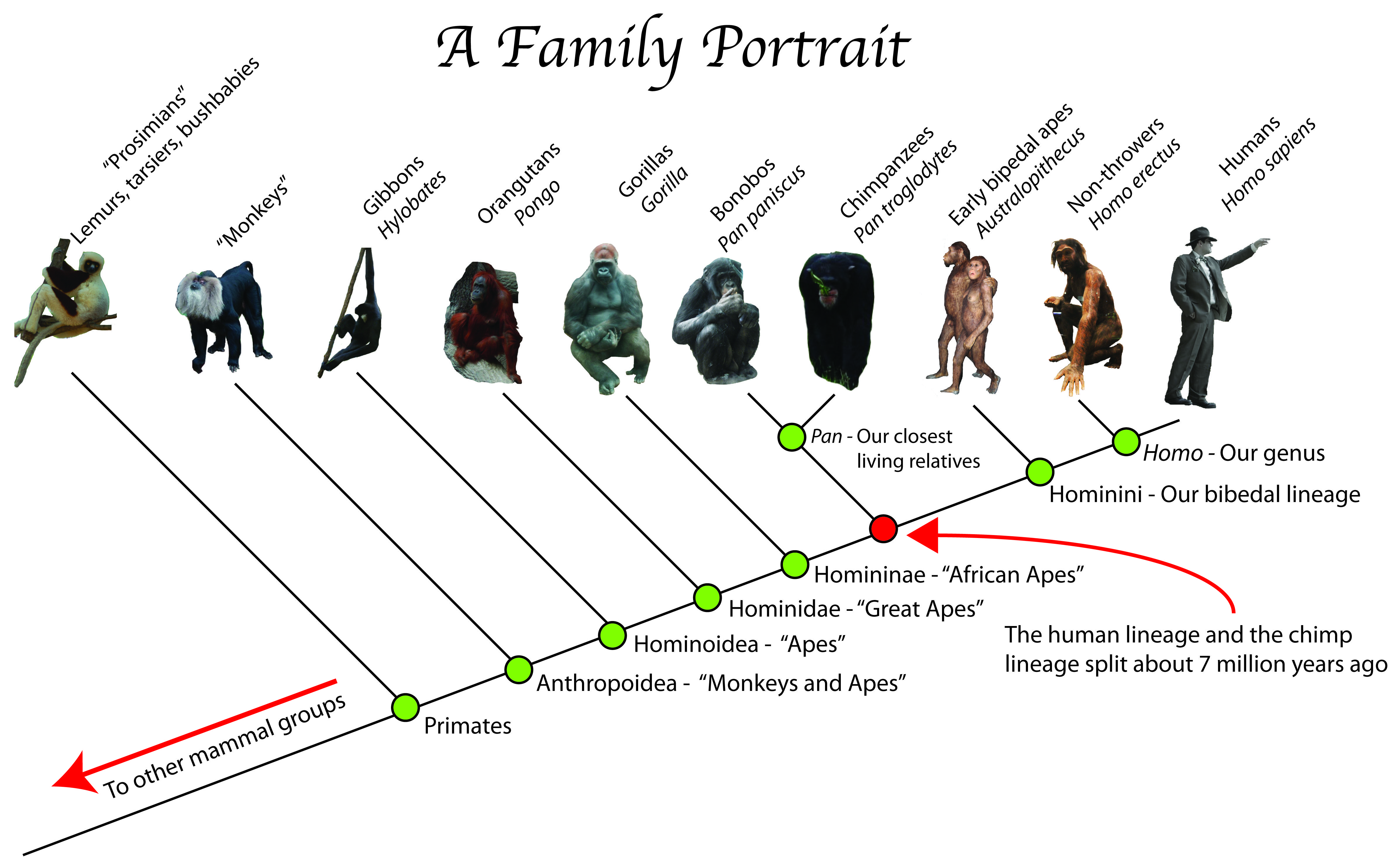
Today’s guest post is by un-Denial regular Mike Roberts. Mike has on several occasions commented that “humans are a species” and this best explains our overshoot predicament. In this essay Mike nicely elaborates his idea.
I was a regular reader of Dave Cohen’s posts at Decline of the Empire. He had a great writing style and was always very rational in laying out his arguments (although, as always, that’s a personal opinion). Many of his posts made the point that humans are a species and what you see is what you get.
Here is an example in which he makes a pertinent point:
If you want to know how late Stone Age humans might have behaved in the 21st century, look in the mirror, read a newspaper, watch TV, or browse the internet. They were us, and we are them.
This kind of analysis eventually made me realise that humans are a species and so its characteristic behaviour (what you see humans doing in a collective sense) is built in. The characteristic behaviour of a species can’t be altered by wishing it. It can only be altered, over deep time, through an external consistent influence, like a changing climate, which may ultimately lead to a new species or simply to a superficial change in a population (like skin colour).
Our polycrisis could be regarded as a profound stressor which could alter collective human behaviour. But though it’s happening quite rapidly, compared to environmental changes of the past, it’s still too slow for humans to really take it seriously enough that it becomes a consistent stressor which can alter behaviours. It will only be enough once a significant minority are having their lives forcibly changed and most everyone else notices. There is no way out, and it just is what it is. It will have to play out. This is the kind of thinking I was applying at the time.
However, my thinking was honed more with much of the information that was flowing through un-Denial.
A Nate Hagens round table featuring William Rees, Nora Bateson and Rex Weyler confirmed that humans are a species and should act like other species insofar as the consumption of resources go. Any species who is given easy access to resources which help them (immediately – there is no forward thinking) will use whatever they can, as quickly as they can. Any genes which enhance this ability will be much more likely to propagate in the population, thus being self-reinforcing. This is until the resources become harder to access (perhaps through depletion, competition or environmental change). Eventually, the ecosystem settles into a relatively stable state, the climax state, until something perturbs it again (e.g. climate change or an invasive species). Humans are fairly well adapted to accessing resources as they have opposable thumbs and a quite large encephalization quotient, making them clever. Consequently, they are likely to become the apex predator in any ecosystem that they encounter.
Recent posts have also introduced the Maximum Power Principle: organisms that capture and use more energy than their competition will have a selective advantage in the evolutionary process. This reinforces the idea that humans are a species, acting like other species but being more successful because they are able to capture and use far more energy and resources than other species.
We’re now getting at the essential idea, not that human behaviour can’t be voluntarily changed, but that humans really act like all other species. How could it be otherwise?
Sapolsky’s views on free will add further support to these ideas. As he mentions, we all recognize that the world, including us, is made up of various molecules, atoms, electrons and so on, but still, some of us think there is room for something else, that can manifest as “free will.” No-one can explain how this other stuff interacts with our molecules to cause the actions involved in our free will decisions. With no known mechanism (nor any empirical, or mathematical knowledge of this other stuff) for this to happen, it is easy to deduce that it doesn’t happen, that there is no other stuff. A belief in free will may well require a belief in an all-powerful creator who can simply imbue humans with a mechanism which does not require adherence to physical laws. So, all species arose by the same mechanism (filtered random variation), even if we haven’t yet figured out how the first species emerged, and so we should expect all species to act in the same way, at the most basic level.
There have been many studies trying to determine the mechanism of how we make decisions. For example, this study appears to suggest that decisions are made subconsciously well before (in some cases, up to 10 seconds before) we are aware of those decisions. This fits quite well with Sapolsky’s position. Our apparent free will is simply us rationalising decisions which our subconscious has already made. And decisions made in our subconscious mind can only be due to all the factors that lead to where we are at the time of our decision; our genes, our upbringing, what we read yesterday, what the weather was like on our way to where we are, and so on.
Of course, humans are unique, in many ways, but so are many other species. They all have special qualities and abilities that can’t be found in other species, or only in a very limited number of other species. But in the essential attributes of a species, humans are identical to all other species. Consequently, it seems reasonable to conclude that the Maximum Power Principle, MORT and other attempts to figure out why humans act like we do, are simply consequences of our being a species. It can’t be any other way. I’m afraid that there really is no way out. The unique human ability to understand stuff should make these realisations hard to take. We can’t even think, “what if we had done something different at that point in history,” because almost nothing would have changed except the timeline. Other species are largely employed at staying alive, as are some members of our species, but most of us have the luxury of spare time to contemplate other stuff and, to some extent, to enjoy living.
Still, maybe I’m wrong. Maybe Cohen, Sapolsky, Lotka and Wyler were wrong. Apparently, it’s in our genes to be optimistic, and no-one can predict the future. So we can live in hope for the rest of our lives even if society and civilisation are crumbing around us, even if the environment is collapsing. Maybe someone will think of something and delay the inevitable for a few centuries. Or decades. Or years.
 un-Denial
I’ve been thinking along these lines lately…that we are energy seeking organisms, that can’t help what we are doing. It just seems so bizarre to exist at this point in time, with the awareness that we are on the brink. There is evidence that humans have been on the brink at other times in the past, but were they aware of the seemingly inevitable train wreck and aware they could do almost nothing to prevent it? An argument could also be made for other life forms on the planet too, as we really don’t know how aware many other species are.
Such is the state of my brain at 1 am, on the 4th day of a 5 day water fast. Ironic that my subconscious at age 61, has directed me to take in NO energy in order to extend the length and quality of my brief existence.
LikeLiked by 4 people
You say it seems “so bizarre to exist at this point in time.” I think of it as a tremendous privilege to be among those able to actually bear witness to our coming demise.
LikeLiked by 1 person
https://www.youtube.com/watch?v=Zp3gCeAI0ds
A beautiful video which is years old but still very relevant.
LikeLiked by 1 person
Mike, your essay is getting some above average (for un-Denial) traction on X by people posting it.
LikeLiked by 2 people
Eliot Jacobson picking it up may have helped!
LikeLiked by 2 people
James @ Megacancer today wrote a brief essay that seems to agree with Mike’s humans are a species idea.
LikeLiked by 2 people
Do you know what James think of MORT?
LikeLike
I think James believes his RNA analogy for civilization is a much better explanation of overshoot. I once tried to persuade James that MORT and RNA complement each other but I don’t think I succeeded. I also once unsuccessfully tried to persuade Mike that MORT complements his species idea. Ditto with Nate Hagens that MORT underpins the many overshoot behaviors he has cataloged. Ditto with others that MORT complements MPP.
I have a perfect track record of never changing the mind of someone on MORT. People either get MORT or they do not.
LikeLiked by 2 people
Nate Hagens strikes me as a rather hopeful and optimistic person so I get it that he is not exactly receptive. I asked James in the comments and will post the answer here.
LikeLiked by 2 people
Following is the response from James:
As a biological dissipative organism avoidance of death is our first and foremost goal. Our brains in their entirety function in one way or another to keep death away. The Mind Over Reality Transition (MORT) theory proposes that humans were the one species that was able to advance into civilization due to an evolved mechanism for burying thoughts of our own personal deaths. Here’s a link to Varki discussing MORT:
In the video Varki asks, “Why aren’t we competing with other very intelligent species today? Mind over reality? I think mind over reality was secondary to other developments which set the stage for humans to become large scale RNA including excellent 3D eyesight, bipedalism which allowed the arms and hands to be free for bonding, manipulating matter and symbolic communication, vocal language and an enlarged brain for modeling the world. I imagine it was an evolutionary process that took millions of years and paid small dividends in survival along the way until a resilient body of information was established. But that’s not to say there aren’t evolved mechanisms for denial of reality.
I thought this one was interesting where scientists came to the conclusion that the brain fools us into believing that death is something that only happens to other people.
https://www.theguardian.com/science/2019/oct/19/doubting-death-how-our-brains-shield-us-from-mortal-truth
I also like Sheldon Solomon’s ideas. He’s shown that death is very much on our minds subconsciously and that anything that interferes with our coping mechanisms like religions that are unlike our own or atheism are seen as a threat. He’s shown that when the subconscious is reminded of death it will become very religiously tribalistic. I suppose that the creation and belief in religions is a form of “mind over reality” in that the mind created something at variance with reality for its own protection. Judges that are subconsciously reminded of death during sentencing may increase the length of incarceration up to nine times. People will also desire more money and procreation when reminded of death subconsciously. This is what a dissipative would want, to fend off death and one might conclude that the fear of death also results in an endless attempt to accumulate resources. Starvation and poverty put people in the vicinity of death as they become weakened and unable to afford medical care.
He also mentions that people would rather not think about their association with the natural world. I imagine they would rather think of themselves as part of the seemingly longer lasting and resilient technological world into which they have evolved. The natural world and environment have become something to be consumed to maintain the existence of the privileged ape in the tech cells. Telling people they cannot consume the natural world puts them closer to “death” and so they deny there’s a problem. They want their accumulated technological chits to be fully convertible into what is derived (unsustainably) from the natural world.
I see “denial of death” in my own kids in that they won’t mention deceased members of the family because it reminds them of “death”. They hate nature too even though working in a tech cubicle will probably kill them faster than anything found in the natural world. Even as they grew-up I had lots of Johnny Guts models and microscopes etc. around but it probably only turned them against any sort of biological or medical education or profession that had to deal with that “gross” stuff.
LikeLiked by 1 person
Thanks!
The key sentence is:
All true but ignores a key event in our evolution. There were many species of homo a milllion years ago with 3D eyesight, bipedalism, and an enlarged brain. Then about 100-200,000 years ago, in one small tribe, something happened that enabled behaviorally modern humans to emerge and out-compete and replace all other homo, and to take over the planet. Simultaneous with this emergence was the first species that believes in gods and life after death.
LikeLiked by 1 person
But MORT appears to be a way of describing part of the behaviour of any species. It’s not wrong, but is a kind of truism. Of course humans act in this way, because they’re a species.
LikeLike
MORT explains why a species exists with a qualitatively and quantitatively more powerful brain than any other species has evolved in 4 billion years, and why that species, despite having plenty of brain power to do so, is unable to understand the overshoot predicament its brain has created, and why that species is the only species in 4 billion years to believe in gods and life after death.
LikeLiked by 1 person
Yes, but being a species also explains that. MORT is another way of looking at it.
LikeLike
Rob… “I have a perfect track record of never changing the mind of someone on MORT. People either get MORT or they do not.”
When I first read you thoughts on MORT and the links to Vardi’s work a couple of years ago, I thought “what a load of rubbish” and ignored it.. It’s grown on me over time, whether it’s an actual gene or not is probably not provable, and there are those of us that think all religions are junk.
MORT does explain a lot, I think of it mostly as a human ‘trait’ handed down from one generation to hte next, mostly by religion. I was raised in a Christian household and all my grandparents were religious followers, but I’m not, it all seemed ridiculous to me. If it was genetic, then I should have the ‘denial gene’, but I don’t seem to as I’m expecting a very bad outcome for all life as modern civilization collapses..
So where’s my denial gene?? I want it!! I want to live in bliss!!!….LOL
LikeLiked by 1 person
Nice to know I’ve had one conversion success. I wish I had normal denial genes too! 🙂
LikeLike
I thought everyone knew that humans are a species … Nate’s round table discussion made complete sense. Am I missing the point?
LikeLike
Not sure if you were talking to me or that I understand your point, but I agree most of what Nate says is correct about our many behaviors that caused overshoot. Unfortunately he misses the most important behavior that underpins all the other behaviors he discusses, our genetic tendency to deny unpleasant realities, which is required to enable the other behaviors given an intelligence powerful enough to know better,
LikeLike
The “powerful enough to know better” idea is counter to the idea that humans are a species. It implies that by sheer will power alone (though we know free will doesn’t exist) it’s possible for humans to resist its characteristic behaviour.
LikeLike
The point is that many/most people seem to think our species is the only one that can change its characteristic behaviour, or the behaviour that all species have of consuming resources at whatever rate they can access. It can’t. Individuals may seem to go against the grain (though I’m not sure even that is true) but the species, as a whole, will continue to act like a species.
LikeLike
I thought today’s essay by Canadian/Sri Lankan Indrajit Samarajiva, which is a big picture review of resistance to US power, was good. It looks to me like the US is between a rock and a hard place.
Will the US escalate or go home?
https://indi.ca/the-praxis-of-resistance/
LikeLike
Unless ‘policy’ has changed?
“By the time you got to the first Bush administration, after the collapse of the Soviet Union, they came out with a national defense policy and strategic policy. What they basically said is that we’re going to have wars against what they called much weaker enemies and these have to be carried out quickly and decisively or else there will be embarrassment—a way of saying that popular reaction is going to set in. And that’s the way it’s been. It’s not pretty, but it’s some kind of constraint.” ?
https://www.nakedcapitalism.com/2018/03/noam-chomsky-populist-groundswell-u-s-elections-future-humanity.html?utm_source=feedburner&utm_medium=email&utm_campaign=Feed%3A+NakedCapitalism
LikeLike
Dr. Tom Murphy today lists the text substitutions his mind automatically applies to understand reality.
https://dothemath.ucsd.edu/2023/12/text-substitutions/
LikeLiked by 3 people
A little book recommendation, Crossings: How Road Ecology is Shaping the Future of our Planet
https://www.goodreads.com/book/show/123627807-crossings
Yesterday marked also the day that first known wolf cub roaming the black forest (Germany) since 1866 was killed by … a car.
LikeLiked by 2 people
Thanks for the tip. I added the book to my library.
Steve Ludlum, originator of the triangle of doom, which showed cost to extract oil would soon exceed our ability to afford oil, used to write interesting essays on how the automobile was by far the most destructive human invention of all time. I haven’t seen Ludlum write much on overshoot these days, as he seems focussed on the “Russia evil” message.
LikeLiked by 1 person
I worked in the roading construction industry for 10 years as an environmental / sustainability manager. By the end I was in a pretty bad depressed state due to my uselessness I felt.
The companies and clients, and even my fellow environmental colleagues, would celebrate and promote the number of birds, bat’s, fish and other animals they had “saved” by catching and relocating them out of the way of the corridor of destruction. All I could think by the end was “you’ve got to be fucking kidding”.
LikeLiked by 2 people
Much of North America at higher risk of Blackouts.
https://www.utilitydive.com/news/north-america-faces-elevated-blackout-risk-NERC-reliability-natural-gas/699275/
https://www.utilitydive.com/news/generator-retirements-threaten-grid-reliability-NERC/702504/
LikeLiked by 3 people
Compelling guest post Mike Roberts. There’s definitely something to your species theory.
Thanks for the links Stellarwind72.
PJM grid operator issued a warning about power outages starting in 2026 from prematurely retiring fossil fuel generation while adding renewables due to permitting backlog and other issues. One of my recent past clients was a PUC auditor and his neighbor is a nuclear control room operator. PUC guy confirmed the problem. Keep an eye out for “coincidences” it may save your life fro species-centric thinking and behavior.
We just bought a 2500 watt dual fuel generator of the quiet variety to run the fridge, lights, low watt space heater and/or charge tools batteries. I spent my “Going Direct” pandemic stimulus $$ on a 400 watt classic package described by Will Prowse at mobile-solar. A common suggestion for people on a limited budget is to focus less on electricity but instead prioritize low tech tools, seeds, water purification and location. Survive world collapse dot com is an interesting read. Have a safe journey!
LikeLiked by 1 person
A year end message from Nate Hagens.
https://natehagens.substack.com/p/the-human-predicament-in-22-clips
LikeLiked by 1 person
This montage of the different experts highlighted to me how people get stuck in their own little world of what’s really important. Everything mentioned is important and has effects on the overall system, but none of the experts, possibly with the exception of Bill Rees has put together that it is a combination of factors that have feedback loops affecting nearly everything else, that guarantees modern civilization must collapse, just like every other civilization before us.
I think I picked up from one speaker that this time there is nowhere to go to. In past civilization collapses, many people just left the influence of one set of leaders to out to the wilds somewhere else and tried to survive off the land.
If you watch USA prepper shows, there are many that plan to be good hunters when everything collapses for their protein. IMHO the number of hunters will vastly outnumber the game, and they will end up hunting each other after most/all large mammals have gone extinct.
Nate tends to be most interested in what we should do, as if an answer exists for massive overshoot. It clearly doesn’t, unless we count culling 99% of the human population. Even with just 1% of humans remaining, we will still be 81,000,000 people, a factor of 10-20 greater than pre agricultural times. The number of humans on the planet is staggering when we think about it.
It should be no surprise to anyone about all our support systems around us collapsing. It should be no surprise about inappropriate moves by leaders panicking over one issue, then the next, they all know what we are doing, by just existing in such vast numbers, is unsustainable, but fear it falling apart on their watch. That includes invasion from others, with the only remedy to that dilemma being more people, which solves the debt problem by providing more growth. Does anyone really think that if countries like Australia, or Canada or Brazil had sustainable populations of under 1M people, they would still exist without a neighbour invading to gain access to all the resources?? I don’t, and leaders get told this by their military leaders, in whose interest it is to expand their own little world.
Leaders are so busy protecting their own little world, that they jump at anything that looks sellable to the public as a good idea to solve problem xyz..
As we go down the net energy curve, it should be no surprise that responses to every issue get worse, by experts in one field and leaders.
LikeLiked by 4 people
What you said is harsh but probably true. That’s why I now think our goal should be to reduce suffering for our species, and other species.
When the goal is to reduce suffering, rather than fixing the problem, it frees us to focus on actions that could succeed, rather than fantasies that will fail.
LikeLiked by 1 person
Every country in the world should have a one child policy to start with.
LikeLiked by 2 people
We should have had the one child policy everywhere for decades, but what do we get instead? Western governments worrying about too low a future population so encouraging immigration, more babies or both. I think we had over 500,000 immigrants into Australia last year alone, in a country that naturally would only support a bit above 500,000 people.
It’s one of the reasons I think we are racing towards collapse, the policies are all wrong, because ‘they’ (leaders), believe the economists that infinite growth on a finite planet is possible and good, with just the right policies (ie their policies).
LikeLiked by 4 people
Exactly the same story here in NZ. More than 120,000 extra people through immigration in the last 12 months. Plus add another 20,000 natural increase (births minus deaths). Successive governments have just opened the doors without any long term population plan.
But it’s good for the economy stupid. More people to pay taxes to help pay for the upkeep of essential services and infrastructure. More people puts more demand on essential services and infrastructure so bring in more people to pay taxes and so it goes round and round….. And also bring in people who are prepared to work for bugger all in the manual labour field. It’s good for the economy stupid….
The most aware and forward thinking political party we’ve had in the last 50 years was the Values Party. Here’s their population policy from 1972. It was the first policy in their manifesto.
“The Values Party believes that there should be a deliberate Government policy of population control as a means to reduce economic and urban growth, protect the environment, and advance the arrival of the four-day working week.”
LikeLiked by 3 people
Isn’t that basically a Ponzi Scheme?
LikeLiked by 2 people
Yes it is.
LikeLiked by 1 person
Canadian Prepper today summarizes 2023 events that suggest a nuclear war is probable.
LikeLike
Actually the term species is overly broad. Homo sapiens are among a great many animal species. Species includes plant species, bacteria species and virus species—corona viruses are species for example. It would be better to point out that we are animals—an animal (mammal) species. That said, even bacteria commonly go into overshoot, there’s nothing unique or special about species’ overshoot.
LikeLike
Well, animals and other non-plant species have more opportunity to access resources but I’m not sure why it would be better to point this out.
LikeLike
Friend Panopticon is back from a break.
https://climateandeconomy.com/2023/12/28/28th-december-2023-todays-round-up-of-climate-news/
LikeLiked by 2 people
Alice Friedemann today with a preptip for US readers.
https://energyskeptic.com/2023/maps-of-hazardous-waste-in-usa/
LikeLike
Yeah, she was scary.
Makes me scared of the coming fire season. With any form of financial collapse, wildland firefighting is going to take a hit. More fires burning longer. With any worse collapse no firefighting at all. Just goes to show all those prepper plans I made 10 years ago were a mistake, I should have moved to NZ or Tierra del Fuego instead of the PNW. 😉
AJ
LikeLiked by 1 person
You, like me, are old and live in one of the nicer places on the planet. With a little luck we’ll be dead before our homes become bad places to live.
LikeLiked by 1 person
https://indi.ca/the-evolution-of-the-hegemonster/
LikeLiked by 1 person
James Howard Kunstler with his annual year-end predictions.
https://kunstler.com/clusterfuck-nation/do-you-dare-even-look-forecast-2024/
On energy, he might finally get a prediction correct:
On covid, I’m less confident about his dire predictions. It’s possible that the story most pro- and anti-mRNA people believe, that a novel, contagious, deadly virus was at the core of the event, is wrong. A hope I have for 2024 is that the truth finally becomes clear.
LikeLiked by 1 person
This is a quote from that article
Compare that to a quote from his 2005 book The Long Emergency.
https://en.wikiquote.org/wiki/Overpopulation
LikeLike
Most of us thought 2008 was the beginning of the end. We were early by a couple decades. I guess in the grand scheme of 2 billions years of life, 100,000 years of humans, and 200 years of fossil energy, that’s close enough.
LikeLiked by 1 person
We should have started using less oil in 2008, but society (falsely) believes that fracking bailed us out, while it really only delayed the inevitable by 15-20 years. We should have used those 15-20 years to prepare for peak oil, but we didn’t.
LikeLiked by 2 people
A frightening scenario that came into my mind recently.
A wet bulb event will put severe strain on the power grid. What happens if the power goes out? With temperatures rising and energy becoming scarcer, I think this is bound to happen somewhere, probably within my lifetime.
LikeLike
Hope you’re ok Stellarwind72, you sound a little stressed out.
One small tip that has helped me is if I’m worried about something I sometimes try it to learn how I will respond and to buld confidnece I can deal with it if and when it happens for real.
For example, I’m also worried about unreliable electricty or electricty I cannot afford. I’m now down to 15C in my home living space, and whatever the outdoor temp is (-6C last winter) in my bedroom due to an always open window. I am perfectly comfortable with no stress. Secret is long underwear top and bottoms, plus a toque. Then I figured out how long a pair of long underwear last, and when they went on sale, bought enough for about 20 years.
We don’t get crazy hot temps here in the summer but I find an inexpensive 10 watt fan pointed at me is all I need during heat waves. I have a spare fan in storage.
LikeLiked by 1 person
Post by Hideaway in the open thread on Peakoilbarrel. I found it very succinct and nicely written.
LikeLiked by 3 people
I saw that post by Hideaway @ POB. It’s very good.
LikeLike
I saw this response to Hideaway’s comment :
Alimbiquated : Interesting point, but horsepower is an exception I think. Also whale oil isn’t used much any more.
I then replied with : regarding “whale oil isn’t used ‘much’ any more” we also cut back drastically on eating Dodo, now we can all sleep better at night, all is well.
Alas, sarcasm is not allowed by the moderator.
LikeLiked by 2 people
Welcome here.
Whales would be extinct if we had not struck black gold.
LikeLiked by 1 person
Thankyou.
LikeLike
Hideaway, you might find this new video by Sabine Hossenfelder on nuclear interesting.
LikeLike
Rob, like so many comments on energy everywhere, it only looks at a part of the picture. She didn’t touch on operating and maintenance costs, which is very real and large part of the total cost. For example, let’s pretend for a minute that the capital cost is zero, a nuclear power plant still costs around $US30/Mwh in the O&M (including fuel) costs.
The example of a small gas project in the Perth Basin of Western Australia, where the ongoing O&M cost is $A0.19/Gj = $US0.47/Mwh (the condensate part of the project is minor overall, being only ~6% of total energy, however it costs around $1.50/Mwh dragging total energy to ~$US0.53/Mwh).
The total cost of Capital plus O&M comes to $US1.59/Mwh!!
We have built the modern world on projects like the gas one, where the cost to produce the energy is a fraction of the sale price, hence the world has had excess energy (or dollars) to enable people to do lots of things not associated with energy.
The wholesale price of energy is around $US60/Mwh (based on average oil price in 2022 from IEA).
The price we pay for something is the sum of all the embedded energy involved with getting that item to the customer. Margin is made all the way along the chain of energy being used within the system, which effectively allows all the people along the chain to take their cut of dollars (or energy!).
At retail level the cost of energy is much higher than $US60/Mwh. For example diesel here in Australia right now is around $US130/Mwh and a Mwh of electricity from the grid at ‘peak’ rates including taxes is around $US306/Mwh.
Most people assume solar or nuclear is cheap. With solar here in Australia you can buy a solar system to put on the roof and offset those peak power prices. The cost of the solar is subsidised by the government, so because the cheap subsidised solar makes so much sense compared to peak power, people assume it can be that way for industry, without understanding industry pays the wholesale price (or very close to it).
Anyway, back to the original point, if the O&M costs of nuclear are around $US30/Mwh in a world where the wholesale price of energy is around $60/Mwh, then before even considering the capital cost, the best nuclear can do is an EROEI of 2. We can’t run a modern complex civilization on that number, the complexity needs high EROEI around 10-20 to be possible. We will not build any NPPs without fossil fuels, with large surplus energy. If/when we lose oil and gas, which give the highest EROEIs, we will never build another NPP.
In a world of wholesale energy cost of $60/Mwh, energy generators that cost $US1.59/Mwh give us complex civilization, those that have O&M costs alone of $US30/Mwh don’t.
One aspect I know for certain, there are oil and gas projects that are wildly profitable (I.E. Saudi Arabia), yet I know of zero nuclear power plants or solar farms or wind farms that are hugely profitable. The old saying of follow the money, seems just as real for energy as anything else.
….
LikeLiked by 1 person
Most interesting, thanks for educating us.
One thing I noticed in the main reasons she gave for NPP construction costs going up was “falling labor productivity”. When I hear those words I think rising oil prices because most labor productivity comes from the diesel used by the workers. She missed that point and attributed lower productivity to increased regulations.
LikeLiked by 1 person
All the increased regulations are definitely part of it. One point I missed out on above, the average cost per kw of nuclear power generation is about the same today, looking at Vogtle and Hinkley as in the early 1970’s based on the relationship to oil.
Using the real price of oil, in say 2020 dollars, the cost of nuclear power stations has increased at the same rate, meaning to me that the capital costs of a nuclear power station are directly related to the cost of oil.
I actually worked it backwards from some old documentation on the costs of NPP in the early ’70’s, then used some World Bank real GDP numbers for today’s dollars real value for past years, and likewise for the actual historic price of oil adjusted for inflation. It was all to see if there was any validity in my calculations of EROEI. Hope that made sense…
Another aspect form Sabina’s video, the same old NPP cost study from the early 70’s clearly showed massive cost and time overruns for the NPPs at the time. Also notably from Sabina’s video she left out the planning and design times as part of the overall time of construction, but this is very relevant in the time component as there is background entropy happening in the system during that time, which is energy degradation, therefore a real energy and dollar cost, but hidden from view. This cost is as much, or perhaps even more in all the people involved, so it can’t be seen like a bridge rusting, but people have an entropy cost to the system.
LikeLiked by 1 person
I thought this was a pretty good emotional but wise and well informed rant about the insanity of US foreign policy by Col. Larry Wilkerson.
LikeLiked by 1 person
Hi Rob,
Wilkerson is a mixed bag. Good on military tactics, strategy and doctrine; piss poor on domestic policy. If you look around you will find videos of him lambasting US military members that refused to take the COVID vaccine. I was sorely disappointed when I heard his opinion on the matter. Since then, I take him with a grain of salt.
Happy New Year!
LikeLike
Thanks, did not know that. Will be more skeptical of him. It’s hard these days to find anyone that does not have a blind spot or serious flaw.
LikeLike
Saskatchewan geese decided not to migrate this winter. Probably nothing to worry about.
LikeLike
Software companies — long favored by private equity for their reliable cash flows and stable businesses — are entering 2024 with one of the biggest piles of distressed debt in the US.
Nearly $17 billion of software-related debt was in trouble as of mid-December, according to data compiled by Bloomberg, signaling the end of the excesses of low interest-rate years and accompanying high valuations that led to a boom in leveraged buyouts.
[…]
While many software firms might be shut out from broadly syndicated financing markets today, booming private credit markets may offer an escape hatch, said Tim Donahue, global head of Lazard Capital Solutions.
“The market should see more private credit financing where there is real enterprise value but the company is saddled with a capital structure and terms that do not currently work,” Donahue said. “Private credit can be the elixir for companies.”
Who could have guessed that die techworld and burning through VC is somehow unsustainable? I’m shocked.
LikeLike
Another great mystery. How can a company that has never made an honest profit for years have a high and rising stock price? Dig around and I expect you’ll find genetic denial.
LikeLike
Happy New Year everyone. Does anyone have predictions for 2024?
Here are two of mine:
Civil unrest in the U.S. surrounding the 2024 Presidential Election
We breach the 1.5° C Threshold
LikeLiked by 1 person
2024 is going to be worse than 2023.
If there is going to be a word of the year, it will be bifurcation.
I predict I will not win the lottery.
LikeLiked by 1 person
Happy New Year to everyone!
LikeLiked by 5 people
https://thehonestsorcerer.substack.com/p/life-after-modern-technology
LikeLike
“… technology use [will] become ever more limited to an ever smaller, ever more privileged elite class” this is stated as though it is true. To a very limited extent it is true, but then the following text explains this is dependent on “massive hierarchies” which are going away.
All of our technology relies on economy of scale, especially silicon fabrication plants and the just-in-time global supply chains. For example, the humble rural gasoline station relies on sufficient customers to stay in business. When customers cease to exist, the station closes and now people (including the elite) have to drive further and further to get gasoline. Eventually it is simply not available without incurring massive expense. The elite will end up in enclaves that are easy to find. They will likely fear their own staff.
LikeLiked by 2 people
Yes, it will likely be a fragile system on the down slope because complexity depends on plentiful credit, which depends on economic growth, which depends on energy and materials growth, which depends on customers that can afford energy and materials, which is not posssible with scarcity due to depletion.
LikeLike
I have serious dread about the credit bubble bursting. I know it is going to happen, I just don’t know when.
Click to access HowToBeTrapped.pdf
LikeLike
Have you seen anything by Korowicz recently? I haven’t. This is 10 years old. I’m thinking he was much wiser than me. He figured out what was going happen, wrote a few excellent essays to explain what he’d learned, and then did not revisit the same issues over and over every day like many of us did.
LikeLike
In the past few years he wrote some papers about the systemic risks posed by the Covid-19 pandemic.
https://www.korowiczhumansystems.com/publications
LikeLiked by 1 person
The financial collapse predicted by David Korowicz will probably look similar to the 1930s U.S. banking crash or the collapse of Bernie Madoff’s Ponzi scheme in late 2008. It will be triggered by large numbers of people/institutions trying to convert fictitious wealth into real wealth. Large numbers of people will see their savings and pensions vanish into thin air. Most rich people will see their supposed net worth drop by at least an order of magnitude. I just wonder what can be done to reduce the suffering when this happens.
LikeLike
Tim Watkins wrote a long essay today relevant to this thread. Too long for me to read but I liked these paragraphs.
https://consciousnessofsheep.co.uk/2024/01/02/the-myth-of-redundancy/
LikeLiked by 2 people
I’ve always appreciated Tim Watkins much more than (for example) Nate Hagens or Tim Morgan. Watkins can obviously see the big picture and how everything can unravel – the relationship between complexity, efficiency, resilience, affordability, volatility and so on.
When collapse truly accelerates I will not be surprised if it takes only days – starting in finance : debts remain unsold, markets freeze, banks fail, currencies go down the toilet. Triggered by almost anything – climate change and crop failures due to drought, flood, fire, disease, insects, lack of fertilizer, lack of pesticides and so on. Or, perhaps bad news from Saudi Arabia. And the only viable smoke screen will be war.
LikeLiked by 3 people
I now share your view of how this might unfold. I’ve been amazed since 2008 at the number of creative tricks they’ve used to keep the wheels on. Every one of these tricks has moved us in the wrong direction by increasing the energy of the eventual explosion (debt), and reducing our resilience (increased complexity), and reducing our trust of critical institutions (covid), and increasing the probability of violent social unrest (wealth gap due to money printing), and setting the wrong expections and a sense of entitlement (energy transition will permit BAU), and increasing the probability of nuclear war (deliberatley crossing reasonable red lines), etc. etc..
LikeLike
Must be smoke in the air. Tim Morgan is thinking about the same issues.
LikeLike
Hamish and Rob, I’m also in the fast collapse category and have identified a point when it will happen if it hasn’t happened before then. Collapse is inevitable once the oil production decline accelerates on the downside.
It’s totally inevitable because of all the feedback loops that make such a huge proportion of the population quickly worse off when oil production falls by increasing amounts each year. The complex system cannot make up for vastly less diesel for farmers and miners, plus less large scale truck transport, shipping etc, a couple of years in a row. Of course a year or two’s increasing decline, will mean markets savaged, less capital for investment, much worse supply lines for existing farms, mines, factories of all types.
It is based upon an assumption that something else doesn’t get us first, like war, disease, climate.
When I have the discussions with the cornucopians on either TM’s site or POB, not one of them ever considers it is a system with many subsystems and feedback loops. They always assume we can just build ‘more’, solar, batteries, nukes, wind…whatever, with no regard to mines, supply lines, factory inputs of energy and people etc, assuming everything else will remain normal.
Tim Morgan pretty much gets that collapse is inevitable IMHO, but he doesn’t want to say it out loud, as that makes him look like a ‘doomer’, and therefore easily dismissed by ‘the establishment’, but all his numbers from SEEDS are pointing that way, especially capital investment.
LikeLike
I agree oil decline will be a likely trigger. If I understood the most recent interview with Art Berman correctly, the oil decline could start soon. Doubly so if the middle east war escalates. They might try another plandemic with lockdowns to decrease oil demand to hide it for a while.
I also agree Tim Morgan burns a lots of words trying not to say what his data clearly shows.
LikeLike
Never forget. Mistakes were not made.
Alternate version.
Background info.
https://substack.com/inbox/post/140190652
LikeLiked by 1 person
A surprising statement by Tverberg, and an excellent question by FE @ OFW:
h**ps://ourfiniteworld.com/2023/12/15/ten-things-that-change-without-fossil-fuels/comment-page-11/#comment-449118
LikeLiked by 2 people
2024 is off with a bang.
LikeLike
LikeLike
Due to the degenerating economies of scale, the deflationary depression that is now beginning will soon no longer be characterized by a slow decline but by rapidly falling dominoes
LikeLiked by 4 people
Consumer electronics and entertainment will be hit very hard, because they require economies of scale to be viable, and they are discretionary.
LikeLiked by 1 person
Yes, electronics will be a likely casualty. I just purchased a spare memory card for my phone at an amazing $40 boxing day price. It’s a micro-sd card with 512GB meaning it stores something like 6 trillion bits on a tiny chip. The manufacturing capital and complexity to pull that off is mind boggling!
I’m ready for the internet to go down and electronics to become scarce with a nice collection of movies, tv shows, music, books, etc. on my hard drives, and hopefully enough spare hard drives and other computer parts to repair my system until I die.
LikeLiked by 1 person
Ditto to everyone’s prognostications above. I too think the initial shock to the economic system will be a rapid evaporation of debt and wealth (if the nukes don’t fly first). But I will miss the internet and the connection to this site (amongst a few others) and the people here – they make me feel like I am not such an anomaly for thinking the way I do.
AJ
LikeLiked by 1 person
I’m hoping a lot of work dries up for influencers LOL. How much of the economy is just various forms of advertising these days!??!
LikeLike
I’m not expecting a deflationary depression, as central banks and governments are fully aware of the possibility, but think printing money is the answer. I’m expecting a inflationary depression where the value of money eventually becomes worthless and complex goods become simply unobtainable for any price, despite the necessity of them.
LikeLiked by 1 person
LikeLike
That’s a good summary.
LikeLike
We had a mild winter this year in NZ. A now our summer is kind of crap with many cold, cloudy days. I’m still waiting for the heat of El Niño. Maybe it’s stuck in the Northern Hemisphere.
LikeLike
Well, the southern hemisphere is still near a record anomaly for the time of year but not actually a record. The northern hemisphere has been in record anomaly territory for about 7 months, apart from a handful of days, and is there currently, by a large margin. So maybe much is trapped up there. It’s certainly weird. Maybe the reduction of aerosols from shipping has had a bigger effect than has so far been estimated.
LikeLiked by 1 person
It’s so strange ae! The jet stream changes could be behind the big differences between regions and seasons. Apparently El Niño also causes more wind, so maybe bad weather is being blown into NZ?
LikeLike
Warmest winter I can remember here in British Columbia. Zero snow. Very few nights below 0C.
LikeLiked by 1 person
Crazy!
LikeLike
Preston Howard here with a link to a recent bulletin released by the Florida Dept of Health concerning COVID-19 mRNA Vaccines.
Joseph A. Ladapo, MD, has battled the US Centers for Disease Control and Prevention since he was first appointed as Florida’s Surgeon General, and this apparently is his most recent salvo.
Others posting on un-denial have a more informed perspective than mine, so I’m sharing it. I’m interested whether Dr Ladapo identifies anything new or of wider value to the overall Covid discussion. Thanx in advance to any who choose to comment. Here’s the link:
https://content.govdelivery.com/accounts/FLDOH/bulletins/3816863
LikeLike
Just to add to Howard’s post – only five states have a Surgeon General (or equivalent); Pennsylvania, Michigan, Arkansas, Florida and California. So not much chance of any other states pointing out that the federal regulators have failed, abdicated (abandoned their duties) and lied. Better late than never (maybe) that the RNA injections are unsafe and ineffective. It is also impossible to have meaningful and valid “informed consent” since there is so much about the injections that they refuse to explain / answer, or even look for the data.
LikeLiked by 1 person
It’s not possible to answer anything about effectiveness and long term risks of a new technology like mRNA without at least 10 years of double blind placebo testing. They have not started nor intend to start those tests. The tests that were conducted were complete bullshit.
We can assess short term safety risks from adverse reaction and all-cause mortality data, however authorities are ignoring and corrupting this data.
Therefore we should ignore everything we are being told about mRNA.
LikeLiked by 3 people
It looks to me like the bad people are going to win because the good people are attacking or ignoring each other instead of working as a team to figure out who did what on the plandemic.
For example:
– many anti-mRNA leaders attack Children’s Health Defense and RFK Jr.
– all anti-vax leaders ignore Dr. Joe Lee’s string theory
– Dr. Joe Lee attacks anti-vax leaders for ignoring him
– Dr. Nate Hagens remains silent on all covid issues
– almost all covid skeptic leaders including Dr. Bret Weinstein ignore Dr. J.J. Couey
– Dr. J.J. Couey and friends attack Dr. Bret Weinstein
– no one is capable of a big picture open minded review of all evidence
https://substack.com/inbox/post/140330052
It makes me very sad and it’s unlikely we’ll ever get to the bottom of what happened.
LikeLiked by 1 person
I agree. The lack of coherence and cooperation is lamentable / infuriating. The clash of personalities is tragic.
LikeLiked by 2 people
I suggest “The Forgotten Side of Medicine” by A Midwestern Doctor substack.
https://www.midwesterndoctor.com/archive
Recent articles..
The Deadly Rise of Scientism
The importance of Healthy Relationships at the Dinner Table
A Primer on Medical Gaslighting
How Far will the FDA Go to Protect a Bad Drug
Data and Dehumanization in the Modern Era
LikeLike
Thanks for the tip. I skimmed him and he looks promising. Which of the half dozen or so covid theories does he believe is true?
LikeLike
This article from the Doctor may help answer your question. It also speaks to your concerns about overpopulation.
https://www.midwesterndoctor.com/p/how-did-we-know-that-the-covid-19
LikeLike
Thanks. Yikes! another deep rabbit hole.
If I’m going to take serious someone who thinks covid has a population reduction agenda, then that person must be fully overshoot aware because otherwise they have no context for understanding what our leaders may be attempting to do.
This person unfortunatley is overshoot blind. 40 billion people on this planet is not possible regardless of the lifestyle or political system.
LikeLike
I agree. But they surely don’t believe that “we can live in harmony with our environment,” an impossibility which renders his belief on population capacity pointless.
LikeLiked by 1 person
My thanks to you, Rob and others for saving me from the effort of even trying to read the doctor’s insanity – the conclusion alone appears completely deranged.
Not only are his (or her) thoughts / beliefs insane, but the comments reinforce my understanding that the vast majority of people are sheep.
Worse still, some sheep are not content to just be sheep – they want most of the rest of us, to also be sheep.
I’m not certain about the veracity of “A Midwestern Doctor”. From the About page, “As a physician in practice with multiple jobs, I have a very full plate.”
That very full plate apparently allows up to 14 posts a month. I suspect, more than one contributor, perhaps paid opposition.
LikeLiked by 2 people
Let’s not throw the baby out with the bathwater. Who among us has everything right?
Midwestern Doctor’s colleague and his group offers robust and respectful replies to fellow scientists on the question of novel symptoms associated with Covid-19:
“In the spirit and intent of fostering respectful scientific debate, a group of colleagues has asked some of us front-line clinicians to reply to a post written by Martin Neil, Jonathan Engler, and Jessica Hockett titled “’Spikeopathy’ does not explain the ‘novel’ symptoms associated with COVID-19.”
FRONT LINE CLINICIAN “REBUTTAL”
k. I will state at the outset that I/we will be unable to fully “square the circle” in providing an explanation for all the anomolous events and data described.k. In terms of how deadly it was, this also gets complicated because the disease changed over the past few years, and despite the seemingly low Infection Fatality Rate, it is the opinion of my colleague A Midwestern Doctor that it is impossible to calculate the true IFR for influenza so a direct comparison between the two is not possible.
https://pierrekorymedicalmusings.com/p/debate-was-covid-19-a-pandemic-caused
LikeLike
On the question of Overshoot awareness among Covid Dissenters.. several frontline personalities and substack bloggers primarily focused on the Covid Reset have softened to or recently allowed guest posts on Peak Oil and the Energy Cliff eg. Naked Emperor, Sage Hana. Mike Yeadon has been in a struggle session with “a person who shall not be named” over the idea of vaccination as a depopulation event to mitigate TM’s Perfect Storm scenario laid out in Fabio Vighi’s treatise on systemic implosion and pandemic simulation.
LikeLike
Mind numbing numbers.
In about 1972 I did a report for my grade 9 Social Studies course on the Canadian Federal election. Canada had a small deficit (< $1B) and the main issue debated was whether a deficit was acceptable.
LikeLiked by 4 people
It isn’t going to end well. the USA can’t keep making debt. that is unpayable and one day, probably soon, all going to blow up. Then all of my assets, all of my stocks and all my money in the bank will be worthless. Then all the little matter is what I can grow on my property.
AJ
LikeLiked by 1 person
The U.S. will default on its debt within my lifetime. It will be either a hard default, or a soft default through hyperinflation.
LikeLiked by 1 person
South Africa accuses Israel of genocide in Gaza.
https://www.pbs.org/newshour/world/read-the-full-application-bringing-genocide-charges-against-israel-at-un-top-court
LikeLike
South Africa is also a good judge of aparteid.
I have some insight into Israeli strengths and weaknesses from first hand experience. They have determination but not the military superiority they once had.
This may not end well.
LikeLike
Israel wants to ethnically cleanse Gaza.
LikeLike
So far, I am about one hour into the video. It is quite fascinating.
LikeLiked by 5 people
Just finished the Brannen interview. It’s excellent and I will listen again tomorrow.
Brannen really knows his stuff and it’s one of the better discussion on climate risks and uncertaintes I’ve heard. He also deeply gets the rest of the overshoot story.
LikeLiked by 1 person
I agree. I put myself in the que to get his book from the library, it sounds like a fascinating read. My only problem with his talk is he is unaware of how rare the circumstances of this planet are in the universe (rare earth hypothesis) and how remarkable is our inheritance of fossil sunlight (carbon fuels).
AJ
LikeLike
I came away with a different impression of him. I heard him say he’s lost interest in astronomy because the planet we live on is so rare and precious compared to all other planets we’re aware of. He also gets the Dr. Nick Lane idea that life is simply a channel for dissipating energy.
LikeLike
Perhaps a Hail Mary to squeeze out a little more growth, and to help the military meet it’s recruiting targets for the war that’s anticipated?
LikeLiked by 2 people
I wonder why @fentasyl didn’t have the same duration for both presidents on the graph. Trump’s duration less than half Biden’s.
LikeLiked by 1 person
I’ve been enjoying this PodCast lately. They even talk about population and hydrocarbons briefly in this conersation
LikeLiked by 1 person
An excellent find. At 41’35 “its comparatively easy to destroy a state, its extremely difficult to recreate it”.
For a long time I have maintained the thought that :- in the absence of continuously finding and producing new sources of oil, the only alternative is to destroy demand. At the scale required this means bombing countries back to the middle ages. This has happened all over the middle east. Bombing Europe was unreasonable, so lets undermine the whole economy by taking out the industrial power-house that is Germany (bomb the natural gas pipeline).
LikeLiked by 2 people
That’s a scary but plausible idea! ek
LikeLike
Art Berman is publishing good stuff for free now.
https://www.artberman.com/blog/beginning-of-the-end-for-the-permian/
LikeLiked by 1 person
Here’s a much, much too long to read, and almost too long to skim, deep dive into the Substack platform, plus part 1 of a critique of Doomberg, who in addition to being overshoot blind, apparently also has a tendency to plagiarize the work of others.
If anyone takes the time to read this, a brief summary about what we need to know about Substack would be appreciated.
https://ff2f.com/how-to-ghost-substack/
LikeLike
Chris Martenson today politely takes down Doomberg’s claim that we do not have an oil problem. I’ll bet Doomberg makes more money than Martenson on subscriptions thanks to MORT.
LikeLiked by 2 people
I’m sure you’re right about Doomberg making more money. MORT along with hopium is a better pitch than what Chris is selling. I thought Chris did a masterful job in this podcast, I wish he would have used Art’s imagery of what is happening in the Permian basin with technology as the bigger straw just allowing you to suck out the oil faster. I wonder where Doomberg thinks the vast new fields of oil are, none of the major producers seem to think they exist. Doomberg’s just selling hopium.
AJ
LikeLiked by 1 person
We will either see hyperinflation or widespread defaults leading to a deflationary doom loop.
LikeLike
Food prices may be showing signs of softening with uncommon sales here. Stocked up on coffee, tea, organic oats, dried mushrooms, and sardines today. They put a limit on the quantity that could be purchased so I made 3 trips into the store.
LikeLiked by 2 people
Houthi Rebels and shipping in the Red Sea.
LikeLike
The trend seems to be steady escalation.
LikeLiked by 1 person
it was interesting to see what the MSM says and how they tow the party line. I haven’t watched television news in years, so it’s really an eye-opener how propagandized they are. I wonder if anyone has done an analysis of how many $2,000,000 missiles have been used in protecting against $2,000 drones so far?
AJ
LikeLiked by 1 person
15 second summary of Earth’s energy imbalance.
LikeLiked by 1 person
Hi all,
I don’t know if anyone is interested but I found this interview of Bret Weinstein by Tucker Carlson to be the best explanation of the who and how Covid and how all fell inline with the message. Correct me if I am wrong.
AJ
LikeLiked by 1 person
Thanks, I haven’t watched it yet but I will soon.
Many of the covid skeptics I follow that believe there was no contagious deadly virus, but also believe a non-contagious virus that does make you sick exists, have already viscously attacked Bret Weinstein for this interview with Carlson saying he’s deliberately not talking about the key issues:
1) most deaths were deliberately caused by inappropriate treatments
2) a panic was created to force mRNA injections into billions of people
3) mRNA is fundamentally unsafe and always will be
LikeLike
I just finished the Tucker/Weinstein intervew. It’s superb.
The fact that covid dissidents are attacking Weinstein rather than congratulating him shows how f**cked up the dissident movement is. They are a bunch of big ego lone wolfs incapable of working as a team.
I’m pretty sure Weinstein held back a few of his darker beliefs to avoid alienating the audience. It’s still an excellent interview and he’s good man with intergity.
Even if you’re sick of covid skip ahead to the last 10 minutes when Bret discusses the breakdown/take-over of western civilation.
LikeLiked by 1 person
The world population has increased by 3 billion since I was born (in the 80s). We’ve added an additional billion people since 2012. The covid years were the only years to have less than 1% growth rate.
LikeLiked by 2 people
How Israel Could Be Stopped By South Africa – Its Overwhelming Genocide Case Explained
LikeLiked by 1 person
It is indeed sad that the Jewish people in Israel who were the victims of the Nazi genocide have raised descendants that now become perpetrators of genocide. Religion is truly a mind virus that allows it’s adherents to commit evil.
AJ
LikeLiked by 1 person
Israel’s actions given its history are remarkable. Also remarkable that Germany is not calling for an end to the genocide.
Germany has been a sad dissapointment to me in recent years. They are committing suicide for no good reason that I can see.
LikeLiked by 1 person
My guess!
Because of Overshoot:
The string-pullers in the USA are removing an european glutton from the global dining table on behalf of the hegemon with the help of corrupted, bribed or blackmailed German political puppets.
With nordstream, we have had our jugular vein cut.
Our farmers have now realized this far too late.
LikeLike
Given German leaders have decided to deindustrialize their country you’d think they would increase support for agriculture rather than reducing support for farmers.
If you do not have healthy industry nor healthy agriculture what is left?
LikeLike
I wonder if the BRICS plan to remove the other major glutton (the U.S.) from the dining table through dedollarization. Dedollarization won’t cut the U.S. off entirely, but it will put the U.S. on a diet.
LikeLike
Given the energy constraint, the net must be down, but maybe BRICS will stay level for a while as the rich countries fall down to their level?
LikeLike
Good interview with off-grid prepper Shawn James. Just started following him but he seems legit and wise and skilled.
LikeLiked by 2 people
Do you ever wonder how annoying people like Daniel Schmachtenberger make their money? This is very interesting https://www.guidestar.org/profile/84-4016495
LikeLike
Where do people like him even come from? Basically appear out of no-where talking a load of gibberish and get paid millions to do podcasts telling us we are all dumb and doomed. What the actual.. And his business runs as a non-profit, so I guess no even paying taxes. Weird grifting
LikeLiked by 1 person
He’s a very smart guy but I do not respect him. Tries too hard to look smart. Too many words. Incapable of getting to the point.
LikeLiked by 2 people
I’m actually getting more and more suspicious of people like him. I don’t think they’re trying to help the situation, I think they’re trying to make money as an internet person
LikeLiked by 2 people
Best thing I got from his Nate Hagens series was multipolar traps (episode 2 I think).
https://conversational-leadership.net/multipolar-trap/
But I agree with you and Rob there are just too many words and I haven’t listened to episodes 3, 4 or 5.
LikeLiked by 2 people
Very good essay by B today restating the case that advanced civilization is mortal and that we deny this fact.
I’m thinking that B is the best writer on overshoot these days. It would be interesting to know more about him/her. If anyone comes across an interview with B please post it.
https://thehonestsorcerer.substack.com/p/death-cults-doomers-and-an-end-of
LikeLiked by 3 people
This point is very well-made: “And while some argue that we waste 80–90% of the energy content of oil during drilling, refining and distribution, we got the initial 100% for free. Whereas with renewables we have to pay all 100 upfront, then get back 7, or 9, or 10 you name it.”
I was trying to explain this to Paul Martin years ago with no success
LikeLiked by 1 person
The Behavioral Stack | Frankly #52
LikeLiked by 1 person
Hmm. I wonder what Nate thinks he’s looking for.
LikeLike
IMHO he is looking for answers that don’t exist. He is getting overwhelmed by all the poor/bad outcomes heading our way that is clear as day from all the guest speakers. All of them are probably stating in private to Nate, about how much worse everything is, in their areas of expertise, than they state publicly, either before or after the filmed broadcast, and he is struggling to deal with it.
Perhaps it’s his brain and knowledge fighting the denial gene.
LikeLiked by 2 people
I agree. But I still wonder what he thinks he’s looking for, as a kind of way to rationalise what he’s doing.
LikeLiked by 1 person
I think the ‘answers’ he’s looking for are what to do next, as if there is a correct path he should be following but not sure what it is. IMHO there is no correct path, we have baked our cake and most people, except those that hide out here, are latching onto anything as an answer.
Whenever I hear of someone needing to go on a retreat or to reset their thinking with meditation, or some type of body cleanse, all I think of is they are struggling internally about what’s happening in their lives that is inconsistent. They don’t like the reality in front of them so keep searching for something else. Often diagnosed by doctors as depression, with the easy fix of some dopamine enhancing pills.
Over the years, since I first read this website and thought MORT was a whole lot of BS, I’ve come to terms that there is definitely a lot about denial that pervades pretty much everyone, in one way or another. I think it’s more a ‘trait’ than a gene, but could be wrong about this and it matters little anyway.
With Nate going on this retreat, cleanse (as in soul) or whatever and silent Saturdays, it is showing internal conflict that he can’t resolve. I would suggest the conflict is about how he knows there is no way out for maintaining civilization, yet wants to keep the creature comforts he has, including the podcast, so keeps looking anyway. In Nate’s case, maybe it’s fully dawning on him how stuffed civilization and most of life on this planet really is, is getting him depressed, so looking for answers to that depression.
All of us that already understand how bad the future will be, but continue to post about it, instead of just living our lives day by day and enjoying life as it comes, have some type of internal denial or perhaps it’s a wish to spread the word of living for today, because one day there will not be a tomorrow.
I hope that made some sense.
LikeLiked by 4 people
Yes, that made sense. I also noticed Nate’s comment that he hasn’t had a holiday in a while as a way of justifying this retreat. As though holidays are a necessary activity for this particular species. My guess is that most humans, and no other life-forms, have ever had what the developed world considers a holiday.
LikeLiked by 1 person
I listened to this episode a second time today and was thinking about how to respond to Mike’s question. Hideaway said everything I was going to say only better that I would have.
Expanding a little on Hideaway’s points:
1) Nate is probably better connected to experts on the many dimensions of overshoot than any other person.
2) Nate probably spends more time thinking about, and understands, the implications of overshoot better than any other person.
3) Nate is better prepared than most with a semi-off-grid homestead, some useful skills, and a network of friends that most of us can only dream about.
4) I’ve followed Nate very closely, maybe as close or closer than anyone for the last 15 years, and I clearly see his stress and discomfort increasing.
Connecting these dots, I conclude that SHTF is probably close, and is likely to be bad.
Given that Nate’s gone through multiple coaches seeking some way to cope with what he knows, I’d say this is yet more evidence for why our species evolved a tendency to deny unpleasant realities simultaneous with evolving sufficient intelligence to understand the implications of our existence.
Me? I just spent 5 full days reorganzing and topping up the supplies in my storage locker. I feel a lot better, despite knowing my preps may not help in the end, and I don’t want a coach.
LikeLiked by 4 people
I’d say you nailed it. Nate looked like he was having difficulty making his point in a coherent manner – that could happen if his point is nebulous to even himself. This might have been a time for him to say far less.
Another possibility is that he may be slipping into shock. In which case ‘stepping away’ could be the most healthy and beneficial thing for him.
Either way, I wish him well.
LikeLiked by 2 people
You above is both Hideaway and Rob.
LikeLiked by 1 person
I also noticed the very unusual (for Nate) incoherence. Something something about people in his tribe having some special brain sauce to lead us out of the darkness…
He’d probably have a better chance of leading a tribe if he was a firearms enthusiast.
LikeLiked by 2 people
The end of modern civ is also going to be the end of modern liberal progressive values. In some sense, I think people like Nate are grieving the impending doom of their values. It must be hard to reconcile that their worldview is useless for survival in the long run. It’s like nature is telling you everything you most believed in is wrong 😦
I too have been through this grieving process.
Are the polar opposite values just as doomed I wonder…?
LikeLiked by 2 people
Shock could be part of it. I can remember a few months ago Nate mentioned he had learnt something from a high up source but he couldn’t tell the audience about it. It made me a bit angry at the time thinking ‘why bother mentioning there is something you can’t talk about, if you can’t talk about it?’
Whatever that is could also be creating internal conflict/guilt…
LikeLiked by 2 people
What happens when **** hits the fan?
LikeLike
Hello friends,
A new year to you all (I am trying not to succumb to the usual platitude of Happy, which is highly variable and debatable according to person). I have been off radar for some time but you have not and I am grateful for the cohesion of this stalwart band. Thank you for all your comments which I have tried to skim as time allows–the past month has seen me completely mired in a situation of clearing out my mother’s house in preparation for sale. She has a severe hoarding condition and whereas a picture is worth a thousand words, you really don’t want to see how she lived and I needn’t say more on what a herculean task it has been and a total physical, mental, and emotional trauma for all involved. I feel absolutely drained and stufficated (do you like my new made-up word?) under the avalanche of items one person can amass because of deep ingrained psychological and biological tendencies. It has thrown me into a panicked depression that there is little hope of achieving balance for my mother no matter how hard we try to help, and my husband and I have finally come to the conclusion that we must concentrate on saving our own sanity. As Hideaway (which I very much wish to do now!) has so wisely said, we may choose to just live our lives day by day and enjoy what we can. In the case of my trying to help someone close that requires sucking of all energy and joy, leaving only more resentment and aversion, I have finally come to the realisation that the suffering we can and should alleviate best is our own.
On a geopolitical note (you may have gotten to this but I haven’t caught up fully on all posts yet), I am thinking all eyes should be on the Taiwan situation in the next couple months. What with their election coming up and the most recent repeated declaration by China in a military summit in Washington that Taiwan is a non-negotiable (how clear must they be?) and somewhere I read here that the best time for sea invasion is March/April, whilst the US is continuing to spread itself thinner between Ukraine and the Middle East and that the US recently stopped a Dutch microchip company from selling manufacturing equipment to China which should make them even more desperate to control Taiwan, the epicentre of microchips…anyway, it is all shaping up to be very interesting times indeed. It is Year of the Dragon for the Lunar New Year, perhaps the most powerful Chinese zodiac sign of all and auspicious time for great changing of the global guard?
I hope the year has started on positive notes for you and your families. Thank you all for your contributions to this space and to our little community here, the encouragement and strength we can share is truly a light in the darkness.
Namaste, friends.
LikeLike
Ouch, so sorry to hear about your mother problems. It’s very upsetting to try to do something nice for someone and have it produce the opposite effect. I had that happen with my brother not so long ago and it produced scars that will take a long time to heal.
Thanks for the Taiwan heads up. It gets very little attention by the analysts I follow.
The US really pisses me off. They are incapable of treating others the same way they would expect to be treated.
LikeLike
Good luck to you Gaia gardener.
I hope to read you more often here, as soon as things settle a bit…
I will be thinking about you and wish you calm detachment.
LikeLike
Hello Charles,
It really touches me to have your thoughts and support through this rather difficult time for our little family. I am an only child and daughter like yours and being a single child brings a distinct set of circumstances all through the family life cycle. I am heartened to know that your family is a warm and nurturing one and achieving the balance and harmony that I have been striving for but this period of our lives is proving how much more there is to learn and grow.
I smile wistfully at your wish of calm detachment for me, unfortunately today was not such a day but I can only try again tomorrow. I am grateful to be able to draw upon your positive energy.
Best wishes to you, your wife and Rachel.
LikeLike
Thank you Gaia gardener 🙂
LikeLike
Nice to hear from you Gaia. I was beginning to fear we had lost you. . .
I understand your mother. My mother-in-law was a hoarder too and my wife got some of that. I have never lived in a house with her where she has not piled up the junk to such a depth that you could not get to many of the walls and have to navigate paths through the junk. Part of it is cultural in that she came from true poverty and the more she has she thinks protects her from poverty. Also I think some is species, she goes out “shopping”(foraging) and always has to bring back “treasures”(prey) for the family – most of which we don’t need.
After a few months as a meat eater I went back to being a vegetarian but trying to limit carbs (at least simple ones). Partially for health reasons but mostly because a carnivore diet isn’t sustainable on a little plot of land and just eating plants is more sustainable (realizing that nothing is truly sustainable except hunter/gatherer).
AJ
LikeLike
AJ, what is your main source of protein and fat now?
LikeLike
Well, let’s start with what I don’t eat anymore: sugar of any kind, simple carbs like grain flours, potatoes, most grains. Almost everything processed that I used to eat before as a vegetarian I don’t eat anymore because almost everything processed has added sugars, starches, junk. I’m eating more complex carbs and those with lower glycemic index’s like beans, steel cut oats. I get most of my protein from soy beans in various flavors (tofu, tempeh, TVP), other beans, some cheese/yogurt. I’m getting most of my fats from olive oil, nuts, a little butter/cheese. I eat a little fruit – blackberries I’ve gathered on my morning breakfast and a piece of dried fruit a day (and boy does it taste sweet!).
No diet is perfect and I’ve given up trusting any “research” as it all seems corrupt. I guess I agree with Michael Pollan, “Eat food, Not too much. Mostly plants.”
AJ
LikeLike
Sounds very healthy.
Can’t remember if I told you a trick with potatoes. If you boil and refrigerate potatoes for eating the next day, the glycemic index increases.
Do you stock dried soy beans? Do they keep well and are they easy to cook like other dried beans?
LikeLiked by 1 person
The Weston A Price organisation warns against soy unless naturally fermented. https://www.westonaprice.org/health-topics/soy-alert-brochure/#gsc.tab=0
LikeLike
Hello there AJ,
It really made my day to know that you understand what our family is going through and I have ever more respect for your great patience and acceptance of what we cannot change but only manage the best we can.
Things here are at a knife’s edge at the moment in terms of everyone keeping their sanity with my mother who also has cognitive decline now accusing me daily of stealing her things because most of her stuff has been packed away for the time being in a 20ft container (all done by my long-suffering husband and myself, and what a nightmare that was). Of course we did have to throw away many items that were either rodent damaged, spoiled and donate others that were otherwise unusable or redundant to an absolutely impractical degree (for example, she collected hundreds of pillowcases and towels from charity shops, so we sent some right back) but we are trying to make these decisions for her benefit and to be accused of deliberately trying to harm her has been rather impossible to take.
Checking in here as often as I can is bittersweet in a way–it’s an oasis from the chaos that is my current life situation but at the same time, our world situation only highlights the precious time we all have left to live our self-directed lives in the best way we can. I know I have tried to extol kindness and compassion here but for now I feel I am failing miserably at it.
Thank you all for just bearing witness to this struggle and accepting my efforts at being human.
Namaste.
LikeLiked by 1 person
preptip
Popcorn is my favorite snack. I eat it pretty much every other day. I have stocked enough for 3 years but would like to stock more because it is so economical, compact, and reasonably not-unhealthy.
Does anyone know the true shelf-life of popcorn in a sealed container? I’m willing to accept some (say 10%) degradation in popping volume and/or un-popped kernels.
LikeLiked by 1 person
Why don’t you grow popping corn?? Pretty sure the seeds are readily available, but not sure if they are hybrids.
LikeLiked by 1 person
I worked for a small organic farm that grew popcorn and it was the best I ever had. The kernels were denser and had a nicer flavor. The farm I work for now does not grow popcorn because it is too hard on the soil and requires a lot of nitrogen fertilizer. Popcorn also requires a warm drying space and equipment for shucking. The prior farm I worked for was blessed with unusual peat soil that they were able to draw down for a few years without replenishing the nitrogen.
LikeLiked by 1 person
My favourite snack too 🙂 I’ve definitely had some site around for a year or so and it’s fine. Not sure for the longterm
LikeLiked by 1 person
Hi Rob,
Glad to know there’s another popcorn fan on site here. It used to be my favourite go-to snack as well until my back molars started cracking up due to grinding my teeth at night (stress of course!) Now I am afraid of more tooth damage if I inadvertently bite down on a partially popped kernel so I don’t eat it as often now. I have this cool Whirley Pop kettle which is a hand cranked pot that pops 1/4 cup of corn in about 4 minutes over a gas stove. But back to the question at hand, I can attest that I’ve successfully popped popping corn that was 4 years past due date with acceptable attrition kernels. I reckon this is really batch dependent and the moisture level must be kept as low as possible. One thing I do with dry goods (if I have the time) is repackage bulk supplies into smaller vacuum sealed portions so I don’t have to open the main bag or container each time, exposing it to moisture.
I can envisage you enjoying one of your thousands of videos with a bowl of popcorn, happily munching away.
Namaste.
LikeLike
Thanks Gaia! I can envisage popcorn disappearing from the shelves when SHTF and it’s so good and so economical in price and space that I’m going to buy more.
I have a hunch the spoiling mechanism is the kernels drying out and thus popping to a smaller size or not popping at all. I’m sure there’s no risk of it going bad. I buy large 3.6Kg packages of Orville Redenbacher that are sold in air tight plastic jugs so it should be ok for at least as long as you suggest.
LikeLike
Rob,
I have been cooking soybeans just like I cook other beans in an instant pot after soaking them overnight. I think they store just like other beans, but don’t know for sure.
AJ
LikeLiked by 1 person