Let’s pretend an alien came to earth to study the evolution and behavior of humans. What would it observe and conclude?
The alien observed that every human group, in every location of the planet, throughout all of human history, has had some form of religion. The alien logically concluded that religions must be associated with a reproductive fitness advantage.
The alien observed that the human species succeeds in large part due to social cooperation, and that religions serve to define, unite, govern, motivate, and entertain groups, and (especially in times of scarcity) define outside groups as enemies. The alien then understood that the reproductive fitness advantage of religions is to increase the probability of survival through enhanced social cooperation.
The alien observed that there are thousands of different religions, each with a unique story, and that each religion thinks it is the only (or most) true religion. The alien logically concluded that all religions are human imagined stories.
The alien then noticed something very odd.
The one and only thing common to the thousands of religions is that they each have some form of life after death story. Religions can and do tell every conceivable story, but religions do not need a life after death story to define, unite, govern, motivate, and entertain a group. It might be reasonable for a few random religions to include life after death in their stories, but it is not reasonable that every religion has a life after death story.
Unless, observed the wise alien, the need for a life after death story has an important genetic foundation.
The archaeological record suggests that religions with their life after death stories emerged at the same time that humans with enhanced intelligence and an extended theory of mind emerged. The alien concluded that the two must be linked. The alien reconfirmed this conclusion by observing that no other species has comparable intelligence or an extended theory mind, and no other species has a religion.
The alien was stumped to explain the link but knew that there were a few good human scientists so it went to the library and found a book on human evolution by Ajit Varki and Danny Brower. The alien learned that a mutation for an extended theory of mind, which enables an individual to understand the mind of another, would be advantageous to a social species, and would have enabled an individual through normal daily observations to understand her own mortality. All mammals have a useful inherited fear of injury and therefore mortality awareness would have caused the individual to become depressed and less likely to take the risks necessary for survival and reproduction. The mutation for an extended theory of mind would therefore not fix in the gene pool.
Varki went on to explain that if a mutation for an extended theory of mind occurred simultaneously with a mutation for denial of death, then what was a reproductive fitness disadvantage would become a powerful fitness advantage, and the two mutations would fix in the gene pool.
The probably of two rare mutations occurring simultaneously is small and the alien now understood why other social species like dolphins, elephants, crows, and chimpanzees, which would also benefit from an extended theory of mind, had not evolved one.
The alien saw that inherited denial of mortality would have caused each human group to believe a life after death story, which over time through elaboration and transmission errors, became a unique religion.
The alien observed that denial of mortality is a very strong inherited behavior. Groups frequently devote all of their surplus wealth to constructing structures to please and communicate with gods in the after life. Pyramids and cathedrals being two of many examples. The alien observed that the behavior remains strong in modern times because new religions, like Scientology, continue to have life after death stories. And atheists are often spiritual with a belief in some form of life after death.
Varki went on to explain that the mechanism within the brain for denying mortality would be relatively simple to create by mutating the fear suppression module used by mammals when they need to fight, but by necessity of how it works, is quite broad in scope. This means that humans not only deny their own mortality, but also tend to deny anything they find unpleasant which creates an optimism bias that is useful when not facing limits to growth, but harmful with limits to growth, and harmful with lifestyle choices like insufficient exercise and nicotine.
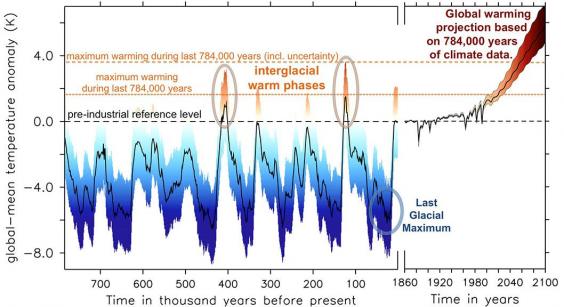
Ah, said the alien, now I understand why almost no humans acknowledge or discuss or act on their severe state of overshoot. And why climate scientists frequently fly long distances to conferences where they criticize fossil energy use, promote green growth, and never mention population reduction.
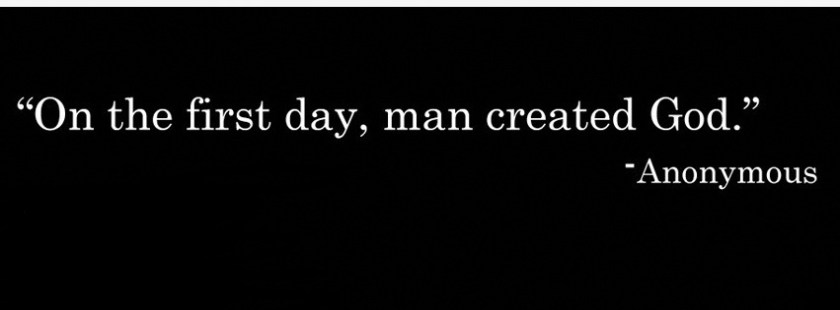
The human brain, the God it believes in, and the overshoot it enabled and denies, all resulted from the same improbable genetic mutation that occurred about 100,000 years ago.
The alien was finally able to tie up the loose ends that had been troubling it.
The alien saw, on the one hand, an intelligent species capable of impressive intellectual feats such discovering a theory to explain the origin of the universe and technologies for visiting the moon, and on the other hand, a species in a severe state of overshoot dependent on rapidly depleting non-renewable resources and destroying the habitat it needed for survival.
The alien had been perplexed at how such an intelligent species could be in such peril without acknowledging, discussing, or acting on its predicament.
The alien now understood and concluded its report with “Denial created humans, and denial will destroy humans.”
As it boarded its ship for home, the alien reflected on how lucky it was to have come from a planet where life had evolved without the need for death and therefore was able to evolve intelligence without denial.
Denial not only makes us believe in god, it is god, because denial created us, and denial may destroy us.





 un-Denial